Nobody tells you that moving countries for a Master's degree is a calculated gamble, you weigh the costs, back yourself, and get on with it. I came to Bath for an MSc in Data Science knowing exactly why I was here. What I did not expect was that the most valuable things I would gain had nothing to do with algorithms: the opportunities I carved out, the people I met, the network I quietly built, and a university award that helped me make sense of all of it, and eventually led me to a role I never anticipated.
Who I am
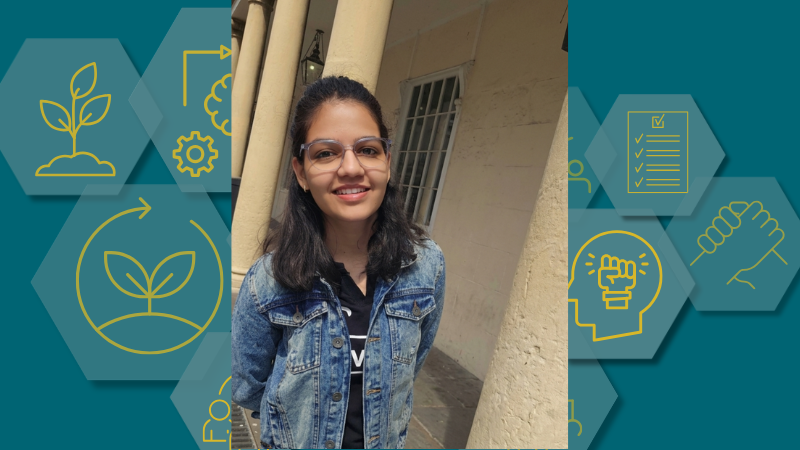
My name is Rajveena, and I am currently completing my MSc in Data Science at the University of Bath. I have always been drawn to mathematics and the logic of data-driven problem solving, and when I started thinking about postgraduate study, Bath stood out, its reputation, the programme's rigour, and the opportunity to build a career at the intersection of technology and finance all pointed in the same direction.
As an international student, I was not entirely unprepared, I had lived independently before. But learning the unspoken professional and social rules of a new country took longer, and it was this stretch, trying to find my footing quickly, without a script - that made the Bath Award particularly useful to me.
How the award pushed me out of my comfort zone
The activities I chose for the award - a Graduate Teaching Assistant role in the Department of Computer Science, and volunteering at university events and in the wider Bath community - changed the way I think about communication, resilience and adaptability. As a data science student, it is easy to get comfortable talking in models, metrics, and code, but that is not much use if the person across the table has no idea what an RMSE is. These capabilities complement my technical skills rather than sit alongside them: they are what let me actually present my work to someone outside the field, without losing them or watering down what I am trying to say.
What I did not anticipate was that completing the award would lead directly to a new opportunity. After completing it, I was offered the chance to work as an Operations Assistant with the Employability and Student Success team at the University of Bath, the very team behind the Bath Award itself. I am spending the summer helping to prepare for the 2026-27 academic year, working on everything from data analysis and report writing to webpage content and student communications.
Working on the Bath Award from the inside gave me a completely different perspective on what the award is really about. In that role, whether I was drafting a report for a senior committee, replying to a student email, or staying steady while explaining a data discrepancy to a colleague, the ability to communicate clearly and keep going when things did not go smoothly made all the difference. The adaptability I had developed meant I could pick up new tasks quickly, adjust to feedback, and stay calm when priorities shifted. And the professionalism I had worked on showed up every day, in how I managed my time, how I communicated with my manager, and how I approached tasks I had never done before.
I saw first hand how much thought and care goes into every email sent to students, every workshop offered, every piece of content on the website, and I realised the award had not just helped me develop skills, it had helped me become the kind of person who notices that care and wants to contribute to it.
A final thought
Looking back, the Bath Award gave me more than a line on my CV, it gave me the words to describe skills I had already been building without realising it, and the confidence to put them to use in a real job. If you are thinking about registering, do it. Not just because it looks good on paper, but because the process itself will show you things about yourself that are genuinely worth knowing, and it might lead somewhere you did not expect.
Respond