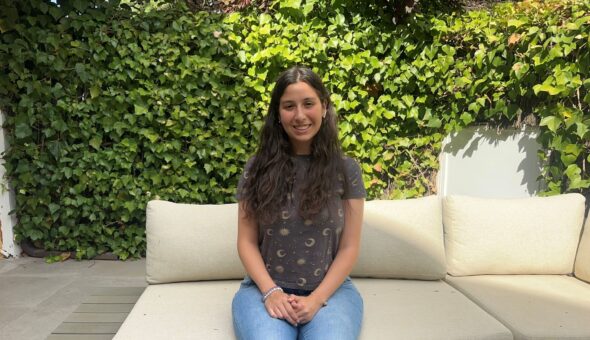
My name is Eya Labidi, and I am a final-year BSc Psychology student at the University of Bath.
A few weeks ago, I was honoured to receive the Department of Psychology Student Citizenship Award. This award recognises students who have made significant contributions to fostering a supportive, inclusive, and dynamic environment within the Department through leadership, community engagement, peer support, and active participation in departmental life.
Receiving this award allowed me to reflect on my journey over the past three years and all the opportunities the Department of Psychology has given me.
Supporting students through peer mentoring
One of the aspects of university that I have valued most has been the opportunity to support and connect with other students. As a Peer Mentor for two consecutive years, whether through answering questions, sharing advice, or simply being someone approachable to talk to, I helped first-year students adjust to university life and settle into the Department. It was a privilege to support students through what can be both an exciting and challenging transition, and it reminded me how important a sense of belonging can be during those first few months at university.
Contributing to research
Research has been another important part of my journey. As a Research Assistant, I had the opportunity to co-author a publication in Frontiers in Psychology in collaboration with researchers from the University of Bath and University College London (UCL). Our systematic review, "The Impact of Acting Training on Emotion Recognition and Expression", synthesised findings from 32 studies examining how acting training influences emotional skills. During the Department's Open Day this year, I also volunteered to support a lab-based study investigating coping with stressful and traumatic experiences. My role involved welcoming participants, explaining procedures, assisting with EEG-based tasks, and engaging with prospective students and their families. Being involved in academic research allowed me to develop skills in critical thinking, scientific writing, and collaboration.
Promoting psychology beyond the classroom
As a British Psychological Society Student Ambassador, I have had the opportunity to promote psychology career pathways and the wide range of opportunities available within the field through outreach activities, talks, meet-and-greet events, and collaborations with students and professionals. I also volunteered to help organise the Southwest Undergraduate Conference, which brought together psychology students from universities across the region to celebrate undergraduate research, share ideas, and connect with academics and peers.
Another particularly meaningful experience was having the opportunity to participate in a panel discussion as part of AMPLIFY The Prequel, exploring topics such as psychological safety for women, the importance of surrounding yourself with the right people, and personal growth, as well as designing and hosting a workshop during the AMPLIFY International Women's Month Summit at the School of Management, focusing on self-confidence. These experiences allowed me to apply concepts from positive psychology, share them with wider audiences, and represent the Department.
Leading the Bath Association of Psychology Students
One of the most transformative experiences of my university journey was serving as Chair of the Bath Association of Psychology Students (BAPS). When I stepped into the role, I wanted to create more opportunities for students to connect, learn, and engage with psychology outside of lectures. We expanded the team from three to seven members and increased membership by more than 100 students within a single year. We introduced a range of academic, social, and wellbeing initiatives. These included talks exploring lesser-known areas of psychology, such as psycho-oncology and business psychology; wellbeing events, such as a Mandala Colouring Workshop; and social activities, including a Psychology Trivia Night. We also contributed to Freshers' Week activities, departmental Open Days, and first-year induction events, helping students feel welcome and connected from the beginning of their university experience. One particularly memorable achievement was helping oversee the Humanities Ball at the Roman Baths, a large-scale collaboration between multiple societies that sold over 200 tickets within minutes.
Founding the University of Bath Psychology Magazine
Finally, perhaps one of the projects closest to my heart has been founding and leading the University of Bath Psychology Magazine. Just a few months ago, the idea began with an email I sent to Professor Richard Joiner outlining a vision for a student-led psychology magazine. The goal was to create a platform where students could share ideas, showcase their work, communicate psychological concepts in ways that make psychology more accessible to wider audiences, and engage with the subject beyond coursework. What began as a small student-led initiative quickly evolved into a large collaborative project. The magazine now publishes issues of around 60 pages every month, featuring contributions from more than 20 students and reaching readers all around the world. Since then, we have welcomed articles and artworks from students across the UK and internationally, including the University of Manchester and the British University of Bahrain. One of the highlights has been interviewing Jon Slade, CEO of the Financial Times, and Helen Haste, Founding Head of the Department of Psychology at the University of Bath. The initiative has also gained recognition from the British Psychological Society, leading to discussions about expanding across universities in the Southwest and collaborating on future student conferences. We have even received interest from international institutions, including New York University (NYU).
Lessons learned along the way, my message to students, and a final reflection
When people hear about these experiences, they always ask me how I managed to balance them alongside my bachelor's degree. The truth is, it was not always easy, especially since maintaining a first-class average remained a priority throughout my degree. There were periods when deadlines, other societal responsibilities, research projects, meetings, and personal commitments all coincided. On top of that, as someone who completed all of my schooling in a French school before moving to the UK, adapting to studying psychology at university level in English already came with its own challenges. So, just like many students, I experienced stress, uncertainty, and times when balancing everything felt overwhelming.
However, this did not stop me. On the contrary, looking back, I can see that these challenges helped me develop many valuable skills that I might not otherwise have gained. Most importantly, they taught me resilience, adaptability, and effective time management. Growth is rarely a straight line; there will be ups and downs, and that is completely normal. I have always believed that when you are passionate about what you do, the rewards often outweigh the challenges. Of course, there were long days, busy weeks, and moments of exhaustion, but the opportunities I chose were genuinely meaningful to me. I think that is a very important point: you do not have to do everything, nor should you get involved in activities to tick a box. Instead, choose opportunities that align with your values, your passions, and the person you aspire to become. During more challenging periods, I often reminded myself why I started in the first place, and that sense of purpose made it easier to keep going.
Trust me, the value of these experiences extends far beyond what appears on a CV or LinkedIn profile. Every single experience pushed me outside my comfort zone and helped me grow, not only professionally, but also personally. They taught me to be more confident in myself, strengthened my communication and public speaking abilities, improved my leadership and teamwork skills, and made me more comfortable connecting with new people and taking initiative.
Perhaps the biggest lesson I learned is that you do not need to have everything figured out before taking a chance on an opportunity. Many of the experiences that shaped my university journey began with a small step: an application, a conversation, or simply an email. Sometimes, the most rewarding opportunities are the ones that initially feel the most intimidating, and growth often begins by trusting yourself enough to give them a try.
Finally, for any student reading this, my message is simple: take that first step. Push yourself beyond what feels comfortable. Be curious. Get involved. Say yes to opportunities that excite you. The time at university passes way faster than you think, and some of the most meaningful parts of the journey happen outside the lecture theatre.
Respond