

Author: Isaac McDermott, MEng (Hons) Civil Engineering student, Department of Architecture and Civil Engineering
Hello! My name is Isaac, and I am currently nine months into my placement with Knights Brown, working on the Weymouth Walls harbour replacement scheme. Here is a snapshot of a typical “day in the life” and what to expect when working for a civil engineering contractor.
Before starting, especially coming out of second year studying civil engineering and architecture, I had no idea what being a site engineer would involve. CAD? Coding? Structural analysis? In reality, it has been climbing into excavations with a GPS and spray can, carrying a total station across site, and briefing teams on complex concrete pours, and I have loved it.
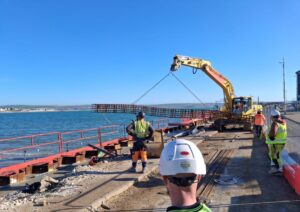
My day starts at 7am in the site cabin with coffee and toast, reviewing my to-do list and preparing permits before work begins. I sit in on the foreman’s briefing to understand the day’s plan so I can stay ahead of requests. A good start is key, as it allows the team to begin work without delays.
Accuracy is everything in site engineering. Around 90 percent of my work involves setting out levels and alignment. Small errors can quickly escalate, and millimetres at the start can become metres at the end. One of the biggest lessons is that “close enough” does not exist.
When I am not on site, I am calculating quantities for materials such as concrete, asphalt, or stone, helping plan upcoming work.
One thing people massively underestimate is how important documentation is on a busy and fast paced site. If it is not written down, photographed, signed, and filed properly, it may as well never have happened, especially if it was not priced in tender.
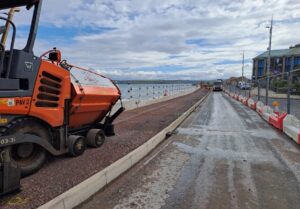
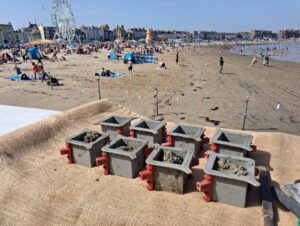
I end up documenting:
- How long the concrete breakout took
- Downtime caused by weather
- When subcontractors stopped for maintenance
- Inspection records
- QA forms
- As-built surveys
- Photos of setting out before work starts
- Compaction results, PSD tests, and concrete cube strength results
- Pour records
Taking photos is a huge part of the job. Before concrete is poured or drainage is buried, you need evidence showing everything was built correctly. Level books are equally important, recording all key measurements and decisions.
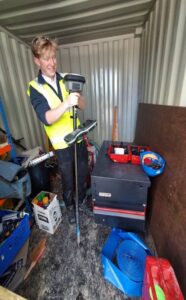
Teamwork is essential on site. Foremen bring practical experience, engineers support checks and problem solving, and project managers coordinate resources, schedules, and communication. Health and safety underpins everything.
The days of site can vary greatly. One day you can sit back in the office and look at drawings, next you’re in the pouring rain for 2 hours, aiming a total station at a 3m tall concrete shutter and monitoring it to ensure it isn’t creeping as concrete goes in. You can spend hours future proofing setting out just for a drawing revision to change your levels. Sometimes prefabricated beams don’t fit, or you make the call to send a concrete load back on a Friday as the mix is out of spec. But other days you stand back and look at a 500m sea wall in your hometown and you know it was because of your setting out.
One of the most rewarding aspects of my placement has been interpreting drawings and occasionally making design decisions on site. This level of responsibility adds to the sense of ownership and pride in the work.
Civil engineering is not glamorous, but it is incredibly satisfying. Much of the work goes unnoticed unless something goes wrong, but being part of building real infrastructure is rewarding.
Overall, this placement has given me a new perspective on civil engineering and a clearer idea of my future career. Despite the long hours, I still make time for my interests, often heading straight from work to gigs with a guitar in the boot.
I hope this gives a useful insight into life on a civil engineering placement and encourages others to consider site based roles.
Respond