

Author: Genevieve Morris, MEng(Hons) Civil Engineering in the Department of Architecture and Civil Engineering
In May, right in the middle of exam season, my original placement unexpectedly fell through.
Suddenly, while everyone else seemed to have their plans sorted, I had no idea what I was going to do. With support from the employability team, I regrouped, explored my options and started applying again.
That’s when Kilnbridge gave me an opportunity I hadn’t expected, creating an Undergraduate Engineer role for me at Old Oak Common, the new HS2 station, that will connect HS2, the Elizabeth Line and the Great Western Main Line.
If you’re worried that a placement falling through means you’ve missed your chance, you haven’t. There are always other opportunities, even if they take you somewhere you didn’t originally expect. Here’s how my placement year unfolded, and what I learned along the way.
Learning by moving around
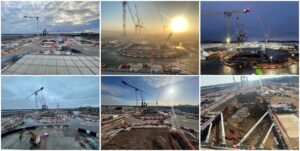
I joined the drainage and utilities team. Over ten months, I worked across six different areas, each teaching me something different, from setting out next to a live railway line to leading a dilapidation survey across 7,000 square metres.
Moving around meant constantly learning something new, but it also gave me a much broader understanding of how a project of this scale comes together. I don’t think I’d have gained the same perspective if I’d stayed in one place for the full ten months.
Alongside all of that
Plenty of my time wasn’t tied to a single area. I learnt how to write Task Briefing Sheets, breaking complex procedures down into clear steps, while also gaining practical experience in deep drainage, reinforced concrete pours, setting out, permanent works and temporary works.
I also took on a system that had been quietly broken: the site diary. Three different teams needed it for different reasons, but none were completely happy with how it worked. I rebuilt it so it worked for everyone, and it’s still the version being used today.
On top of that, I helped welcome new engineers to the team, getting them set up with the right drawings and showing them around site so they weren’t starting from nothing.
Finding my favourite project in the last place I expected
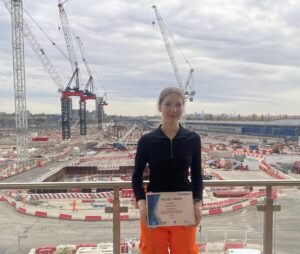
If you’d asked me back in January, I wouldn’t have picked CA05, the site’s haul road. I was settled somewhere I liked, and being moved there felt like a step away from what I wanted to be doing. It turned out to be the best thing that happened to my placement.
CA05 was relentless. The road was only 150 metres long, but there were fifteen concrete bay pours to plan, set out and get right, alongside everything else going on. I had to work through setting out problems, help develop a method for meeting cover requirements with what was already available on site, and hold my ground when I disagreed with a decision on a concrete delivery I didn’t trust.
It pushed me further than any other part of the placement, and it’s the area I’m proudest of. CA05 ended up the best performing section on site against programme, and I don’t think that happens without being uncomfortable first.
What it's actually taught me
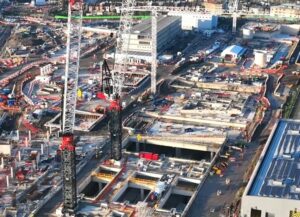
The technical side of this year has been huge. I now properly understand how site engineering fits together, from processing over a thousand ferroscans against a six week deadline to catching a geogrid installation error before it became a structural problem.
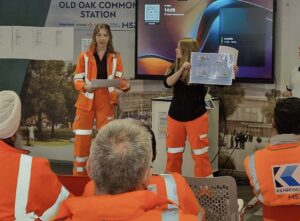
But the bigger shift has been in the skills nobody puts on a spec sheet: standing my ground with a construction manager with decades more experience than me, delivering a safety presentation to 100 people with barely an hour’s notice, learning how to build trust, and knowing that admitting a mistake early is worth far more than hiding one.
University teaches you how to calculate things. Placement teaches you how to be an engineer people trust.
If you're thinking about it
Do it, even if your plan falls apart first. A placement year is a steep learning curve, and a lot of what you carry forward afterwards isn’t necessarily what you expected going in.
You learn how a live site actually runs: how contractors coordinate, how quickly decisions need to be made, and how problems get solved on the ground rather than on paper.
If your first choice falls through, that’s not the end of the story. Mine started with a rejection email in May, and it turned into the thing I’m most proud of from my degree so far.
Respond