
In January, the UK government released the white paper “A New Vision for Water”, outlining plans to reform England’s water sector in response to growing public frustration over sewage discharges and other environmental impacts. Kemi Adeyeye, University of Bath, explores what the white paper could mean for water governance.
A major reform of the England’s water sector is underway, marking the most significant overhaul since it was privatised in 1989. The proposals set out in the January 2026 White Paper build on the 2025 joint independent review of water governance in England and Wales, conducted in partnership with the Welsh government. While Wales has chosen to proceed with a consultative Green Paper, the UK government has advanced directly to a set of concrete actions that aim to reshape how water is managed, regulated and protected in England.
The White Paper responds to growing public frustration over sewage discharges, wastewater overflows, pollution incidents and the wider deterioration of environmental performance across the sector. Pressures on rivers, lakes and coastal waters have intensified over the last decade, prompting widespread calls for a stronger, more accountable regulatory regime. The government’s proposals aim to strengthen enforcement powers, enable criminal sanctions for pollution cover-ups and create a more joined-up approach to water and environmental management.
To support the ambition to improve water quality, enhance resilience and rebuild public trust, the government has committed £104 billion to upgrading England’s water infrastructure. Overall, the White Paper sets the stage for systemic reform and long-term sustainability in how England’s water resources are governed.
What is new?
The most significant reform in the White Paper is the decision to replace Ofwat, the economic regulator, with a single, integrated water regulator, bringing together the functions from Ofwat, the Drinking Water Inspectorate, Environment Agency and Natural England. For the first time, one body will oversee everything to do with water – from customer service to ecological protection, from reservoirs to rivers. This change addresses long-standing criticisms that splitting responsibilities across multiple organisations makes it difficult to enforce standards consistently and confuses accountability. The expectation is that consolidating these functions into one regulator will create a clearer, more coherent system that can respond more rapidly to environmental risks and operational failures.
The new regulator will also be strengthened with technical and engineering capacity. A new Chief Engineer role will provide further oversight of the condition of water assets, an area where the sector has struggled due to capacity and capability gaps, ageing networks, complex infrastructure and inconsistent maintenance regimes.
Another shift lies in how strategic direction is set. Currently, the sector works to five-year Asset Management Plans. While this cycle has provided structure, it has also been criticised for encouraging short-term thinking and limiting innovation. Under the new model, Strategic Policy Statements will set out 25-year goals for the sector. These goals will be based on a whole‑water‑system approach, rather than the previous approach of company economics, business performance or price control considerations (Figure 1). Crucially, however, the familiar five‑year review cycle will not disappear. Instead, it will act as a checkpoint, allowing the regulator to supervise progress, ensure companies stay on track and intervene early if performance falls short, while still anchoring the sector in a long-term strategic direction.
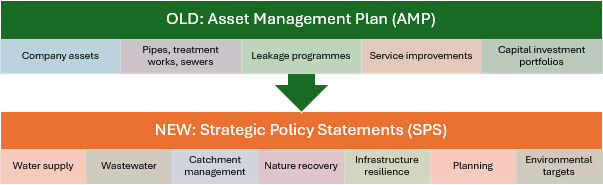
Figure 1 – Comparing the old and new strategic approaches.
For the public, the White Paper proposes stronger legal protections, improved complaint handling and tariff structures that better reflect service quality. Positively, the planned phase-out of the falling block tariff – a pricing approach that effectively rewards higher water use – is still going ahead. But the timeline, stretching to March 2030, may feel slow considering water pressures and growing concerns about fairness and equity.
The White Paper also calls for more consistent and coordinated regional water planning, improved supply–demand forecasting and stronger leakage management strategies. Although England is not always seen as a water-stressed country, climate projections tell a different story, showing increasingly volatile extremes – periods of both too much and too little water. It is good that the government recognises this shifting climate reality and also emphasises regional flexibility within a national strategic framework.
A new approach for water efficiency?
The White Paper’s recognition that “England is facing a projected five billion litre a day shortfall in public water supplies by 2055, plus a further one billion litres required for the wider economy", and that current levels of water consumption are unsustainable, marks an important shift. Against this backdrop, addressing demand is no longer optional – it is fundamental to long-term water security.
However, the White Paper offers relatively few new tools to drive reductions in household or business water use. Smart meter rollouts, a mandatory Water Efficiency Label and water reuse and recycling are now commitments, rather than ambitions. Water reuse and recycling remain limited to large non-household developments and large water users, pending the outcome of ongoing consultations on building regulations.
Unlike previous reforms, which introduced water efficiency instruments such as metering expansion, household behavioural trials, water-efficient fixtures, per capita consumption and leakage targets, or regulatory standards for buildings, the 2026 proposals focus more on restructuring governance rather than expanding the water efficiency toolbox. Approaches used widely in the energy sector – such as programmes, rebates, product mandates, reuse incentives or approved installer schemes – are notably absent.
Policy as a driver for change
Despite these gaps, the history of water regulation since privatisation shows that major policy and regulatory interventions often drive the biggest leaps forward.
From the 1989 Water Act, which created the National Rivers Authority and Ofwat and established the foundational levers – price controls, service standards and leakage scrutiny – that enabled structured demand‑side policy, to the Department for Environment, Food and Rural Affairs' (Defra’s) 2008 Future Water strategy, which set the first national demand‑reduction framework and legitimised systematic programme evaluation, regulatory direction has repeatedly shaped sector progress. The Environment Agency’s 2009 water behavioural synthesis embedded social‑science evidence and normalised behaviour‑led efficiency.
As private monopolies, water companies operate under Ofwat’s five-yearly Price Reviews (PR). The 2014 PR1 introduced outcomes‑focused regulation, total expenditure and stronger evidence expectations. Updates to building regulations in 2014–15 tightened water‑use standards and set consistent end‑use baselines, and the 2018 25 Year Environment Plan formalised national per capita consumption (PCC) and leakage indicators.
PR19 and the Environment Agency’s 2020 National Framework (withdrawn in 2025) locked consumption and leakage into regulatory outcomes and expanded regional coordination. Recent reforms, such as the 2023 Plan for Water and 2024 Water Resources Management Planning guidance, embedded adaptive, best‑value planning. And the Environment Act 2021’s target pathway made water demand milestones legally binding, marking more than three decades of progressively firmer regulatory direction.
The 2008 Future Water strategy from Defra catalysed my own research interest in water efficiency. Since my stint as EPSRC policy fellow at Defra in 2011, I have keenly observed how UK research outputs have closely aligned with the direction of national policy. Each major regulatory milestone has triggered new waves of research, experimentation and inquiry, advancing our understanding of water use efficiency, user behaviours and system resilience.
Where next?
The White Paper sets out a major structural reset for England’s water governance. It promises a simpler, more coherent regulatory system, better alignment between environmental and customer priorities, and a long-term strategic approach grounded in the realities of climate change.
Yet significant questions remain. Most notably, there are no new household- or business-level tools for reducing water use, despite clear evidence that demand reduction must be a central part of England’s future water resilience strategy. Without practical mechanisms such as retrofit programmes, water reuse incentives, updated product standards, cost or behaviour change initiatives, the risk is that long-term objectives become difficult to deliver.
We’ve seen that policy and regulatory interventions, however contested, do drive change and innovation in the water sector. However, beyond what is currently proposed, there remains scope to address not only who regulates, but how change happens on the ground. Structural reform can create the conditions for progress, but it needs to be matched with practical, well-designed interventions to drive the necessary scale of efficiency improvements.
As England moves into this new era of water governance, the challenge will be turning institutional reform into wider societal action, ensuring that households, businesses and communities can play their part in building a sustainable, resilient water future.
All articles posted on this blog give the views of the author(s), and not the position of the IPR, nor of the University of Bath.