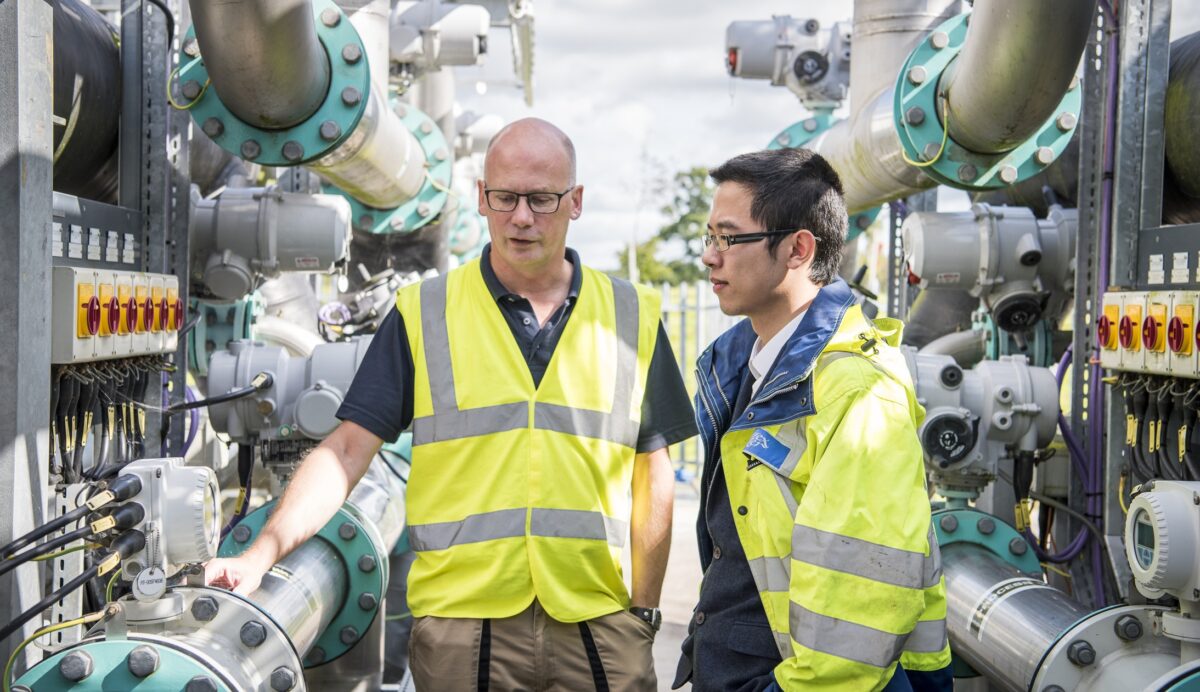
Reaching our 200th Knowledge Transfer Partnership (KTPs) is a proud moment for the University of Bath. This achievement reflects our deep commitment to strengthening impactful collaborations between academia and industry, and to driving innovation that delivers real-world benefits. It’s a reflection of the brilliant work our researchers, graduates, and business partners do together—turning ideas into impact.
KTPs are all about collaboration, and this milestone shows how far we’ve come in building strong, innovative relationships with industry. I’m incredibly grateful to everyone who’s been part of this journey, and I have invited Steve Boakes, Head of Knowledge Exchange at Research and Impact Services to share his insights of our KTP story.
Kind regards,
Sarah
A Knowledge Transfer Partnerships (KTP) is an Innovate UK match-funded grant scheme that connects University academics with a business to address a strategic challenge through the sharing of knowledge and generation of new ideas and ways of working.
The partnership includes a highly qualified graduate, known as a KTP Associate, who joins the business for between 1 to 3 years and brings together the partners to understand challenges and develop innovative solutions. New approaches are developed between the partners that address the project aim and typically result in positive impacts to all that extend beyond the KTP.
The University of Bath has been involved in Knowledge Transfer Partnerships (KTPs) since their inception in 1975. In 2025 we achieved a significant milestone, becoming one of only a handful of universities awarded its 200th KTP. This impressive achievement coincides with the 50th anniversary of Innovate UK’s flagship programme.
While the scheme is reported to deliver an estimated £5 return for every £1 invested1, the impact delivered reaches far beyond its financial metrics, proving transformational for both academic researchers and business partners alike.
Bath has a longstanding reputation for excellence in KTP delivery, with an application success exceeding the national average (85%), thanks to bespoke and dedicated support from the Business Partnerships and Knowledge Exchange team. The breadth of partnerships has spanned across all faculties of the University, with collaborations reaching as far south as Cornwall, up through Wales and England to Aberdeen on Scotland’s north-east coast.
Partnerships have involved a raft of disciplines, providing expertise, know-how and skills from academics including:
- Developing the latest underwater surveying technology
- Introducing cutting edge AI capabilities to safety process evaluation to improve safety and reduce design times for complex processing plants
- Improving the sustainability of global employee relocation to reduce carbon-footprints
- Understanding the psychology of risk in financial decision making
and much more beyond.
KTPs have enabled new technologies and practices to be embedded into partner organisations driving positive and lasting change. For researchers the impactful and tangible outcomes support research ambitions and often provide the foundations for longer-term collaboration.
One standout example is the partnership developed between Dr Andrew Watts in the Department of Life Sciences with Bath ASU (Icon Group). Their first of two KTPs led to the co-development of methodologies enabling application of extended shelf-life to ready-to-use injectable medicines. This innovation resulted in several new products being launched to market, has made treatments more accessible to patients and has resulted in significant cost savings and reduced wastage within the NHS. As a direct result of this work, Bath ASU has grown to become one of the largest independent aseptic compounding units in Europe and one of the largest employers in Wiltshire, whilst being acknowledged nationally as a recipient of the Queen’s award for Innovation.
These KTP partnerships have also resulted in significant benefit to both the University and the research team of Dr Watts, by driving ongoing collaborations with Bath ASU which have resulted in industry funded studentships, contract research awards, collaborative grant funding through UKRI research councils (totalling over £5 million funding) as well as REF Impact Case Studies.
The careers of the KTP associates involved have also flourished, with them gaining full-time employment in Bath ASU. They have spoken at national NHS conferences and contributed towards new NHS guidelines covering stability assessment of the important class of medicines investigated during their KTP projects.
The awarding of 200 KTPs is an impressive milestone and testament to the University of Bath’s researchers and the dedicated Business Partnerships & Knowledge Exchange team, who’s work with external organisations continues to deliver meaningful, real-world impact.
If you are considering a KTP or otherwise wish to learn more about the scheme and how it might support your research ambitions, please contact the BPKE team (partnerships@bath.ac.uk).
1Marking 45 years of Innovate UK Knowledge Transfer Partnerships. Richard Lamb, Programme Manager for Knowledge Transfer Partnerships (KTP), Innovate UK. Blog, UKRI, 6th December 2023.