As a student, I used to think creativity was unique to individuals such as students designing beautiful posters for society events, friends making cinematic vlogs, or people who could come up with brilliant campaign ideas in minutes. As a Management student, I was always fascinated by creative branding campaigns, catchy slogans, and innovative business ideas. Because of that, I associated creativity mostly with artistic work and big ideas, but not necessarily with the things I was doing myself.
The small moments where creativity appeared
Over time, I started reflecting more after each project, internship, or work experience. I found myself asking questions like:
- what did I improve?
- did I introduce a new idea?
- what contribution actually made a difference?
That was when I realised I had been creative all along, just in forms I never recognised before.
As an Employee Engagement intern, I once redesigned the format of employee birthday cards to make them feel more personal and emotional. It was a small change, but it improved how the message was received internally.
During another internship at a Creative Production House, I noticed that our social media production process was taking too long and often going in circles. I sat down to analyse the workflow, regroup tasks, and change the order of execution to save time and reduce confusion.
I also remember a group project at university where our team kept approaching a problem in the same way without making much progress. Instead of continuing down the same path, we experimented with a completely different approach. It wasn't guaranteed to work, but it helped us move forward and ultimately improve our final outcome.
Rethinking what creativity means
Looking back, none of these moments looked “creative” in the traditional sense. There was no painting, filmmaking, or graphic design involved. The common theme was that they all required observation, experimentation, problem-solving, and the willingness to try something different. This reflection helped me change the way I understand creativity now.
I no longer see creativity as artistic talent. I see it more as the ability to notice things, connect ideas, or improve situations. Interestingly, this is also how many organisations have been shaping the creativity capability at the workplace. Deloitte’s 2024 Human Capital Trends report highlights that creativity, curiosity, and the ability to explore new questions are rising important human capabilities in a rapidly changing world.
University life actually gives us many opportunities to practise these skills. It might be finding a new way to divide responsibilities in a group project, convincing friends to try a new society or event, adapting when two commitments clash in your schedule, or finding a better way to revise for an exam. These moments may not feel particularly "creative", but they all involve generating ideas, adapting to situations, and trying different approaches. Watch the creativity starts with questions video to understand how to start being creative.
How I stay creative
Some habits that help me stay creative are surprisingly simple.
First, I try to stay curious and ask “why?” and “how?” about things around me. Sometimes I walk around the city and observe how places operate. Why does one café always seem full while another stays empty? What kind of business would be good to be here? Even random questions like “How does an ATM actually work?” can lead to interesting ways of thinking. Once I start exploring questions like this, I often find myself thinking beyond the original topic, like how services are designed, how people interact with technology, and why certain systems are built the way they are. It is less about finding the answer and more about training myself to look beneath the surface and make connections between ideas. You can watch the simple ways of being more creative video to get tips and learn techniques you can practice.
Second, I keep track of my progress via reflection. After a project, a workshop, a course, a job, I jot down what I found memorable, what I learnt, what I improved, and what I contributed. Many of these reflections become evidence of creativity: moments where I solved a problem, improved a process, adapted to a challenge, or introduced a new idea. These examples are often much stronger than simply describing myself as "creative" on a CV because they show creativity in action. You can watch the how to evidence creativity on your CV video to find out how you can do that.
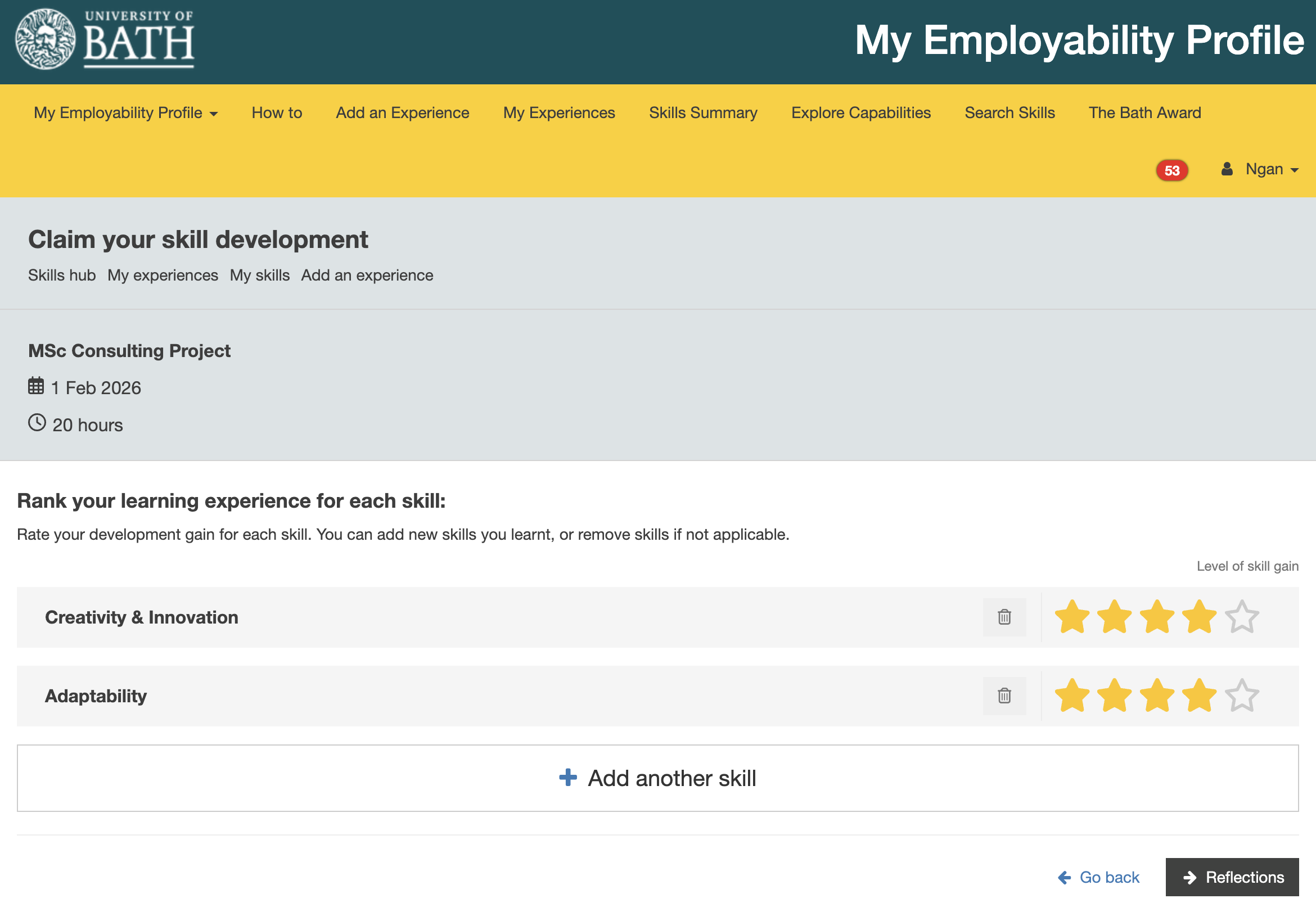
With the launch of My Employability Profile, I can keep all of my reflections in one place, tagged with Creativity as well as other capabilities that each activity has helped me develop. This serves as a useful record of experiences that I can draw on when writing job applications, preparing for interviews, or reflecting on my development.
Final words
The final word is that creativity is less about having brilliant ideas and more about building the habit of noticing, experimenting, and learning from experience. If creativity is a capability you'd like to develop further, the Creativity resources on My Employability Profile offer practical ways to build these habits and recognise them in your own experiences.
Respond