Hi everyone, I'm Sudar! I'm going into my final year of an Integrated Masters in Mechanical Engineering, and I thought it would be helpful for the students coming up behind me to hear about the opportunities out there. Despite being an engineer, I think most of what I talk about here should transfer to everyone, regardless of what you study.
Getting started with work experience
Firstly, don't be super worried about getting a headstart on the job search or finding experience. I spent my first year mostly just getting to grips with university life and getting through the course. First year tends to be easier than the rest, so it's the best time to focus on extra-curricular activities, find some sports and societies, and step out of your comfort zone as much as you can. You might think that's pointless for getting ahead in your degree, but when you come to apply for jobs, you'll realise most people have pretty similar skillsets to you: they've studied the same things and used the same software. Especially early on in your career, it's your transferable skills and general work experience that set you apart from the other candidates.
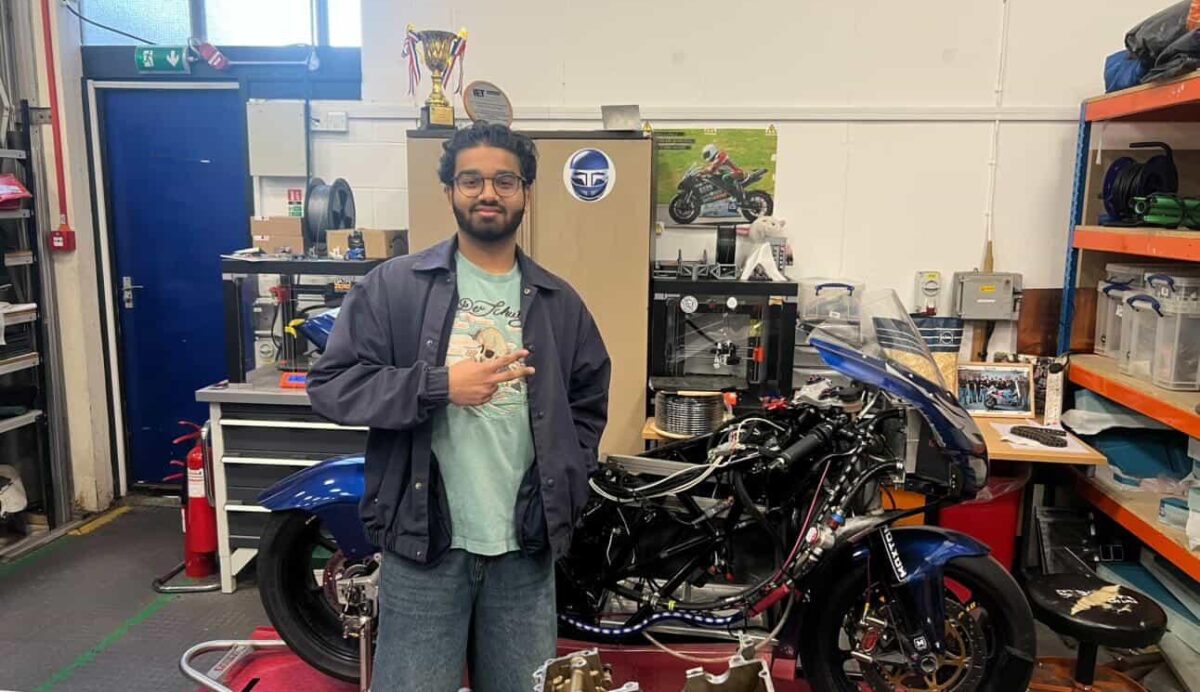
By second year, I'd found the societies and sports I was most interested in, and naturally slowed down on the others to make space for the extra workload that comes with the second-year scaries. One of the ones I stuck with was Team Bath Zero, I helped out where I could, setting up 3D printing and then optimising the battery casing print for the team. It wasn't a huge amount of my time, maybe an hour or two a week, but even that helped set me apart when I came to apply for industrial placements.
Applying for placements
Getting a placement is by no means easy, and this is where variety matters. Realistically, your CV will be skimmed for maybe 20 seconds, so you have to get your skills and strengths across quickly. It's about quality and quantity: you genuinely get better at personality tests, interviews and assessment centres the more you do them. It's almost guaranteed you won't get your first application, so don't let that get you down, the key is to keep reshaping your skillset and CV to match what the job and company actually want.
I did my placement in Engineering Project Management at Nissan, specifically their research and development facility, Nissan Technical Centre Europe. It wasn't directly engineering work, but it gave me three key things:
Regular contact with the varied engineers in the company and key stakeholders.
Making engineering decisions on different aspects of a vehicle's final design, and on timelines for prototyping and testing, needed expertise from different departments, which I couldn't have drawn on without learning how to communicate with different kinds of people.
Managerial experience in high-stakes environments.
Managing build plans for vehicles, where going off track could mean million-pound losses, vastly improved my ability to work under pressure, maintain attention to detail while doing so, and understand engineering design priorities from a different perspective.
And lastly, people.
I met a huge number of amazing people on placement, other placement students and graduates my age, all on different courses, showed me the different paths people were on. My teammates and managers gave me guidance not just in the workplace but for furthering my career in general, sharing knowledge they'd picked up over years on the job.
A key lesson from reflecting on my time at Nissan is not to box yourself in. I was originally sceptical about starting a "non-technical" role, but after talking to the careers team I realised industry experience is still experience, it gives you valuable skills you wouldn't otherwise have. So widen your horizons if you can. You don't have to be so specific at the start; you might find something amazing without realising it.
Returning from placement
Coming back from placement, I was excited to jump into third year and see what it had to offer. I went straight back into Team Bath Zero, designing the rear suspension as part of the team taking it to competition in 2027 and for my Group Design and Business Project (GDBP), as well as helping out at sponsorship events and talking to potential sponsors and interested students.
Before starting third year, I came across Engineer Your Fit, a programme for returning placement engineering and architecture students to develop their entrepreneurial abilities. As an engineer, you don't really focus on the business side of things, it's mostly about making something work, never about how to sell it, which is strange considering how many of those skills are transferable to entrepreneurship. Making a design cost-effective, technically sound, and defending the technical choices behind it are all skills you need when selling a business, a product, or starting a company.
Engineer Your Fit helped me realise these were transferable skills. It also taught me the technical side of entrepreneurship: the costs of getting started, filing patents and copyrights, setting up a business, and the different pathways within the university for doing so. It introduced me to a personal mentor and a wider mentor network I could go to for advice. Meeting these entrepreneurs helped me overcome my biggest problem with starting a business: finding the right idea. Talking to them, I realised there isn't always a lightbulb moment, a lot of them worked in a field for a couple of years, and it was only once they'd built up their own expertise that they spotted a gap they were passionate about filling. The key is to keep exploring, and you'll find something worth pursuing.
For engineers returning from placement, I'd really recommend Engineer Your Fit. I think it opens you up to a completely different way of thinking, and could even set you up to start your own business if you win the pitching competition.
Final thoughts
Overall, the best advice I can give is to say yes to as many opportunities as you can. It's easier to step back later once you realise you've got too much going on than to try to join something after it's already passed you by. Who knows, you might end up doing something you never expected, or find someone to help guide you toward the path you were always meant for. The point is, you won't know until you give it a go, so you might as well.
Respond