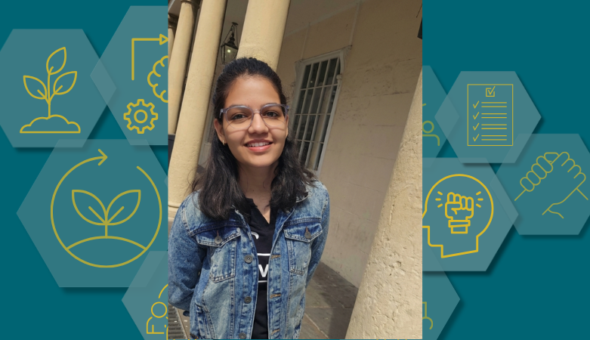
Hi, I am Dina, a PhD student on the second year at the University of Bath, and a few months ago, I was happy to complete the Bath Award. In this blog post, I will share my experience as a neurodivergent and international student for completing the Bath Award. I hope you find my insights useful.
The process
Being a PhD student looking to further develop my communication skills despite a busy schedule, I found that the Bath Award is an experience I can add to my CV. While the award is achievable, that does not mean it is easy: it challenged me to stretch my soft skills through practical experience (tutoring, peer mentoring, and participation in a VIP project), targeted reading, and workshops, all while reflecting on my progress iteratively. I dedicated 1–3 hours per week to this process. For an international, neurodivergent student, soft competencies are more vital than ever, especially in this AI era, and the award has helped me to know more about how to show my interpersonal value to potential employers.
What I Learned
Communication: As a student tutor, I realised I must adapt my communication approach depending on the student's level. Sometimes this involves rephrasing complex ideas to ensure clarity. Other times, it means asking open-ended questions to encourage a student to find the answer themselves. While communication feels like a vague term, it is highly sought after by employers. It is the catalyst for resolving issues from working with clients to collaborating with a research group.
Initiative: Committing to a peer mentoring role and participating in a Vertically Integrated Project were fantastic ways to gain new experiences and signal genuine drive to future employers. These roles involve taking responsibility for an inclusive environment, coordinating meet-ups, sharing knowledge, and ensuring mentees feel supported throughout the start of their research journey. In a professional setting, these behaviours translate directly into effective team management.
Adaptability: My PhD journey has taught me to be resilient in the face of uncertainty. For instance, I have maintained the motivation to iterate on my work and refine it even when the process felt solitary (despite the support of my supervisors and research group). I have learned to process feedback from reviewers or collaborators and navigate the feeling of "searching for a needle in a haystack" by managing my available resources mindfully and reminding myself of my motivation.
How about being neurodivergent?
As a neurodivergent person, I have often faced situations where I felt my growth didn't match the effort I was putting in. While this can be because of different communication styles or learning processing, I firmly believe that attitude is the key to success. From my experience, employers truly value this mindset. Having worked in industry prior to my PhD, I found the Bath Award to be a helpful refresher on professional basics that can still feel abstract or complex to navigate as a neurodivergent individual. It has also provided me with a clearer understanding of "how the world works" in a UK professional context, which I am still in the process of learning.
Conclusion
Overall, the Bath Award offers a framework that encourages you to take the initiative to explore new available roles and learn through them. It provides the structure to develop soft skills which you can immediately apply at your work and then refine through iterative reflection.
Suggested links
Respond