Hi, I'm Emma. Taking part in the University of Bath’s Doctoral Festival of Ideas has been one of the most energising moments of my PhD journey so far. My research explores how immersive media, particularly virtual reality, can support more effective climate change communication. I’m interested in how we help people connect with climate change in ways that feel meaningful, emotionally resonant, and grounded in psychological evidence. When the call for contributions to the Doctoral Festival went out, it felt like the perfect opportunity to practice communicating these ideas beyond specialist audiences.
Stepping up to the challenge of presenting
I decided to submit both a flash talk and a poster. The five-minute talk format was a challenge I actively wanted due to the need to communicate complex research in a clear, engaging narrative. This forces you to understand your own work differently and prioritise the key messages. It’s a test of clarity, confidence, and storytelling.
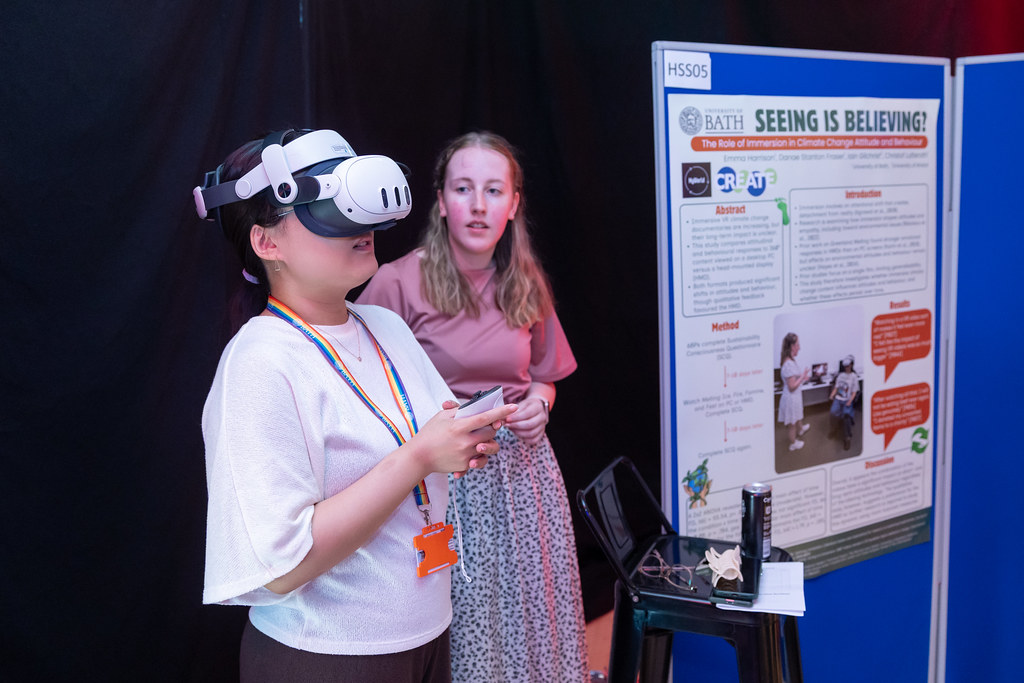
The poster session, meanwhile, offered space for deeper conversations and a demonstration of the content used in my research. People asked thoughtful questions about methodology, ethics, and the practicalities of using virtual reality with participants.
Conversations that shaped my thinking
Those discussions helped me refine how I explain the “why” behind my project, and not just the “what”.
The festival itself was a brilliant environment. It brought together researchers from across disciplines, each tackling big questions in their own way. Presenting in that space reminded me how valuable it is to step outside your academic bubble. Hearing how others interpreted my work, what resonated or surprised them, gave me fresh insight into how my research can be communicated more accessibly, and more impactfully.
Skills I developed along the way
I also developed skills I didn’t expect. Preparing for the flash talk sharpened my ability to prioritise key messages and craft a narrative that works for non-specialists. The poster strengthened my confidence in responding to spontaneous questions and explaining technical decisions in plain language.
The whole experience reinforced the importance of interdisciplinary communication, which is essential for climate research.
My advice for future participants
For other doctoral students considering taking part in future festivals, my advice is simple: do it.
You don’t need to wait until your research feels finished or perfectly polished. The festival is a supportive space designed for exploration, conversation, and growth. Focus on what excites you about your work and what you want others to take away. Think about the story behind your research: why it matters, who it could help, and what questions it raises.
Remember, communicating your ideas is a skill you build through practice, not perfection.
Leaving inspired and motivated
Participating in the Doctoral Festival of Ideas reminded me why I love this work: connecting with people, sharing ideas, and making complex research accessible. It was a privilege to contribute, and I’m grateful for the conversations, encouragement, and inspiration it sparked.
I left feeling more confident, more connected, and more motivated for the next stages of my PhD.
Respond