

This blog was written by Dr Shona McIntosh and Education PhD Students who attended the visit.
10 students from the Education PhD programme visited Fairfield House, the Bath base of Haile Selassie, Emperor of Ethiopia. The students went with PhD students from the Department of Social & Policy Studies and the Department of Politics, Languages and International Studies. The trip was kindly subsidised by the Department of Education and supported the department’s aim to connect with community groups and networks. The trip involved a tour of the house, exploration of objects and hearing stories from the wonder guide Ras Benji and recorded voices of those who knew the Emperor during his stay.
We learned about the conditions that brought about the exile of the Emperor and his family, as well as the British government’s reluctance to shelter them. It was a Bath MP who extended a welcome to the city, and his 5-year stay at Fairfield House began in 1936. We also learned about the national and international political and ambassadorial work performed by Haile Selassie during his years in exile and beyond. He was also a soldier for great parts of his life, yet also the incarnation of the Rastafarian God. When leaving Bath, the Emperor bequeathed the house to the elderly residents of the city of Bath. It occupies a unique and unusual position in the history of the city, providing an intercultural meeting place despite relying entirely on volunteers.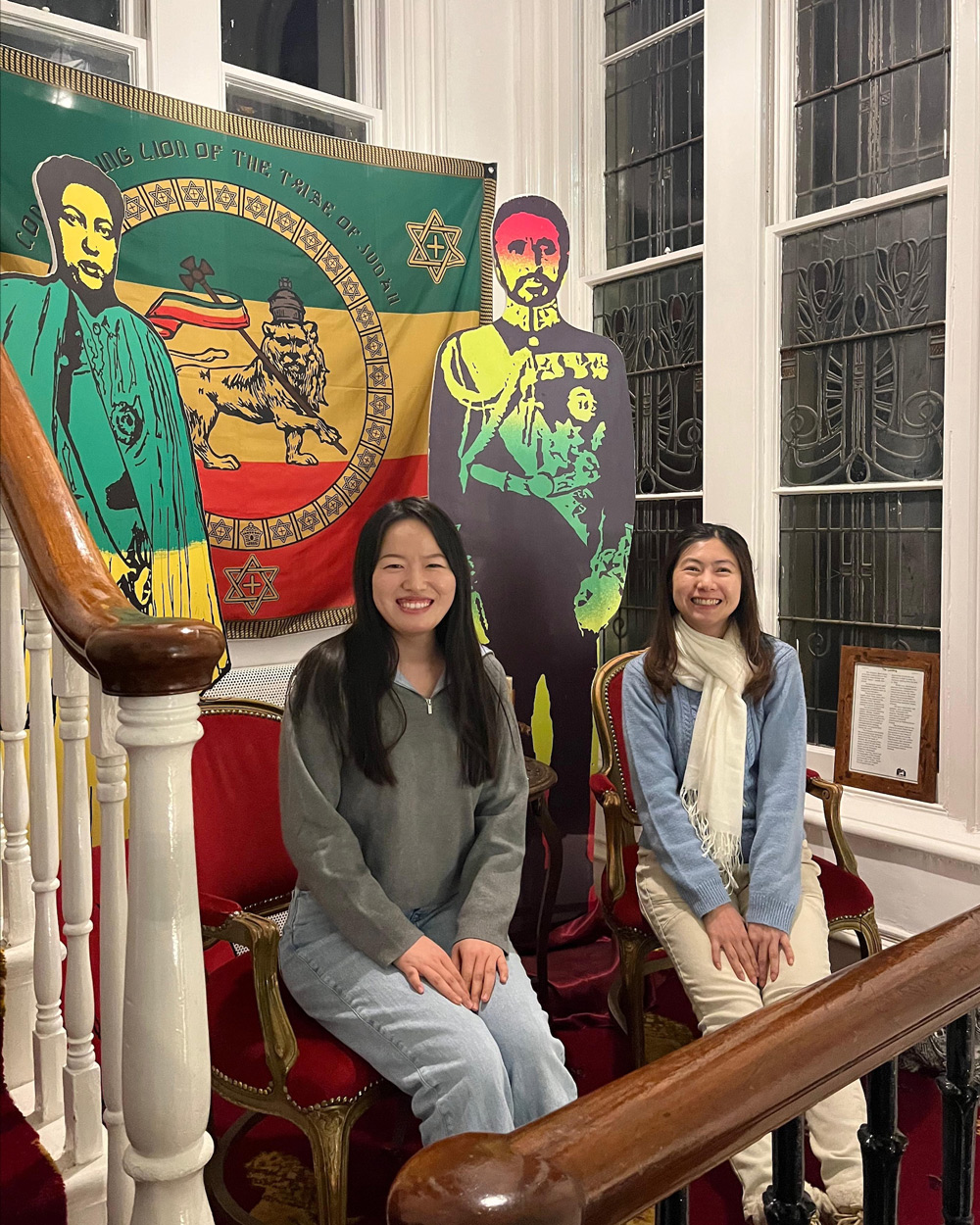
PhD students were from a range of countries in Asia and Africa, all with different perspectives and levels of familiarity with Ethiopia, Haile Selassie and Rastafarianism. Afterwards, the students reflected on what the visit had made them think about. For one, the impressive international relations work of Haile Selassie made them think about the positive power people can exert:
“Learning about the history of HIM Haile Selassie I and Ethiopia made me reflect on the impact individuals and institutions could have on a country and even world history.”
The international influence of Haile Selassie in raising awareness of the plight of Ethiopia struck one student, leading them to reflect on their research:
“...it dawned on me that scholarship is not merely about generating new theories or knowledge; it should strive to connect real people, lived experiences and social contexts, and most importantly, raise awareness of certain issues in society and make an impact on it.”
The ethics of “everyday acts of solidarity” resonated with another student, who bumped into someone she had met at Fairfield House:
“The encounter felt like a continuation of the ethos embodied at Fairfield House: a living example of the human-to-human connections that have long been nurtured there, and that continue to shape the city’s international and intercultural relationships today.”
Our visit ended with a wonderful vegan meal together, cooked by Fairfield House volunteers and, as we left in the dark, waving goodbye to our kind hosts, we agreed that Fairfield House had been undeniably special.
Respond
