
Reflections on the Impact and Knowledge Exchange Fellowship
By Dr Georgina Wort, Research Associate, Department for Health. Cohort 2026.
As researchers, we are often very good at collecting data, analysing findings, and publishing our work. But how do we make sure that our research reaches the people who could benefit from it, informs practice or policy, and contributes to meaningful change?
The University of Bath’s Impact and Knowledge Exchange Fellowship has been really valuable for developing my knowledge and skills to pursue impactful research, improving the way I communicate my work.
One of the most useful aspects of the Fellowship was the encouragement to think differently about how we communicate research. Understanding how research can be communicated, interpreted, and used by different audiences is incredibly important. It is a real positive that as a research community we’re doing more to move beyond predominantly communicating with academic audiences. As academics, we can become accustomed to explaining our work using technical language and concepts that make sense within our own disciplines. However, the people we ultimately want to engage with – whether it be members of the public, policymakers, practitioners, community organisations or members of the public – have very different priorities and perspectives. The Fellowship's workshops provided practical opportunities to better develop our communication skills and tools. For example, we had sessions to become familiar with explaining our research to completely different audiences (including grandmas and aliens) to think about the problem we were trying to address and the key aspects of our work to communicate.
For my own work, this means continuing to think carefully about whose perspectives are represented, how research findings are communicated and how evidence can be made useful to those working in real-world settings. This is particularly important when researching health inequalities and complex issues, such as commercial determinants of health (private sector activities and marketing practice that directly or indirectly impact human and planetary health and equity, for better or worse).
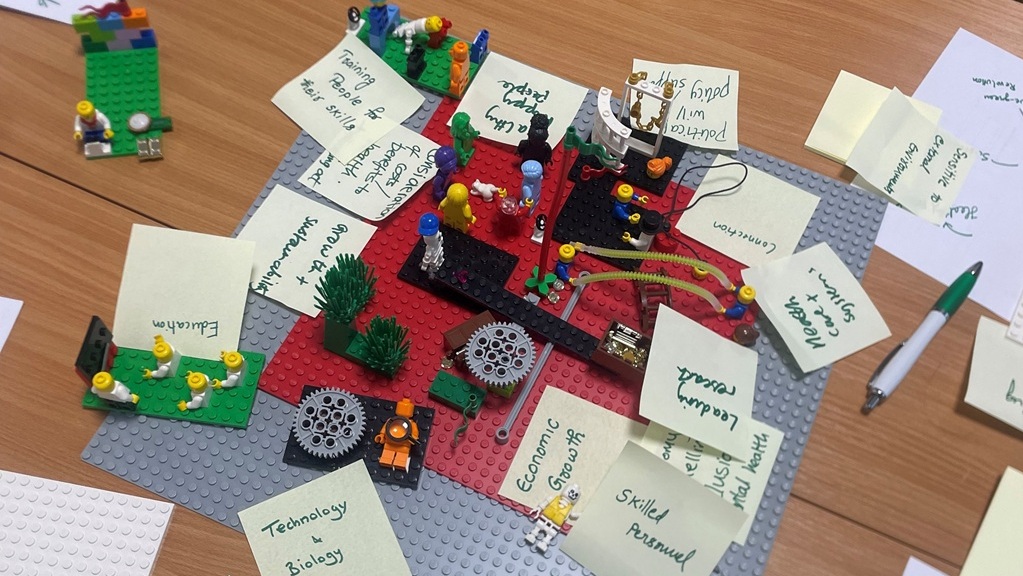
Another important learning point was the value of thinking about how to better embed impact and knowledge exchange early on in the research design process. The Fellowship introduced practical approaches for thinking through these pathways, including Theory of Change, stakeholder mapping, and approaches to monitoring and evaluating impact. These tools provided a useful structure for thinking about questions such as: Who might use this research? What do they need from it? What can I realistically influence? And how would I know if my research has made a difference? The Fellowship also helped reinforce that good knowledge exchange is not simply about telling people about your research; it is about listening, understanding what matters to others, and identifying where academic and community knowledge can complement one another.
One of the most enjoyable aspects of the Fellowship was the opportunity to connect with researchers from across the University working in many different disciplines. Whilst we all had different experiences of knowledge exchange and impact, the opportunity to openly share things that had worked well, the setbacks we had encountered and, importantly, the things we were still figuring out, was incredibly useful and it was reassuring to know that others faced similar challenges. The Fellowship also created protected time for reflection, and the one-to-one mentoring was an important part of this. Having someone who I could discuss ideas, challenges, and potential opportunities was particularly valuable for my broader career development.
I would recommend the Impact and Knowledge Exchange Fellowship to other researchers, particularly those who are beginning to think about the wider relevance and potential impact of their research. The Fellowship provides something that can be difficult to find within a busy academic career: time, space, practical tools and supportive people to think about what your research could achieve and how it could benefit people and wider society.
Respond