Ilaria arrived at the University of Bath to study Politics and International Relations, with dreams of a career in the field.
A spontaneous trip to swimming trials during freshers' week changed everything – reconnecting her with artistic swimming and setting her on a path that would help shape Team Bath's own artistic swimming programme.
Her journey since has taken her worldwide, from Dubai to Aruba. She's now home in Italy, coaching the national artistic swimming team and lecturing for the Italian Swimming Federation, as they build towards the next Olympic Games.
What made you choose to study at Bath?
Bath was suggested to me by a teacher helping me apply through UCAS. I'd wanted to move to the UK since I was 16, but I'd never actually visited – I chose it purely on gut feeling from the website. I liked that it felt like a green, outdoorsy university, with the lake and lots of nature around.
I was already a sporty person – I'd competed at national championships and won a few – but going abroad, and studying alongside sport, was always the priority. It was one of the best decisions I ever made, not just because of what I studied, but because of everything that came with it.
In what way did it have that impact?
I studied Politics and International Relations and always dreamed of working for the UN or another international organisation. But Bath also reignited my passion for sport at a serious level. During freshers' week I turned up to swimming trials and was recruited straight into the university's high-performance programme: ten sessions a week, training alongside the national squad. Mark Skimming, Chris Alderton and David McNulty all became huge mentors to me.
They also helped me realise what I was really missing: my passion had always been artistic swimming, but there was no artistic swimming at Bath... yet.
So, you first joined Team Bath as a straight swimmer, and pushed for artistic swimming from there?
Exactly. With support from Stephen Baddeley, we set up Team Bath's artistic swimming club, building a pathway so athletes could pursue the sport at an elite level – all the way to the Olympics – while still completing their degree. It helped lay the groundwork for athletes like Kate Shortman and Ranjuo Tomblin.
Getting there took a lot of pushing. Between 2012 and 2015 I got involved with the GB Senior National Team thanks to Lolli Montico, who'd prepared Great Britain for London 2012. I was introduced to Karen Thorpe, then in charge of Swim England's Development Pathway for artistic swimming and now GB Artistic Swimming's Head of Performance. I took a gap year instead of a placement to focus on sport, getting back in the pool as an athlete while helping Karen at GB level. I became a British citizen in 2018 and went on to represent Great Britain myself, right up until 2019, when we won silver in the free team combination event at the Paris World Cup Leg.
Lolli and Karen have truly shaped me, just like Paola Basso, my former coach in Italy. Kate Shortman and her duet partner, Izzy Thorpe, were like little sisters to me, and I'm incredibly proud of what they've since achieved at the Olympics.
Looking back, is there any one achievement that stands out?
I'm proud that I came away with a first-class dissertation despite everything else going on. But honestly, the biggest achievement was finding the strength and support to pursue my sport – not just from staff like Mark Skimming and David McNulty, but from everyone around the sports department. I was also working part-time at Team Bath throughout my degree, and that sense of being supported by the whole Team Bath family is something I haven't found anywhere since.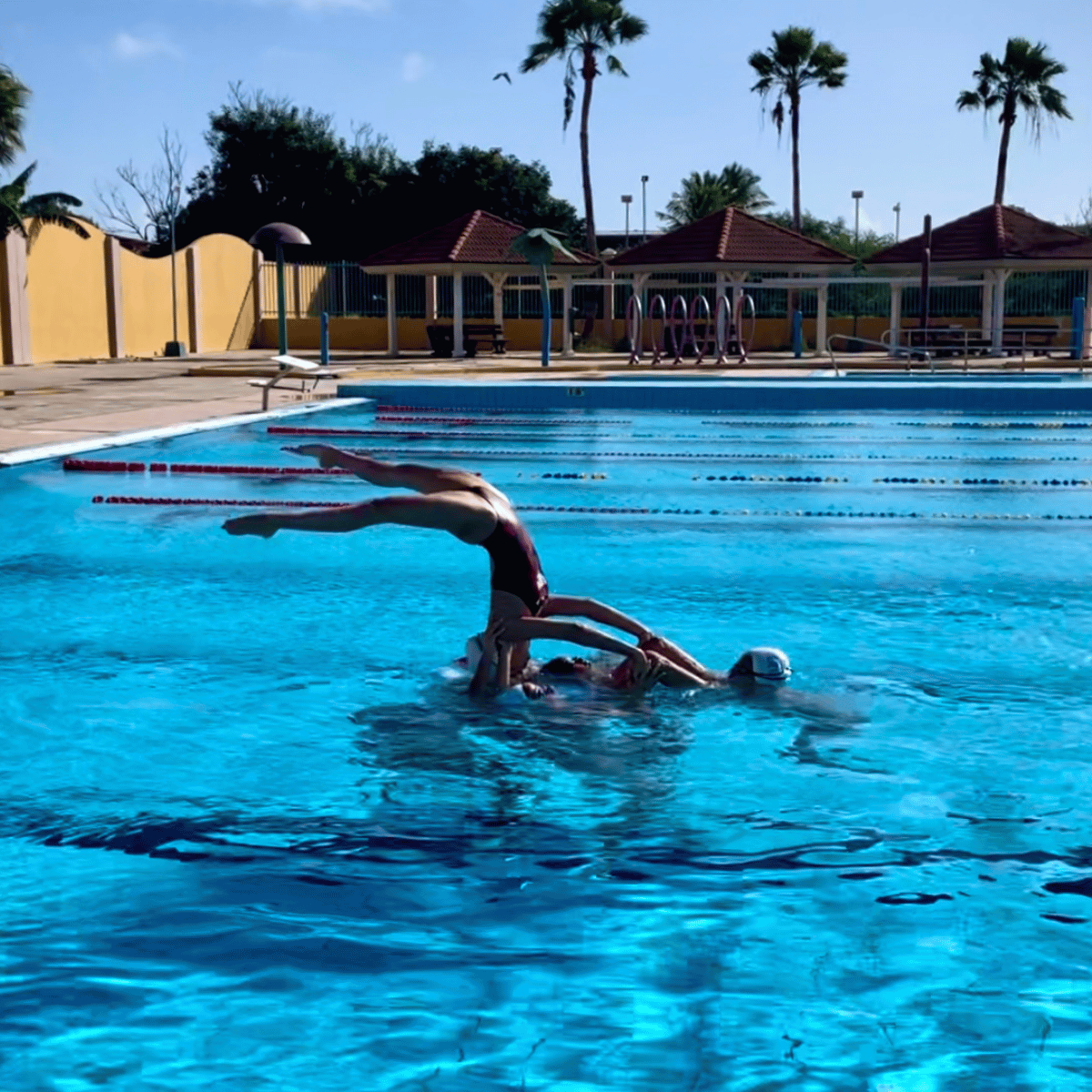
As a coach, I'm proud that by around 30 I'd become one of the youngest coaches to get athletes into World Championship finals. My ongoing dream is to keep coaching for as long as I can, and eventually move into organisations like the International Olympic Committee or World Aquatics.
Where did your career take you after you graduated?
I did an MA in Global Ethics and Human Values at King's College London, focused on climate change, ethics in politics, and human rights. It was very theoretical, but it built on everything Bath had given me.
After that, my now-husband and I were offered jobs in Dubai, developing one of the biggest aquatics academies there. Then COVID hit, and everything changed.
While still in Dubai, I got a call about preparing athletes for the Pan-American Games, World Cups and World Championships – based in Aruba, a tiny Caribbean island I hadn't even heard of before the call. I accepted, and within three days had packed up our life in the Middle East to fly to the other side of the world.
Aruba was the opposite of Dubai – raw, small, simple – but we got results nobody expected. It was my first role as Head Coach, reporting directly to the Federation and National Olympic Committee, including working closely with Nicole Hoevertsz, Vice President of the COA and of the International Olympic Committee.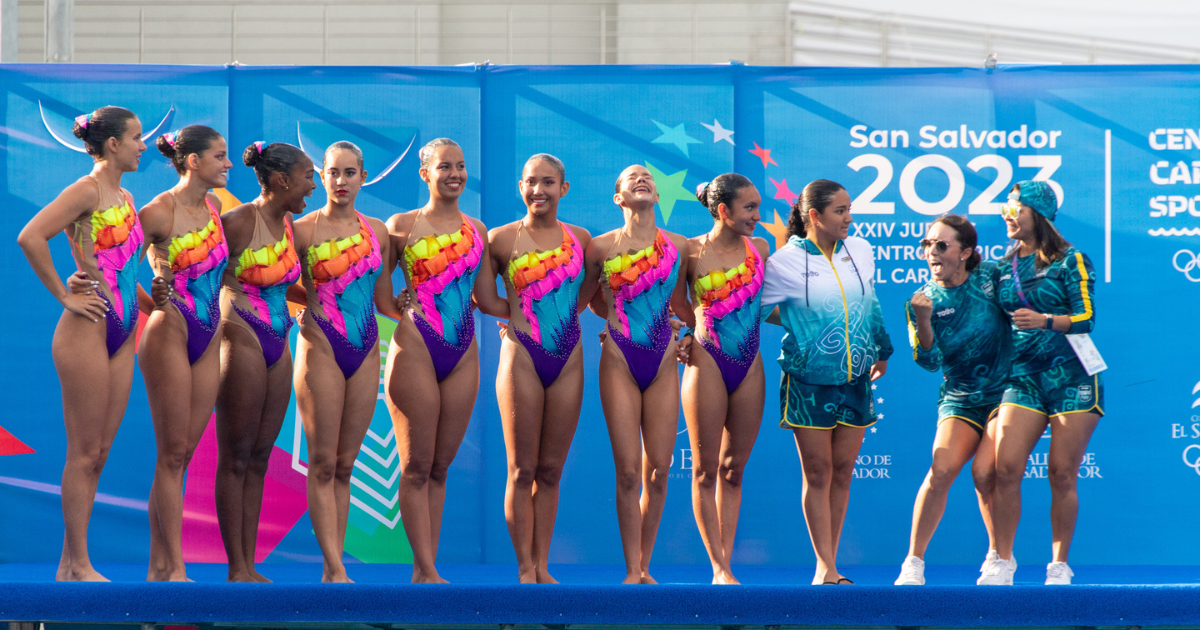
In under eleven months, the team qualified for the Pan-American Games and reached two World Championship finals at Fukuoka 2023 – at one point even beating Italy. That's when my current boss, Patrizia Giallombardo, Performance Director of the Italian national team, called about my next move: home to Italy.
What does a typical day look like in your role now?
I'm now part of the Italian national artistic swimming staff, both as a coach and, for the past year, as a lecturer for the Italian Swimming Federation – something I wouldn't have expected at this stage, and it's thanks to the presentation and communication skills I built at Bath, and the trust Patrizia and the Federation have placed in me.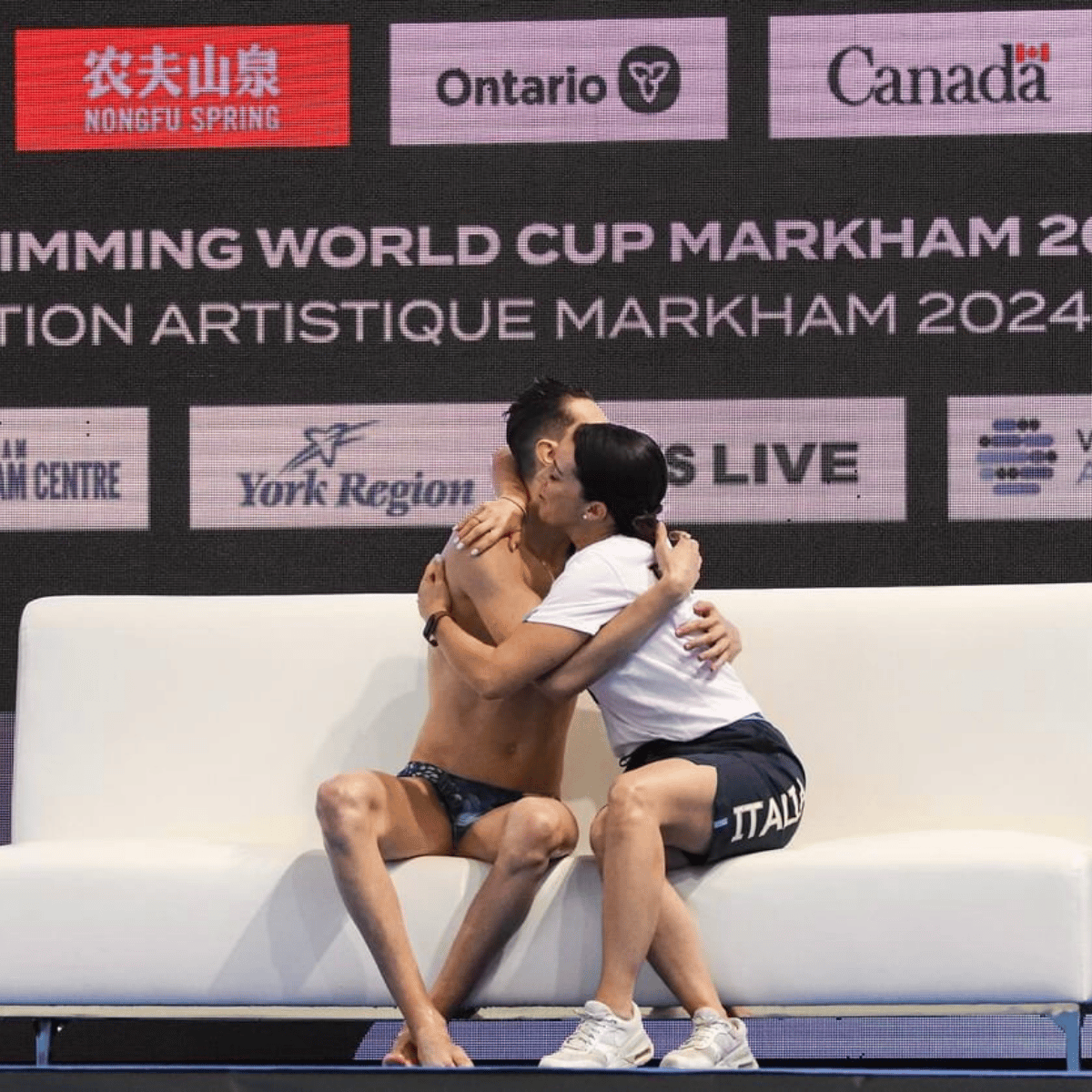
Alongside the national team, I coach Rari Nantes Savona, Italy's most successful artistic swimming club, where our national team is based. I'm at the pool most days, and when I'm not poolside I'm teaching or preparing lectures. It's not easy work, but it's exciting building towards competitions and seeing how sharing knowledge can help develop a better future for the next generation.
What are you working towards next?
Right now, everything is focused on supporting the national team's qualification for the next Olympic cycle. Longer term, my dream is to help my own country achieve more every season – after representing other nations, there's nothing quite like the pride of representing your homeland.
Beyond that, I'd love to move into a governance role with an organisation like the IOC, helping develop the sport long term. For me, it's always been about the team, not individual achievement.
Has anything surprised you along the way?
Probably how unpredictable life is. At university you imagine a neat path, but it never quite works that way – it's how you react to what happens that shapes who you become. One moment sums this up: in 2023, I was at the World Championships in Fukuoka, where our small team from Aruba reached a final for the first time ever – something everyone had told me was impossible when I set it as a goal ten months before.
The very next day, I learned my father-in-law had been diagnosed with stage 4 cancer. Holding something so huge and exciting alongside something so devastating was the real challenge. Those are the moments that shake you, because you always assume they happen to someone else. It's why my advice to anyone at Bath is that there's more to who you become than what you study – it's how you deal with everything beyond the notes and exams.
Any final advice for prospective international students?
Just go for it, be curious and stay open-minded. People can be quite closed off, but if you step outside your comfort zone, there's always someone who can help you discover something new about yourself – maybe even a part of your own subject you didn't expect to love, just from talking to someone with a completely different background.
I'll always be grateful to the university – to the politics department, the sports department, and the whole Team Bath family – they're the people who really shaped who I am today.
Respond