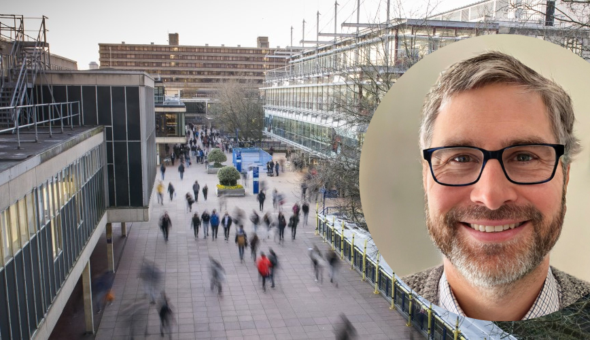
Alumnus Neil Pollard (BArch 1971) reflects on studying Architecture during the University of Bath’s formative years and witnessing the move from Bristol to the campus we know today.
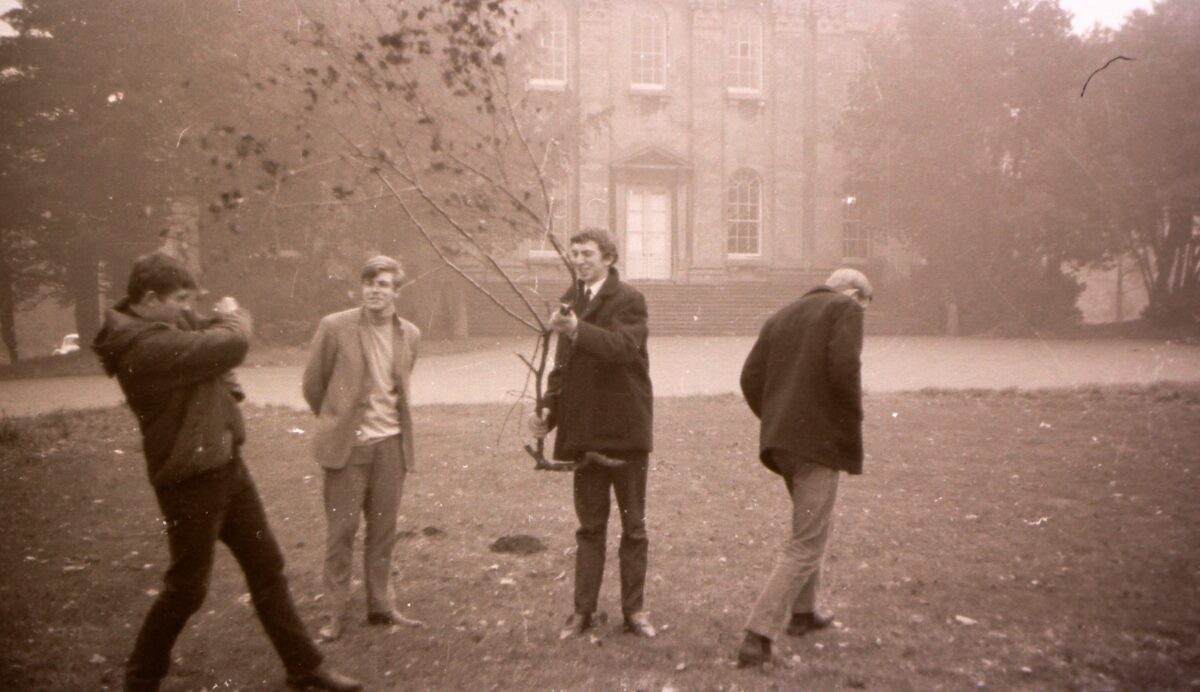
When I arrived to study Architecture in 1965, the University of Bath was still finding its feet. The Department of Architecture was based not at Claverton Down, but Kingsweston House, an imposing 18th-century mansion overlooking the Severn Estuary. Designed by Sir John Vanbrugh, architect of Blenheim Palace, it was certainly a memorable setting for a student interview.
I must admit that during my first visit I was struck not only by the grandeur of the building, but also by the apparent number of female students. On arriving for my first term, however, I discovered – to my great disappointment – that most of them belonged to the sociology department, which had already departed for Bath!
Life at Kingsweston
Architecture was the last department to move from Bristol to the new campus, remaining at Kingsweston until 1969. During those years, the department felt wonderfully self-contained. We had our own bar, made our own entertainment, and occupied spacious galleries that served as studios. The house's central atrium became the venue for concerts, social gatherings and all manner of student events.
Looking back, it couldn't have been more different from the Claverton Down campus that was taking shape at the time. Today's beautifully landscaped grounds and impressive buildings are a far cry from the exposed, treeless plateau that greeted students in the 1960s. The vision behind the campus – a raised pedestrian concourse linking departments and residences above a service road – seemed remarkably bold for such a windswept site.
Under construction
For much of my degree, contact with the developing campus was limited to occasional visits to the science and technology departments, which were already operating there. The site itself had previously been used as council sports pitches, and in those early years the sporting facilities were, shall we say, functional rather than luxurious.
I played football for the University's First XI and vividly remember changing rooms that amounted to little more than sheds. There were no showers; instead, there was a square concrete enclosure containing a foot or so of cold water. Unfortunately for us footballers, the rugby players usually arrived first, leaving behind little more than a mud bath.
As club secretary for a period, I spent much of my time organising teams, transport and pitches from the single telephone at Kingsweston. Building work frequently rendered the campus pitches unusable, forcing us to find alternatives. We often relied on pitches at Ralph Allen School, and on one memorable occasion I persuaded the grounds staff to prepare a football pitch back at Kingsweston itself. I suspect this was not quite what Vanbrugh had envisaged for his stately parkland setting.
Visiting teams were probably less than impressed by our arrangements. Today's students, with access to the Sports Training Village and the University’s world-class facilities, could scarcely imagine the change.
Collegiate learning
The Architecture department earned a strong reputation early on, one that has only grown over the decades. Looking back, I believe the course's success rested on two particular strengths.
The first was its sandwich-course structure. Spending substantial periods in professional practice meant students graduated with significant real-world experience already under their belts. It was an excellent foundation for employment and professional development.
The second was the close relationship between architecture and engineering students. Learning alongside those studying related disciplines gave us a far better understanding of how our professions would ultimately work together. It was an approach that reflected the realities of the construction industry and, in my view, remains one of Bath's greatest strengths.
Lasting memories
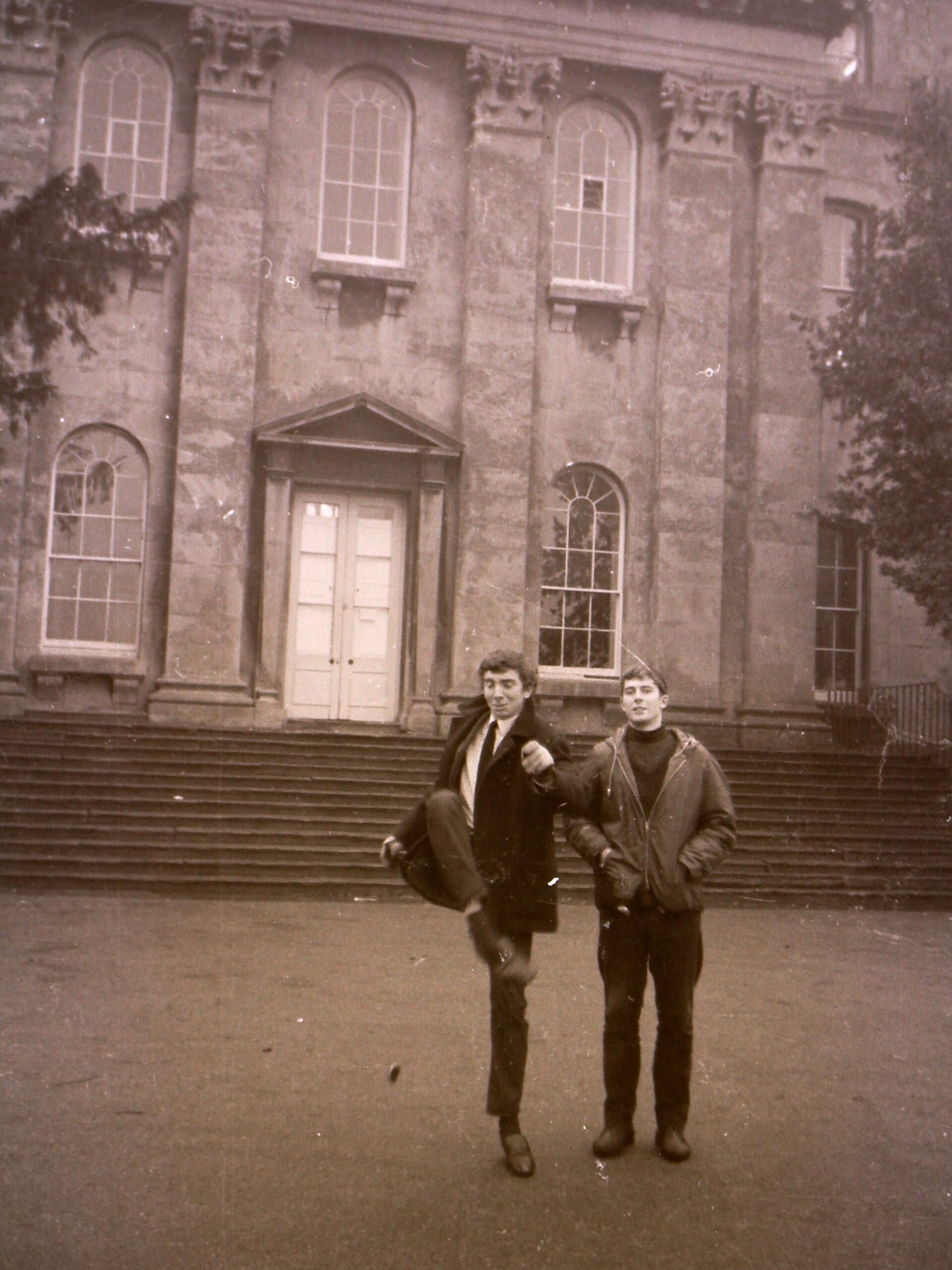
Kingsweston House itself has experienced mixed fortunes since the University's departure. Over the years it has been occupied, neglected and reinvented, and today serves as a venue for events and functions. Architectural opinions on the building have always differed. The historian Nikolaus Pevsner famously described it as "entirely graceless", while I once heard a visiting lecturer refer to it affectionately as "a noble pile".
For me, however, Kingsweston will always be remembered for more personal reasons. It was there that I met my wife. It was also, many years before my time, where Ralph Vaughan Williams composed The Lark Ascending.
Still part of Bath
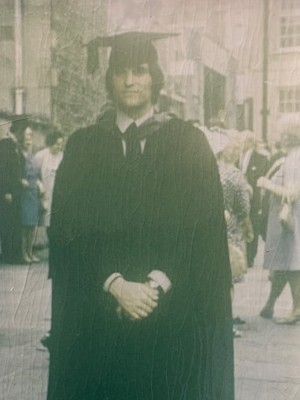
My years at the University spanned 1965 to 1971, covering a remarkable period in its history. I was fortunate enough to witness the transition from an architectural department housed in a grand country mansion to a university campus taking shape on the Somerset hills.
More than 50 years later, I am still a regular visitor, using the gym at the Sports Training Village. I suspect there cannot be many users who remember the days of muddy sports pitches, makeshift changing rooms and life at Kingsweston House.
If you want to share your memories of Bath, too, get in touch on advancement@bath.ac.uk
Respond