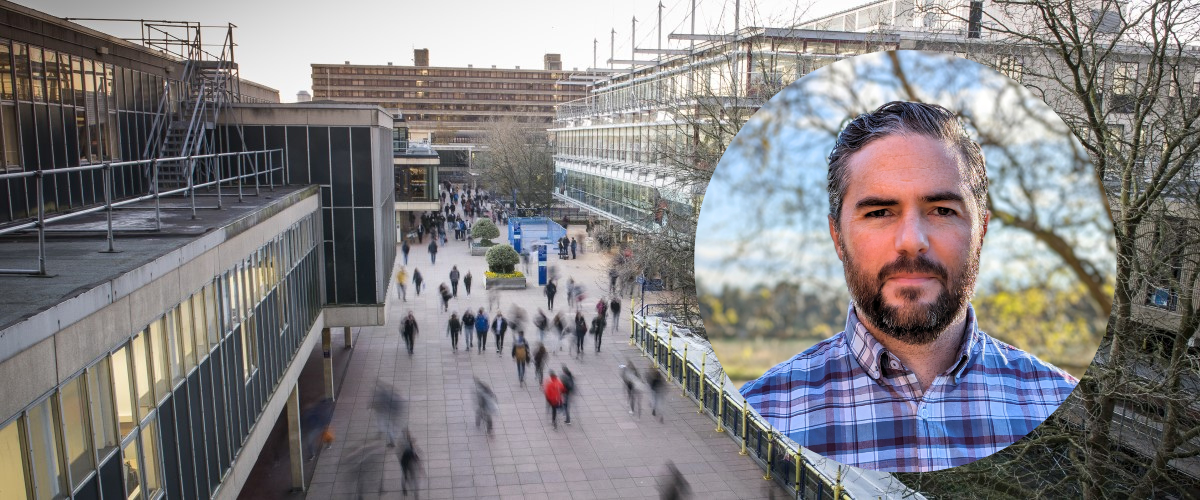
Edwin’s route to Bath wasn’t conventional. He hadn’t planned on going to university at all, but the foggy weather and an interview with a fellow aircraft enthusiast changed his mind.
What followed was an experience shaped by close friendships, societies and a love for the outdoors. Since graduating, Edwin has built a varied career across engineering. He is now a Senior Project Manager, working internationally on railway electrification programmes.
Why did you choose to study at Bath?
Bath wasn't my first choice; in fact, I hadn't planned on attending University at all. But when I came for my interview – despite it being very thick fog that day – I immediately had a warm feeling. My interview went very well too.
I didn't do A-Levels before university, originally intending to complete a BTEC with a City and Guilds and then start at the local airbase, Boscombe Down. The Bath lecturer who interviewed me was really into model aircraft, and I had just completed a work placement at the Empire test Pilots School where – at the time – they had an BAe Astra Hawk, for the time a very advanced fly-by-wire training jet. As soon as I mentioned that my interview became a very detailed discussion about aircraft and went very well. I think it was about that time I began to think University was for me.
Can you tell us about your experience of studying here? Do you have any favourite memories or preferred places to visit on campus or in the city?
I really loved my time at Bath, which looking back was a combination of finally having moved away from home, being young and being in a community with so many people of my own age.
All my best memories from that time involve my close circle of friends (some of whom I am still in touch with) hanging out at the Bath Rag offices on campus, doing some charity event and going on walking or climbing trips in the local countryside or occasionally further away to places like the Highlands of Scotland in the middle of winter to sleep in a snow hole.
Were you part of any societies or sports clubs during your time at Bath? What did you enjoy most about them?
I was part of Rag and the Mountaineering Club.
I joined Rag because I shared a coach trip with the then Sabbatical Officer, Martin Evans, whilst we both had bad hangovers, we became close friends and still are today. I loved the organising of the events more than the actual fundraising and I became the Rag Chairman in my final year.
I started hillwalking when I was 14. My secondary school started a targeted enrichment program to offer meaningful opportunities to a select group of students, and part of this involved a trip to Dartmoor, which I loved.
I joined Venture Scouts because of that trip and by the time I started at Bath I was a keen walker, shifting to wild camping, scrambling and mountaineering whilst at Bath. In the years since then I have continued my love of the outdoors, although over time I have shifted more to trail and mountain running, Bushcraft and Cyclocross. 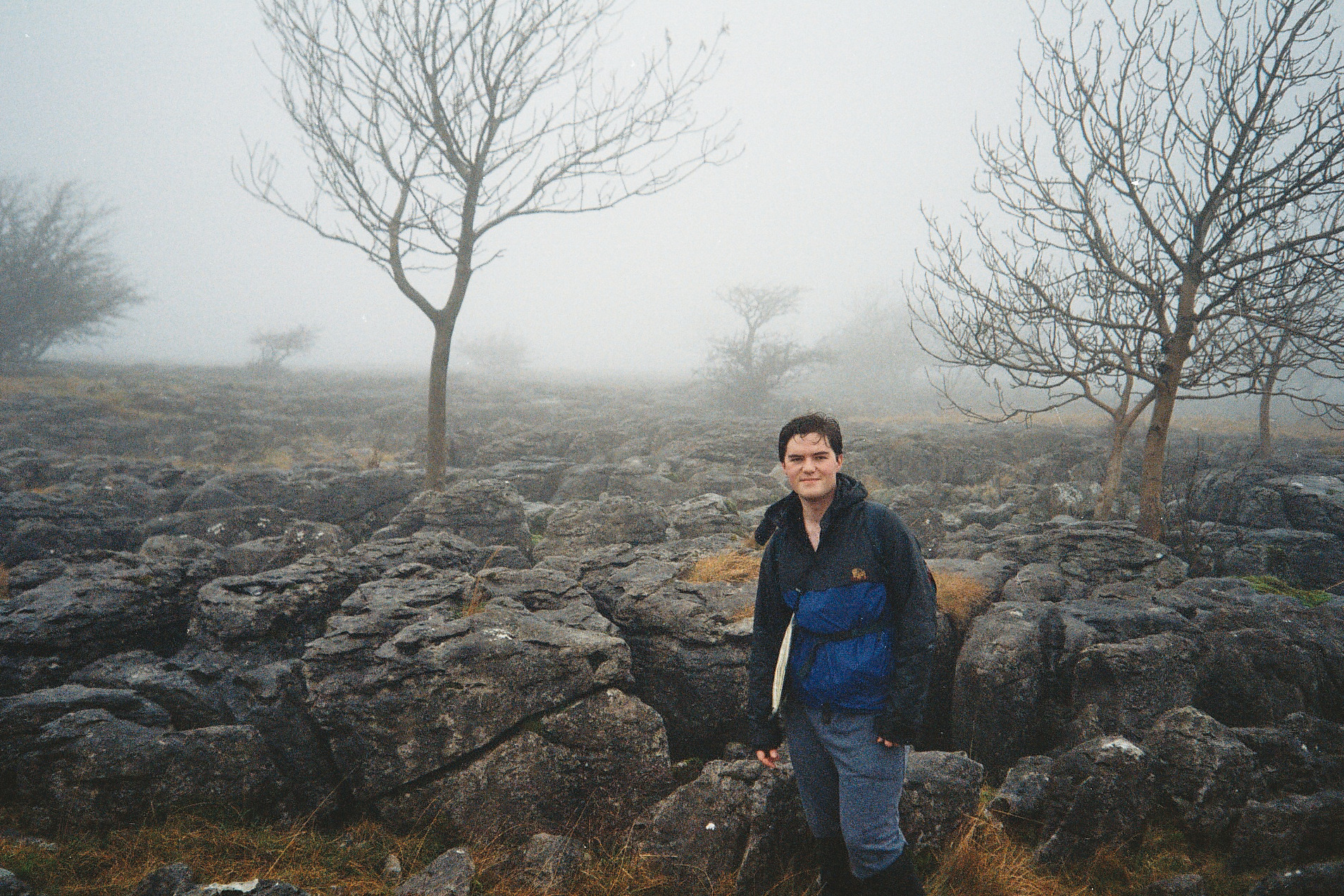
Describe your career journey since graduating. What is a typical day like in your current role?
While I was at Bath, my parents experienced financial difficulties, and I had to support them during my second and final years. As a result, after graduating, I faced financial concerns of my own and was hoping to secure a high-paying role that matched my qualifications.
In 1999, the military dictatorship in Nigeria ended. As part of the reforms introduced by the new civilian government in 2000, visa restrictions were imposed on non-degree-qualified technicians, which led to a labour shortage in parts of the Nigerian oil industry. My combination of a BTEC, City & Guilds qualifications, extensive factory and fitting experience, and a university degree made me a strong candidate for a well-paid position as a field technician, so in 2000 I started work in the Delta region for an oil exploration company that used explosives as an energy source for geophysical surveys.
I never intended to stay in the oil industry, and my experiences there, including the tragic loss of colleagues, motivated me to shift toward public transport and, eventually, decarbonisation of public transport. In 2002, once I was in a better financial position, I joined London Underground as an Engineering Graduate Trainee. I have mostly worked in the rail industry ever since.
After completing the graduate scheme, I continued working at London Underground and became a Chartered Engineer shortly before taking a role with Network Rail as a Project Engineer. During the 2008 economic downturn, I found myself working for another firm commuting between London and Birmingham, managing projects affected by administration issues or bankrupt suppliers and clients. It was during this period that I transitioned into project management.
By 2014, I had become a Fellow of Engineering and was working for Turner & Townsend as a consultant Project Manager, taking on a major programme management role for a client on the Crossrail Scheme, now the Elizabeth Line. Two years later, having successfully completed that role, I became Deputy to the Head of Global Operations for an Austrian firm. Unfortunately, the move to Austria coincided with the Brexit vote, and my stay there lasted only a year, but as a consolation it was also where I met my partner!
Back in the UK, I joined Siemens Mobility as part of the board of an alliance of six companies delivering a major rail programme from York. Over the next five years, we successfully delivered the East Coast Mainline upgrade, and my partner moved to live with me. In late 2022, just as my role in York was winding down, we learned that my stepson in Germany was going to become a father. That same week, Siemens Mobility advertised a Senior PM position at their global HQ in Germany: a perfect fit! After interviews and planning, my partner and I relocated to Nuremberg in 2023.
Today, I am a Senior Project Manager. I manage a portfolio of railway electrification projects across several Latin American countries, support global bids, and occasionally serve on expert review boards as a specialist in collaborative contract forms.
My work is highly varied and includes frequent travel to South America, as well as to sites and partner offices across Europe. Hybrid working defines most of my week, especially given the time difference with my teams, and I often work from home in the afternoons and evenings to align with their local time zones.
What do you enjoy most about your career? Has anything surprised you?
I’ve always enjoyed complexity, variety and problem-solving, all have been central to my career and continue in my current role. In my early career, as well as being able to travel a lot as a result of my job in Oil (6 weeks on - 7 days a week - followed by a 3 week holiday multiple times a year) I had to solve a lot of technical problems related to being in a seismic camp in the middle of the jungle hours of drive away from the nearest place we could buy spare parts (everything from fixing the generators, or the satellite phone, to getting our long suffering toaster to make one more breakfast).
In London I got to explore abandoned tube stations, and even once was lowered 90m out of a cable car onto the roof of a Thames Clipper as part of proving the validity of a rescue training system.
I think what has surprised me most is how much I enjoy management, and how much that has gelled with my love of technical complexity. At Bath I was the typical engineering student, looking down on management disciplines. This changed in my second year when I did a sociology module, starting a long fascination with teams and people management.
How did your studies help you develop professionally and/or personally? If you participated in a placement, could you talk a bit about that experience?
If I hadn't completed a degree, my life would be very different. When I started my BTEC I never intended to go to university – nobody from my family ever had.
The thought of spending several more years in education, when I could have a stable well-paid job close to home, made little sense to me. However, one of my tutors persuaded me to consider University, and without his encouragement, as well as that foggy visit to Bath, it's possible I would still be living in Salisbury.
You volunteer on Bath Connection – could you tell us why you give back to Bath in this way?
When I was supporting my parents, I received help in turn from the University. I would like to give back that support to other students if I can, this is also why I make a monthly donation to the Alumni Fund.
What advice would you give to prospective students considering studying your course at Bath?
I would encourage them to join one of the Engineering Institutions. It will provide career structure and support moving forward, especially if they follow the IEng or CEng route
If they ever shift careers or move to another country, the fact they have kept and properly maintained paperwork as part of their certification and CPD will be very useful. It was for me two years ago when I needed a copy of my module-by-module results from Bath translated into German by a court-certified translator!
If possible, I would also suggest they take modules outside of the core engineering disciplines, like the sociology module I did. Most engineering knowledge will become out of date as technology develops, but humans are humans, and the extra perspective it gives you can help develop a more rounded and successful career.
Respond