
A guest blog from Reyna Dimli, Grace Mcmahon, Annabelle Morris – Year 1 students in Modern Languages.
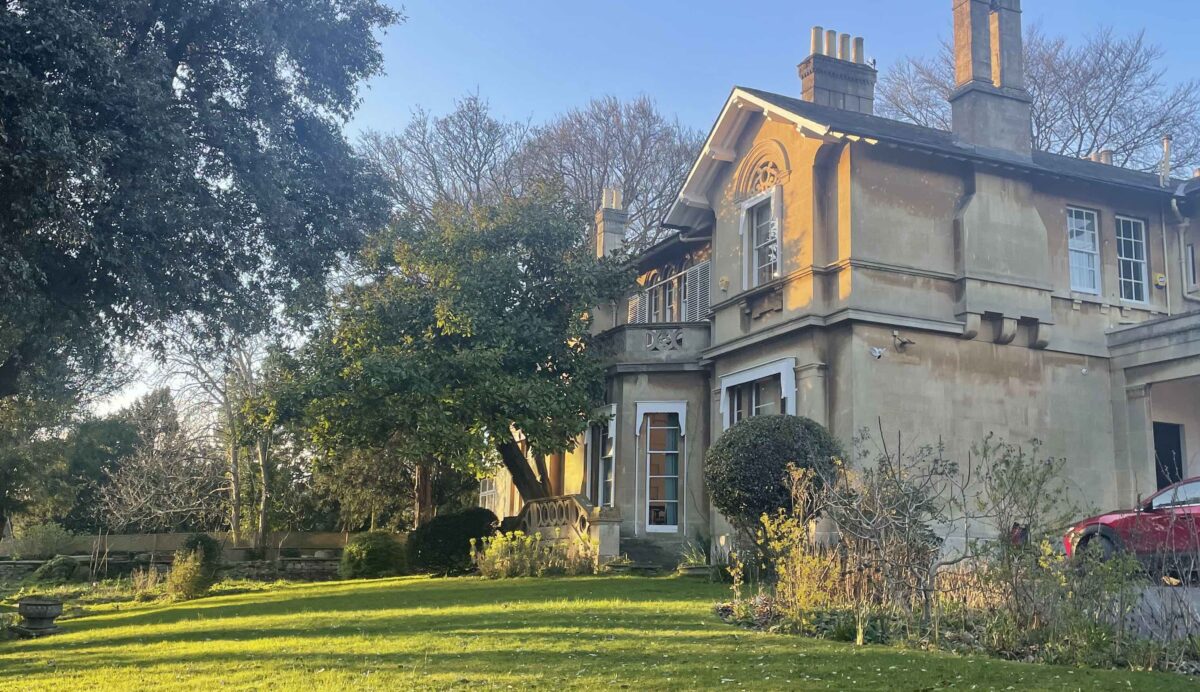
Situated on Newbridge Hill, just a couple miles from Bath’s city centre, stands Fairfield House, the historical landmark that represents its fascinating ties to Ethiopian Independence. This former residence of Ethiopian Emperor Haile Selassie during his exile now functions both as a rich museum full of original artifacts, personal anecdotes and photographs, as well as a multi-cultural community centre valued by locals of all demographics.
As a group of first and second-year Modern Languages students, we had the chance to experience one of Fairfield House’s guided tours as part of an extracurricular activity organised by our lecturer Dr Galadriel Ravelli. The visit served not only as an opportunity to consolidate our study of European history, but also as a physical reminder of the legacy of Ethiopia’s struggle for independence against the Fascist Italian invasion between 1935 and 1941. Fairfield House is not an attraction many would associate with Bath, yet its vibrant legacy is kept alive through its weekly tours and teachings of Emperor Haile Selassie's political fight whilst seeking refuge in the city.
As a stark contrast to the perhaps more broadly publicised tourist attractions in Bath, this site represents a page of history that, for various reasons, is often overlooked. The trip revealed Bath to be a ‘safe haven’ for the Emperor and his family between 1936 and 1941. Italy’s fascist invasion of Ethiopia in 1935 forced Haile Selassie to leave his country and continue his fight for independence in the UK: a time when their lives were threatened and others offered nothing but hostility. Whilst the Emperor was driven out of London upon arrival, the community of Bath welcomed him with open arms. As a university and a community, it is vital to recognise and reinforce this positive legacy of openness and solidarity. This is the exact reason Haile Selassie gifted the house to Bath, which has since become a symbol of unity and anti-colonialism, two notions that remain pertinent in today’s society and current affairs. The guided tour also emphasised the commemorable work of several key figureswe had previously explored in the classroom, such as Sylvia Pankhurst, who acted as a forceful ally to the anti-fascist fight for Ethiopian Independence.
All in all, this was a lovely opportunity to relate our academic work to the wider world and combat the development of an “academic bubble”, where students and lecturers only discuss educational and academic matters with each other and remain separated from the rest of the city through a lack of participation in educational and informative activities outside of the campus environment. We would absolutely recommend this experience to get to know a community and place within Bath that you may be less familiar with, whether you’re new here (like us First Year students) or a longer-time resident of the city – it’s always worth being curious about what’s around you!
By engaging with historical sites such as Fairfield House, the University and the Department of PoLIS give students the opportunity to approach educational topics with a local focus, and to contextualise their understanding of anticolonial resistance in the world around them. This type of activity allows students to feel a greater connection to the larger Bath community and explore its vibrant history. This is part of the University’s wider engagement with the local community involving the public with its teaching and research. As we highlight below, this kind of extracurricular activity allows students to immerse themselves into emplaced historical narratives and connect their studies to the local community and its lesser-known history. Additionally, the activity enabled a critical reflection on the way locals and tourists engage with the visibility of the historical narratives emplaced in similar sites, and the conversations that Universities and other institutions can foster on this going forward.
We would like to conclude by sharing some individual thoughts on the tour and its potential to engage the University community with the city of Bath’s lesser-known histories:
Annabelle: An exploration of history and culture, that I found to be rich, reflective and at times, unexpected.
Grace: An eye-opening experience that offers an inspiring insight into the struggle for Ethiopian independence.
Reyna: An excellent opportunity to explore a historical and cultural site in Bath and to see a clear example of how a small project to preserve a piece of history can grow into something bigger that benefits more and more people, present and future.
Reyna Dimli, Grace Mcmahon, Annabelle Morris – Year 1 students in Modern Languages.
Responses



Well done, really impressive!