Te Kaupeka Oranga | The Faculty of Health
As far as the rumours go, Kiwi’s do seem to live up to the expectations of their laidback lifestyle. At the start of placement myself and my other Bath friends would arrive at work for 9am and would always be the only ones in the office. The opposite would happen as we would wait for 5 o’clock and sometimes would get asked as to why we were still in the office at that time. We then adjusted our working hours…
Although I don’t have much to compare my NZ working life to (as I have never properly worked a 9-5 before) it was still a really refreshing environment to be in. It became obvious quite quickly that people weren’t constrained to their jobs as much, and when they were out of work, most people (including ourselves) always had some sort of trip / hike planned. On one of my very first days at work, my supervisor had taken me around campus for a tour and we came back to the office and joined some others for lunch, one of whom was completely barefoot under the table eating his lunch. A slight culture shock moment but one I did come to embrace (although it’s not as well tolerated back in London unfortunately).
Our Māori Welcome
Within the first couple weeks of starting work, we received a rather intriguing (slightly daunting) email explaining to us the details of something called a mihi whakatau. At this point in time I was still very new to learning about Māori culture, so it was all a bit confusing at first. A mihi whakatau is a traditional welcome ceremony in order to greet new people and help create a bond between the “hosts” and the “visitors”. It is believed people should be acknowledged and celebrated as soon as they arrive, as opposed to only learning of someone once they leave.
Each welcoming individual is expected to deliver a pepeha, a speech in which you talk of the people and places you feel connected to. This is traditionally meant to be said in te reo Māori (the native language), where you talk about the places you are affiliated to such as your mountain or river. Thankfully we were told that just sharing why we are here and where we are from would be enough for our introduction. I did attempt to say my name in te reo though...
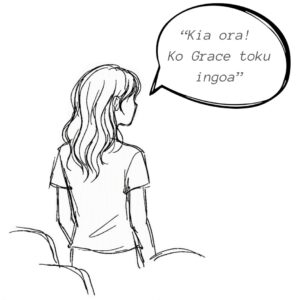
Here is an example of how the structure of a pepeha would start:
- Ko… te māunga = the mountain I am affiliated to
- Ko… te awa/roto/moana = the river/lake/sea I am affiliated to
Typically the faculty members would then introduce themselves to us as well, but we didn’t have time for this unfortunately. I remember standing up in front of everyone whilst I was speaking and they all seemed genuinely interested in what I had to say. The ceremony ends with some closing speeches (kōrero whakakapi), followed by kai (food) to finish off. Kai is a big part of Māori culture and we always bless the kai with a karakia (prayer) before eating. It was such a fascinating and welcoming experience to have had and made me very curious to learn more about NZ culture.
I did initially think this was widespread throughout the university, but I later learnt that the faculty of Health had a kaiārahi. This is a specific position given to someone who works to integrate and teach Māori customs within workplaces or educational settings.
My Pounamu Gift
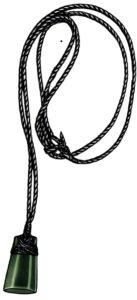
Another memorable, and probably one of the most special moments I’ve ever had, was the surprise of receiving a traditional Māori gift during my last week of placement. On behalf of my work friend and the rest of the faculty, myself and my fellow Bath friends were given pounamu in the form of a necklace. Pounamu means greenstone and is considered taonga (treasure) amongst Māori people. It can only be found in rivers along the west coast of NZ’s south island (the Māori name for the south island is te waipounamu meaning the waters of pounamu). There are strong beliefs around pounamu in which it should only be given to someone as a gift and never to be bought for yourself. I was given mine during a traditional ceremony in which the pounamu is blessed in wai (water), in my case it was in the little river that runs through the UC campus that was outside my office. Dipping the pounamu into wai, i.e. back to where it came from, is meant to offer protection and wash away any bad luck. One of our Māori faculty members led the ceremony and we ended it with the hongi, the traditional act of pressing one’s noses together. It was such a privilege to have experienced this and I wear my pounamu most days now. I always like knowing that I’ve taken home a piece of New Zealand with me.
Māori?
The way to pronounce the word māori can be slightly tricky and did almost take me the whole length of my placement to learn, but the easiest way is to think of the word ‘mouldy’ and replace the ‘d’ with a (slightly) rolled ‘r’. The macron over the a means you elongate that vowel.
Here area few other common words you come across:
Kia ora = Hello
Haere mai = welcome
Whānau = family
Aroha = love
Aotearoa = New Zealand (land of the long white cloud)
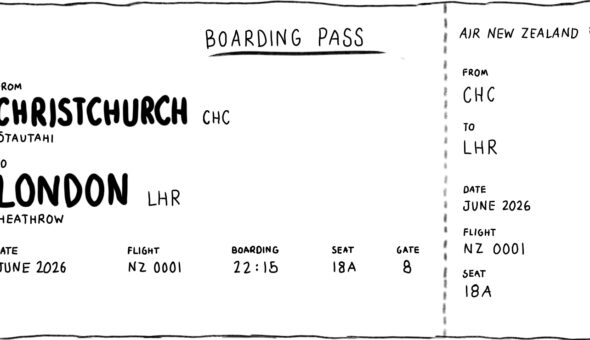
Learning and getting to experience Māori culture whilst completing my placement year was something I never expected. I felt so welcomed being in New Zealand which made the 18,000 km journey from home feel way less scary.
Thank you for reading!
Grace
Respond