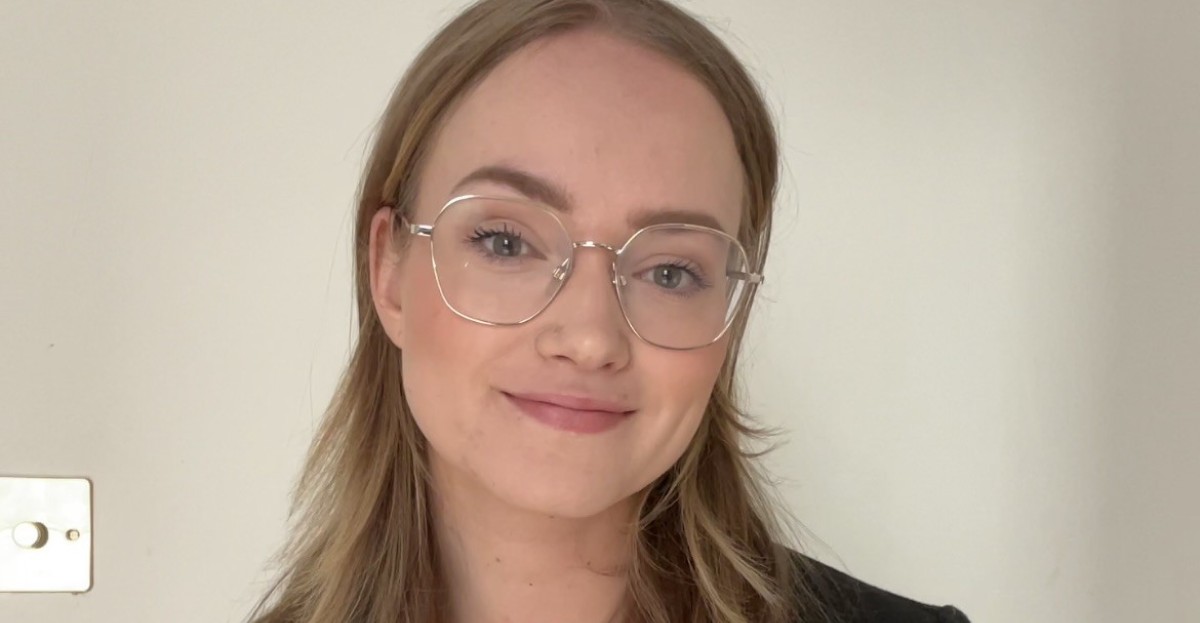
Mila is in the third year of an ESRC-funded PhD in Management, studying the impacts of chronic illness in the workplace. She tells us about her research, how people experience tension between their ambitions and their embodied experiences, and why it’s important to have a life away from your studies.
What drove you to choose Bath for your PhD?
I moved to Bath for my undergraduate degree, so I already knew that I really liked the University and the city – so when I came to my PhD, I knew that Bath was the obvious choice for me.
My background was actually in the Department for Health, but when there was an opening to do a PhD in the School of Management, I saw that as a great opportunity, especially knowing the School has a really good reputation.
What is your research topic and how did you decide on it?
My research explores how people living with chronic illnesses navigate their careers and their workplace experiences.
My supervisors – Dr Stefanie Gustafsson, Dr Katharina Chudzikowski and Professor Simona Giorgi – found that in management and organisation literature there has been a growing focus on the body, and we believe that focusing on workers with chronic illness could demonstrate how the body plays a pivotal role in career decisions and everyday work experiences.
Chronic illness can make the body's influence visible in ways that I think are often overlooked, and this offers a very powerful lens to understand how careers are shaped by different embodied realities.
What initially sparked your interest in the topic?
My personal experience with a chronic illness is very much a reason I became interested in this topic – connecting my individual experiences with broader concerns about inclusion and the future of work.
It’s made me very aware of how the world is structured around certain assumptions about constant productivity and stamina, and has shown me how important good management can be in shaping how people feel supported or excluded.
What are your findings so far?
I've used a qualitative approach and have conducted 50 interviews so far with people that are living with chronic illnesses. We've talked about their workplace experiences and their career experiences.
I chose interviews because I believe it allowed participants to share their lived experiences, which is something that is definitely lacking in both management and disability research.
I’m just beginning to analyse the interviews, but I think some strong findings are this tension that participants describe between their ambitions, their desire to do more, and the limits imposed by their bodies.
I've also found there are a lot of rare or less-understood conditions, and that can impose unique challenges – for example, having to educate others or struggling to be believed in the workplace.
How could your research be applied in a real-world setting?
There is a strong push by the UK government to reduce the disability employment gap and encourage disabled people to enter or remain in work. This is framed as positive, but I feel like there are a lot of barriers yet to be addressed if these policies are going to be successful.
I think my research really highlights that, so I'm hoping that my findings can influence policies. I've used quite a few charities in the recruitment of my participants, and so in exchange for that they are happy to share my research with their community.
What advice would you offer to others studying or considering a PhD?
I think my best advice is to look after yourself and to have other hobbies and interests outside of your PhD.
Doing a PhD is not easy and can be very up and down, so I think it’s pretty important to have that life away from it. I also believe that if you look after yourself, you will do a better job throughout.
Another thing is to choose a topic that you feel passionate about because that is ultimately what's going to keep you going. On the flip side of that, choosing something that is really personal can also be difficult, as it can be this constant reminder of something that's going on in your life.
Respond