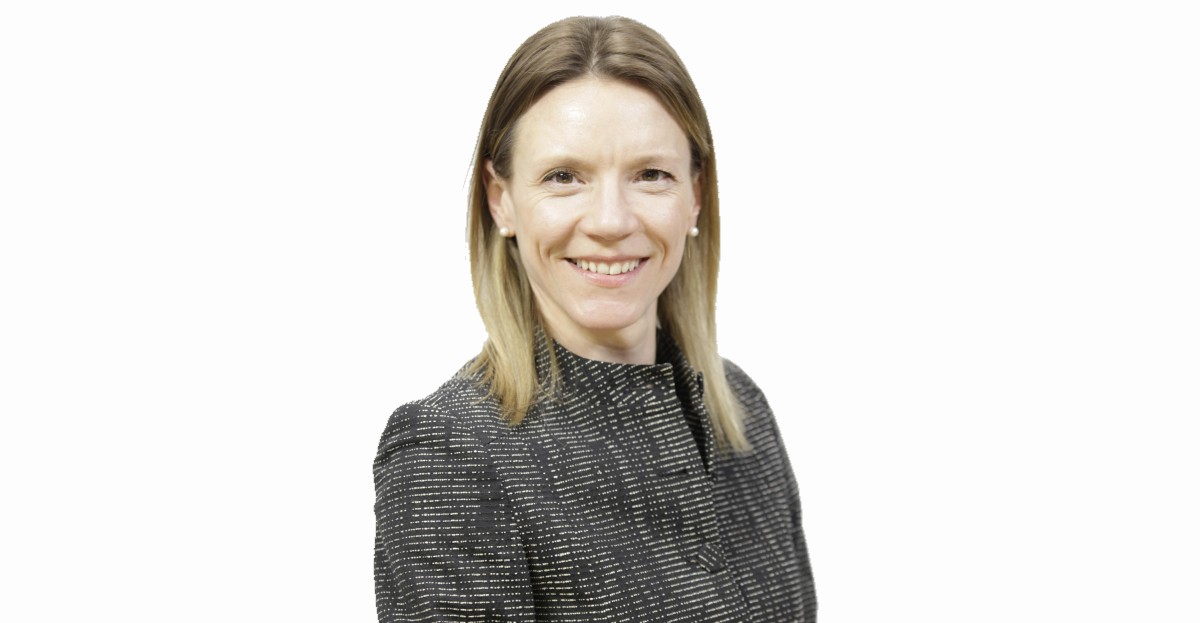
Maria is a third-year PhD student in the Strategy & Organisation Division, researching cooperation and togetherness in the context of third places. She explains the importance of public spaces, how a PhD changes your identity and why it’s important to keep research relevant.
What drove you to choose Bath for your PhD?
I've not come here straight from education – I've worked for over 15 years, so I have quite a bit of professional experience. I had a general idea of what I wanted to study for my PhD and so I reached out to various academics up and down the country working on and around the themes that interested me.
It so happened that I clicked with Dr Stefanie Gustafsson and that she had some funding available at the time. Professor Nancy Harding was then a good second supervisor fit, as there was some alignment in our research interests and methodological preferences.
I am proud to be associated with the University of Bath and the School of Management. Something I've noticed and appreciated now that I've got out into the academic world a bit more in these last couple of years is that when you go to conferences, our School is very well known, well respected, and always well represented at these events.
What is your research topic and how did you decide on that?
Initially I came in with an interest in organisational space and formulated a research proposal around that. It was the early days of the post-Covid world and there were a lot of questions being asked in the headlines about the purpose of the office or why people should come together versus working from home.
My research interest is at the intersection of cooperation and togetherness and organisational space, although nowadays I talk more about ‘spaces of organising’, because one thing that you learn as part of your PhD is to question everything. The ‘spaces of organising’ framing acknowledges that there is a lot of bottom-up organising happening by and among the people who use any given space (to work or otherwise), and their use of it is not simply dictated by its original organisational purpose or design intentions.
What sparked your initial interest in the topic?
There's an interior and spatial design side to my career experience, hence the focus on space. I always found the practice of it a bit shallow and superficial, so I am glad to now be able to think more deeply and theoretically about people in space. I've also worked in big, multinational corporations, and was always puzzled by certain aspects of how organisations worked or didn't work, and the fact that this was hardly ever questioned by anyone.
A lot of critical academic literature suggests that perhaps the way neoliberal capitalist organisations are set up is not encouraging or enabling cooperation, even if cooperation is widely recognised as one of the key principles of organisations and organising. So, right there I had an interesting tension to explore and try to get my head around.
I think most PhD students will probably say the same thing – that their thesis, their work is influenced by different aspects of their own experience, whether that’s professional or in their own lives. This has certainly been the case for me.
What kind of methods are you using and what are your findings so far?
I'm very much a qualitative researcher. I started with surveying two separate streams of management and organisation studies literature: the cooperation literature and the literature on organisational space. Unsurprisingly, the latter has been particularly vibrant in the post-Covid years. That's great because it's a live and topical academic debate that I'm looking to contribute to.
Beyond reviewing existing literature, I'm doing empirical work in the public areas of a major cultural institution in the City of London. I have become a bit of an ethnographer, interviewing and observing people in the space, taking photographs and studying archival material. Given my research site, I've pivoted my interest to third places – places that are between the home and the workplace – and the cooperation and togetherness within them.
These places are becoming ever more important, the more work shifts online and people move to non-traditional forms of employment such as freelancing. Despite these developments, the need for human contact has not gone away. A lot of young people, in particular, tell me that they really don't enjoy working from home on their own. They seek out places like the one that I'm studying because they want life around them – that's the exact word that they use.
As a researcher, it’s fascinating to observe how different user groups of this space come together and navigate this coexistence, with no top-down organising force or dynamic.
How do you hope that your findings can be applied in a real-world setting?
I think the first thing is that we need more third places, because the privatisation of public space is a real concern in a city like London. There are potential findings of interest to policymakers at different levels of government. The classic example is council-run libraries, right? In some places they're in a total state of disrepair and really losing their meaning and purpose. And then in other places, they're thriving because they have been rethought and they offer new services and opportunities for the community.
Spaces that have some connection with the arts or other leisure activities are widely cherished yet chronically under-funded. I think there is a general lack of understanding of how they support thriving communities, for example by bringing together people from across the generations and segments of society.
Although the techno-utopian view and vision of the world prioritises online contact and communities, we have to remember that these are unlike real-world communities in several respects. For one, a lot of the time we just gravitate – whether it's through choice or through algorithms – to people and causes who are similar to us, whereas in physical spaces it's not as easy. You're kind of forced sometimes to coexist with people who differ, and that is absolutely a good thing.
More broadly, I think there's something here that speaks to the importance of public space, of civic space and preserving that, even creating more of it where possible, in large and busy cities such as London.
What advice would you offer for either fellow PhD students or people considering a PhD?
It’s quite a serious commitment, both professionally and academically speaking. You become quite invested in it personally, and I think that's something worth being aware of – you kind of assume this academic identity, which in my experience is quite different to that of people whose identities are more rooted in some sort of corporate employment. It’s quite hard to switch off from being a social scientist at the end of the workday.
There's something unique about doing a PhD, which is genuine intellectual stimulation from start to finish – this was the primary reason why I decided to pursue it in the first place. So, if you like thinking, if you like reading, if you like writing, if you like learning, then you'll absolutely love it.
Personally, what I think is really important and what I'd encourage people considering a PhD to think about is the link between academia and practice. It's all well and good contributing to academic debates, which we are conditioned to do, but the reach of the ideas will remain limited if they remain contained within that academic community.
It's important to be outward-looking at least as much as inward-looking, so consider: why is this research topical? Why is it timely? Why might it be relevant to practitioners in industry or in policy-making circles? The good news is that universities are also increasingly receptive to academics actively engaging with the wider world around us.
Respond