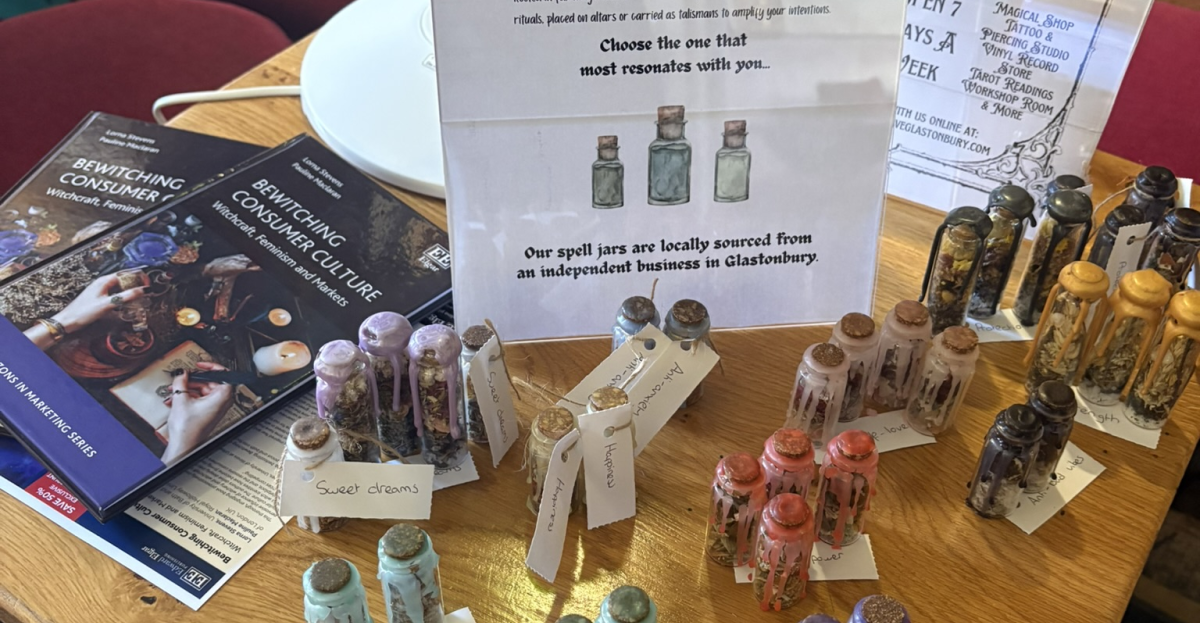
Dr Roman Pavlyuchenko delivers his verdict on the latest book from Dr Lorna Stevens – which explores the growing interest in witchcraft in the marketplace and reveals how the witch has evolved into a feminist heroine for our times.
As all good anthropology does, Bewitching Consumer Culture: Witchcraft, Feminism and Markets by my colleague Dr Lorna Stevens and esteemed Professor Pauline Maclaran makes the strange familiar and the familiar strange. Suitable for both neophytes and seasoned experts, the book is a tour de force of facts, fiction and top-notch cultural critique that will make you rethink everything you know (or think you know) about witches and witchcraft.
Chapter 1 explores the history of witchcraft and the origins of its basic iconography: broomsticks, cauldrons and black cats. Yet the authors show that these should not be dismissed as mere trivia in service of the Hollywood-industrial complex. Rather, these are ancient symbols of feminist emancipation and revolt against the patriarchal superstructures.
Chapter 2 offers an insightful analysis of how the witch archetype has been preserved and challenged in popular culture. Each generation has their own witch growing up, but it was extremely refreshing to see how other witches have been portrayed throughout the years – always different, but always serving as the vessels of diverse viewpoints that evolve with the times.
Magical places
Chapter 3 delivers a powerful re-exploration of Glastonbury – the site of the UK's biggest annual music festival – as a living, breathing repository of all things witchcraft. Glastonbury is just one short broomstick flight away from Bath, but I was surprised to learn how much there is to discover there if one takes witchcraft seriously. Travel industry, take note!
Chapter 4 demonstrates a strong and counterintuitive link between witchcraft and sustainability by looking at Green Witches, the early pioneers of recycling, foraging and all other things we so desperately need. In a world struggling to chart a clear path forward, being in sync with Mother Nature is a message that resonates loud and clear.
Chapter 5 takes a U-turn towards TikTok, where Glam Witches are reinventing the beauty standards for today's and tomorrow's little sorceresses. Both Lorna and Pauline are consumer researchers, and this chapter is where it really shows. A must-read for influencers, business scholars and cultural entrepreneurs! Also, did you know that ‘glamour’ comes from the word ‘grimoire’?
Maiden, mother, crone
Chapter 6 reinvents the crone archetype. Traditionally a derogatory term for an old woman (whose one desire is to steal one's youth and beauty, naturally), the crone is reimagined here as a leading figure who uses her Wise Anger to drive reform, upend age-old stereotypes, and challenge the sexist cliches our culture is full of. If you are as in love with Judy Dench as I am, this is mandatory reading.
Lastly, Chapter 7 invites us to rethink covens as places of solidarity, inclusion, self-discovery and even political resistance. With some magic on the side, what covens are really about are shared rituals and social networks that bring people closer in a supportive and revelatory environment. We can be witches, but we are social animals first and foremost.
Looking back at the wonderful time I had reading this short, but endlessly insightful work, I have just one scathing critique: the fact that we have to wait some time for a sequel is a painful grudge indeed!
Respond