
Evidence shows that ‘choking’, or non-fatal strangulation (NFS), during sex carries significant risks of harm, and that these potential risks are not widely understood. However, recent reports indicate that NFS during sex is becoming increasingly common. Prevalent myths and misconceptions about NFS, often perpetuated by pornography and the media, make it all the more important to talk about.
This blog covers:
- What is non-fatal strangulation?
- The anatomy of strangulation and its risks
- Strangulation, sex and consent
- The emotional and psychological impact of strangulation
- Where to go for further advice, information and support
What you can take away from this blog is that there is no safe way to strangle someone and that when being strangled, you cannot consent to sexual activity or make rational decisions. If you have experienced NFS, you are not alone. There is support available if you are finding it hard to cope with the feelings that have followed your experience. You can find more detail about the support available at the bottom of the blog post.
What is non-fatal strangulation or ‘choking’?
‘Choking’ during sex has become increasingly common, with a recent survey estimating that 66% of sexually active 16–34-year-olds had been strangled at least once during sex. In pornography, ‘choking’ is often depicted as enjoyable and the pressure to engage in the act can be very strong. However, there is no safe way to engage in strangulation or ‘choking’ during sex.
Strangulation is defined by the Institute for Addressing Strangulation (IFAS) as ‘obstruction or compression of blood vessels and/or airways by external pressure to the neck impeding normal breathing or circulation of the blood.’ When strangulation is used in consensual sex, it is commonly referred to as ‘choking’ or ‘breath play’.
The anatomy of strangulation and its risks
Strangulation can be caused by holding or pressing a hand or hands, an arm (such as in a headlock) or an object (like a scarf or belt) around someone’s neck, blocking the airways. When breathing stops or is restricted, this prevents oxygen from reaching the brain. This is called asphyxia. The pressure on the neck can also limit blood flow both to and from the brain as the carotid artery and jugular vein are restricted.
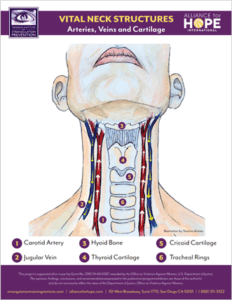
Figure 1: Anatomic diagram of the neck provided by Alliance for Hope International
The pressure needed to cause asphyxia is very little, as the neck is a sensitive part of the body. Strangulation for between 5 and 10 seconds can cause unconsciousness and severe long-term brain and respiratory damage. Between 1 and 3 minutes, it can cause death. Death is also possible in the days after strangulation from the increased likelihood of strokes, blood flow complications such as clots, and respiratory illnesses such as pneumonia.
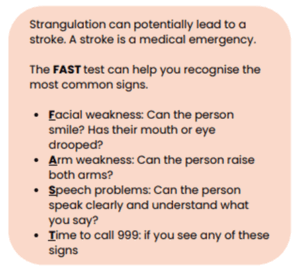
IFAS has outlined the range of symptoms of strangulation both during and after the act, such as sight and hearing issues, loss of control of the bladder or bowels, pain in the neck and voice changes. Additionally, IFAS uses the FAST acronym to advise checking for stroke symptoms, which can develop after strangulation. If you notice the signs of a stroke, you should call 999 immediately.
Some people engage in strangulation because it can feel good. As Professor Catherine White, Medical Director at IFAS explains,
"Often people say they experience a 'euphoric' feeling during strangulation, but that feeling is your brain cells being damaged – and you can’t regenerate new ones. If strangulation happens frequently, you’re putting yourself at risk of nerve damage, stroke and even death."
Seeking medical attention after being strangled is the safest way to check if there has been any long-term harm caused to the body, whether you have physical symptoms or not.
Strangulation, sex and consent
For someone to be able to consent to sexual activity they must have the capacity and freedom to make informed choices about what they are consenting to. Someone cannot consent to sex when their brain is not receiving enough oxygen, and they cannot consent if they are unconscious. Sexual consent may also be withdrawn at any time, and strangulation can prevent someone from being able to do this.
Oxygen is essential for adequate brain functioning. Even if the strangulation allows for some breathing, the restricted oxygen and blood flow can still cause the person to pass out, become disoriented, confused, or experience memory loss. Experiencing asphyxia whilst having sex can be very dangerous as it makes it difficult to decide what sexual activity you consent to, and to be able to change your mind. The person strangling may not understand the full impact of the strangulation in the moment and may continue to engage in sexual activity, which could constitute sexual violence. Once the initial effects wear off, it can be difficult to remember the event in its entirety, with some people never gaining back the memory of what happened.
It’s also important to note that suffocation and strangulation are criminal offences, and if someone is harmed as a result of being strangled, their consent to the activity is not a defence. Find out more about it in our ‘Choking’ during sex isn’t just risky, it’s against the law! blog.
The emotional and psychological impact of strangulation
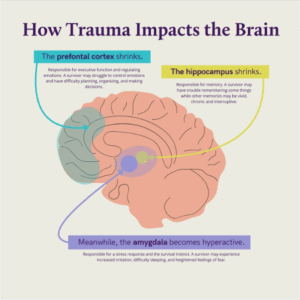
Although strangulation may be discussed in advance and agreed upon before engaging in it, the risk of harm remains extremely high. Even if you have initially consented, experiencing strangulation can provoke a sense of terror. This is because the brain enters survival mode by activating the amygdala, which automatically activates the survival response most likely to ensure our survival. Fight or flight are common responses in dangerous situations; however, in interpersonal dynamics such as during sex, the body may enter the freeze, flop, or friend state (for more information, visit the webpage The 5 Fs: fight, flight, freeze, flop and friend). Whichever reaction the body has, it is instinctual and is not chosen rationally (see Figure 3). It can be hard to come to terms with the reaction that you might have had once the threat has passed, but it is important to remember that it is not your fault.
If the strangulation was not consensual, it can cause severe psychological harm due to the immense fear it triggers. There is also a clear link between strangulation and domestic violence; strangulation can be used as a form of power and control in a sexual relationship. The Training Institute for Strangulation Prevention (TISP) note that strangulation is one of the most common, and most dangerous, forms of domestic violence because of the high risk of severe harm and death. Strangulation is a risk factor for homicide, meaning that if someone has experienced strangulation from a partner it is a strong indicator that the person strangling may go on to hurt them further, or even kill them, in the future. Knowing this is important when considering whether to engage in strangulation during sex. A sexual partner strangling you unexpectedly, or pressuring you to engage in strangulation, is illegal and could be a part of a wider picture of domestic abuse.
The long-term psychological effect of strangulation can be just as impactful as physical symptoms. If the strangulation took place during sex, it may be difficult to engage in sexual intimacy after experiencing strangulation due to the fear that it might happen again. A survivor of NFS may experience flashbacks, nightmares, panic attacks, and other stress responses, which are all symptoms of post-traumatic stress disorder. Survivors often feel shame and guilt surrounding their experience and fear telling others because of these feelings. These are all normal responses to trauma and can feel very overwhelming. If you are feeling any of the above, support is available, and you are not alone.
The University of Bath is committed to responding to NFS, raising awareness, and ensuring that abuse is always recognised for what it is: #NeverOK.
Support at the University of Bath
If you need support after an experience of strangulation, there are many places to turn to.
In an emergency (if you feel unsafe, like someone will hurt you, or you may hurt yourself), call 999.
For students
Student Support Advisers can help. Visit the Roper Centre (4 West) or complete the online form. They may refer you to the Sexual Violence and Domestic Abuse Response Service (SVDARS), who offer specialist support, safety advice, and guidance on reporting.
Students and staff can also report an incident or access confidential advice through the Support and Report tool.
For staff
Staff can speak to their HR Advisor for signposting to support.
Health Assured also offers free, confidential counselling and wellbeing advice to staff members.
Specialist external support
- Visit a Sexual Assault Referral Centre (SARC) for support after sexual harm. The Bridge is the SARC for Bath and Somerset and they provide support 24/7
- Student Support at the University of Bath
- National Domestic Abuse Helpline (run by Refuge) available 24/7: 0800 2000 247
- Galop (for LGBTQ+ survivors of abuse) available various times, see website: 0800 999 5428
- Men’s Advice Line (run by Respect) available Mon-Fri 10am-5pm: 0808 8010 327
- Respect Phoneline (for people perpetrating harm & abuse) available Mon-Fri 10am-5pm: 0808 8024 040
Respond