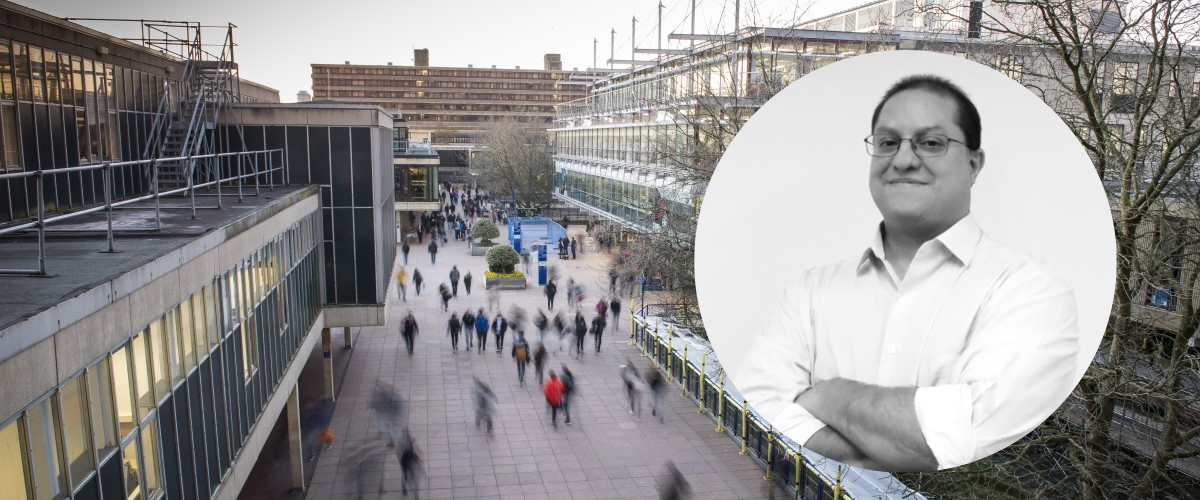
Cycling up to campus, running the Bath Half twice, and feeling snow fall for the first time outside the library. Double-alumnus Horacio has "nothing but good memories of Bath."
He's always been a mathematical thinker and now applies that mindset to his role as Head of Unstructured Data Analytics and AI at Kantar.
Why did you choose to study at Bath?
I wanted to study in England. I had been learning and studying English all my life and I wanted it to actually use it. My thesis advisor from my undergrad recommended Bath and when I looked at the programme, I was sold.
Can you tell us about your experience of studying here?
I loved being in Bath! The programme was challenging and I learnt a lot, but it wasn’t only that, it also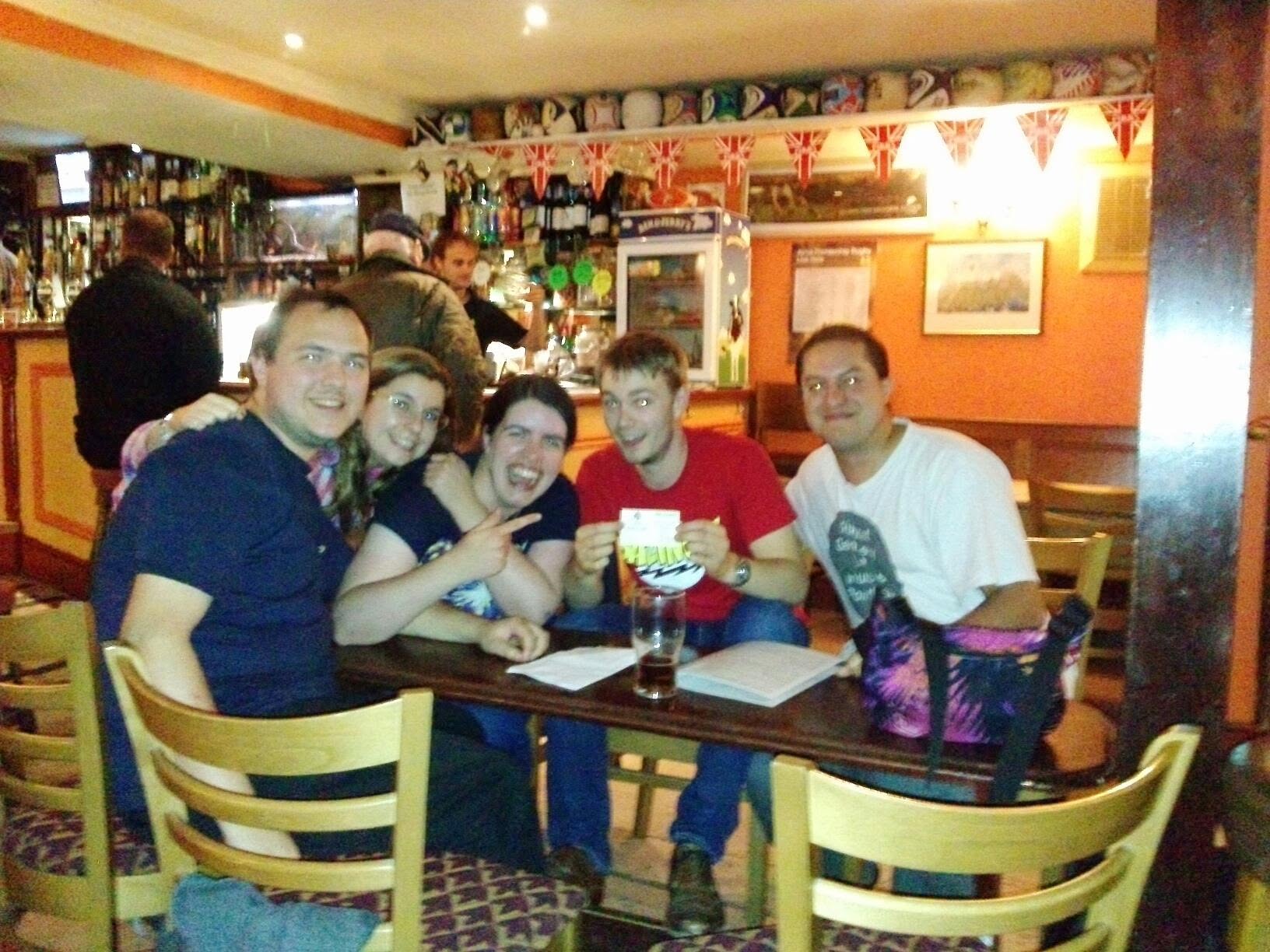 was the number of friends and people I had the chance to meet. I also got to learn German and a little Chinese.
I played football, basketball, and badminton; the latter is now my favourite sport. I still remember the first time I felt the snow falling on my face while I was walking in front of the library. I was able to cycle up the hill to get to campus, and I ran the Bath Half twice. I have nothing but good memories of Bath.
Describe your career journey since graduating.
I went back to Mexico after finishing my PhD, I taught some classes in Probability, Stochastic Processes, and Statistics at a university, and went back to the company I was working at before Bath.
After three years, there was the opportunity to relocate to London, so I took it. I have been part of the Global Data Science team at Kantar for the last eight years. My actual job title is Head of Unstructured Data Analytics and AI, but in my day to day I say I am the Algorithms Director.
Can you tell us about a project that you're especially proud of?
One of the things we do at Kantar is measure the creative quality of an advert. In other words, how much people enjoy it, engage with it, remember the brand, and so on.
To do this, we recreate viewing environments like YouTube, show the advert to a sample of people, and then ask them a series of survey questions.
These questions typically use a Likert scale (a psychometric rating tool). Over time, we noticed that the way people respond to these scales has shifted. As audiences moved from watching TV to consuming more content on mobiles, they're increasingly giving higher ratings across the board.
The challenge was that we wanted the definition of a "good" advert to remain consistent over time, regardless of these changing response patterns. Our solution was to recalibrate historical data so that it retained the same ranking, but reflected today's distribution of scores. The methodology itself is relatively simple, but I think the solution was particularly elegant because it was clever and computationally inexpensive.
Kantar's LINK+ methodology is worth millions annually which strengthens the confidence in the methodology. Stakeholders are very happy!
How has AI changed your role over the past five years?
I was brought to this position due to AI eight years ago. I'd say AI has changed my role quite a lot! In 2017, we created some Large Language Models (LLMs) to analyse texts, but when LLMs became a commodity in 2022, the game was completely and forever changed.
It's also completely changed how we code. Productivity has improved – what would have previously taken us a couple of weeks to code we now complete in a couple of days, if not hours.
What has become evident to me is that what I know has become even more valuable with AI. I think Steve Jobs said it better than me, AI is like a bicycle for the mind.
What do you enjoy most about your career?
Working with my team is the most fun. All my co-workers are great. I also like trying to force mathematical ideas into market research problems. I enjoy being that bridge between worlds.
Has anything surprised you along the way?
In Mexico we have a saying that roughly translates as “the lion believes everyone has its fitness”, which means something like one believes that everybody thinks the same way one does. I have come to realise this is not true, so I’m always surprised by people who see things differently or understand things in a different way than mine.
What are the three things someone would need to know to be successful in a similar role to yours?
- Talk to the stakeholders. Understand their needs and requirements and speak their language.
- Keep learning. Read the new papers, test the new technologies and find where they work and where they don’t. Push the limits.
- Embrace the changes. Be cool with new technologies, they're here to stay. Flow with new organisations and restructures. Bruce Lee said it better than me: “Be water, my friend.”
How did your studies help you to develop?
My studies are part of me, I am a mathematician not only because I have a paper that says so, but also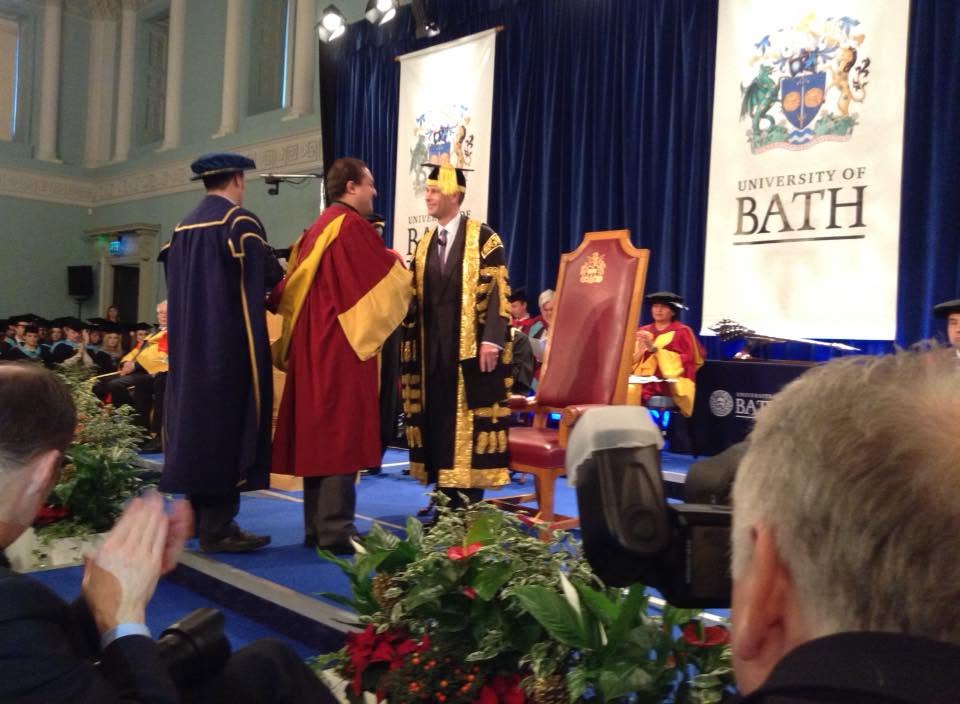 because that’s how I think, and I’ve always been like that.
Studying mathematics helped me to formalise my thought process and I learnt a lot of things I didn’t know. Everything I do, I do it from a mathematical point of view.
What advice would you give to prospective students thinking about studying your course at Bath?
Learn more than what you’re taught in your courses, learn from the small city, learn from your course mates, learn from the people you don’t study with, learn from people that come from different places.
And run the Bath Half! If anything, you will learn that you don’t enjoy running, but it is quite an experience.
Respond