Elle Wilks came to Bath with dreams of helping young people thrive – a thread that has been woven through her life since. And now, after an impressive career in the third sector, she has founded Fearless Girls Club, an award-winning community enterprise empowering young women.
Why did you choose to study at Bath?
I visited lots of universities before making my decision, so choosing Bath was a very deliberate one. It had an excellent academic reputation, I loved the idea of a campus university and the setting was hard to beat. I also had friends from school who were already there and spoke so highly of both the course and student life that it reinforced everything I'd seen during my own visits. It felt like somewhere I could genuinely picture myself spending the next four years.
Did you have a particular career in mind when you chose your course?
Yes. I chose Psychology because I wanted to become either an Educational or Clinical Psychologist. Although my career took a different direction, that interest in understanding and helping people (especially children and young adults) and has been the common thread running through everything I've done since.
Can you tell us about your experience of studying here? Any favourite memories, or places to go on campus and in the city?
I absolutely loved my time at Bath. I lived in Eastwood in my first year before moving into shared houses in Oldfield Park and later closer to the city centre. Some of my happiest memories are long summer evenings sitting with friends by the lake. The Students' Union was a huge part of university life too, and we definitely made the most of the student nightlife in Bath, from Moles and The Fez to Cadillacs and Vodka Revolution!
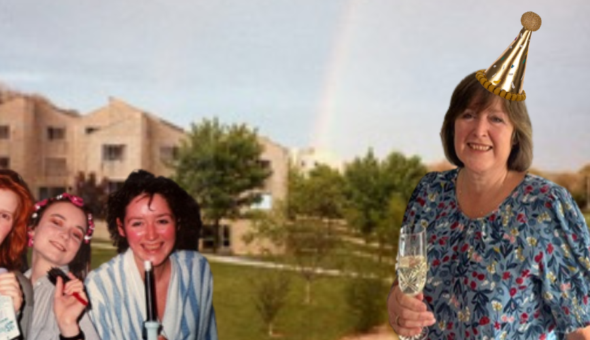
I loved how compact Bath was. You could walk everywhere, whether that was lectures, shopping, cafés, restaurants or pubs. As a huge Jane Austen fan, I never got tired of the city's beautiful architecture and rich history. One memory that still makes me smile is spending the day wandering around Bath with my friends wearing curlers in our hair before our graduation ball.
Most importantly, Bath is where I met some of my closest friends. More than twenty years later, they're still my best friends.
Were you a part of any societies or sports clubs during your time at Bath? What did you enjoy most about them?
I played both netball and volleyball, which was a great way to meet people outside my course. I also volunteered with a local charity supporting young people with eating disorders, worked part-time in the campus nursery and became a Student Wellbeing Advisor in my final year. I also worked with several lecturers in my department, transcribing interviews for their research projects, which gave me an insight into research beyond my own studies. Looking back, I think I was drawn to opportunities that involved supporting people even then.
Where has your career taken you since graduation?
After graduating, I worked in marketing and fundraising before building a career leading charities and social enterprises. Over the past two decades I've worked across children's services, education, mental health, disability and gender equality, including roles as CEO of mental health charity Woking Mind and Deputy CEO of Lightyear Foundation, a children’s disability charity. Alongside that, I founded Raising Rebels, a campaign encouraging parents to challenge gender stereotypes in childhood, before co-founding Fearless Girls Club, an award-winning social enterprise helping girls aged 8-12 build confidence, resilience and self-belief through weekly clubs, workshops and subscription activity boxes.
No two days are ever the same. One morning I might be writing funding bids or designing new activities, and in the afternoon writing the magazine for our subscription boxes or meeting schools, and the evening running one of our after-school clubs. Running a social enterprise means wearing lots of different hats, but I wouldn't have it any other way.
What do you enjoy most about what you do?
Making a genuine difference to children's mental health and wellbeing has been the thread running through my entire career, and it's still what motivates me every day. There's something incredibly special about seeing a child discover a sense of self and confidence they didn't realise they had, speak up for the first time or simply leave a session standing a little taller than when they arrived. Knowing you've played a small part in that journey is a real privilege.
What inspired you to set up Fearless Girls Club?
The seeds were planted during my Psychology degree. I became fascinated by gender studies and the way girls and women are represented (and treated) in literature, history and the media. That sparked a lifelong interest in girls’ and women’s mental health. Combined with my experience leading charities and working in children's mental health, I became increasingly convinced that we needed to do more to support girls before the pressures of adolescence take hold. Fearless Girls Club was created to give girls the confidence, skills and support to navigate those challenges.
We're already seeing girls grow in confidence, develop stronger friendships and become more willing to challenge stereotypes and believe in themselves. Parents regularly tell us they see positive changes at home and teachers notice differences in school too. Our ambition is to make that impact available to many more girls across the UK. Every girl deserves the chance to grow up knowing her worth, speaking up and believing she can achieve whatever she sets her mind to.
How did your Bath experience help to develop you, professionally and/or personally? If you took part in a placement, can you talk a bit about that experience?
My third-year placement with Surrey CAMHS (Child and Adolescent Mental Health Service) was a real turning point. I worked as part of a multidisciplinary team and it gave me valuable insight into clinical psychology and evidence-based practice. More broadly, Bath taught me to be curious. It encouraged me to volunteer, work alongside researchers, take opportunities outside my course and meet people with different perspectives. That willingness to keep learning has stayed with me throughout my career.
If you could go back in time to when you were a Bath student, how would you spend 24 hours?
I'd start with breakfast in the communal kitchen with my housemates. Some of my favourite memories are of everyone drifting in and out, chatting before heading off to lectures.
I'd then head to the library, check my emails (I didn’t have a laptop or PC – or a phone with internet access!), hunt down the books I needed and inevitably spend far too long photocopying journal articles and printing notes. I loved the library and spent countless hours there over the four years.
After that, I'd spend the afternoon sitting with friends by the lake in the amphitheatre, putting the world to rights, before wandering into the city for a bit of shopping and something to eat. Back at the house, we'd inevitably end up in someone's room listening to music and chatting before attempting to cook dinner together, with varying degrees of success! I'd finish the day with a trip to one of Bath's fantastic theatres or one of the city's many gorgeous pubs.
And I'd definitely make one final stop at the incredible Chinese takeaway we used to visit in Oldfield Park. I was notorious for eating everyone's leftovers for breakfast the next morning, much to my housemates' horror! (That’s what you get for living with biologists.)
What advice would you give to prospective students thinking about studying at Bath?
If you're considering Bath, visit it. Walk around the campus, explore the city and imagine yourself living there. That's what I did, and it made my decision an easy one. If you do choose Bath, make the most of every opportunity. Join societies, volunteer, try new sports, meet people outside your course and say yes more often than you say no. Some of the experiences that shape you most are the ones you'd never have planned.
What advice would you give to young alumni with ambitions to change the world?
You don't have to have all the answers before you start. Find a problem you genuinely care about, stay curious and be prepared to keep learning. Meaningful change rarely happens overnight, but small actions, taken consistently over time, really do add up.
Respond