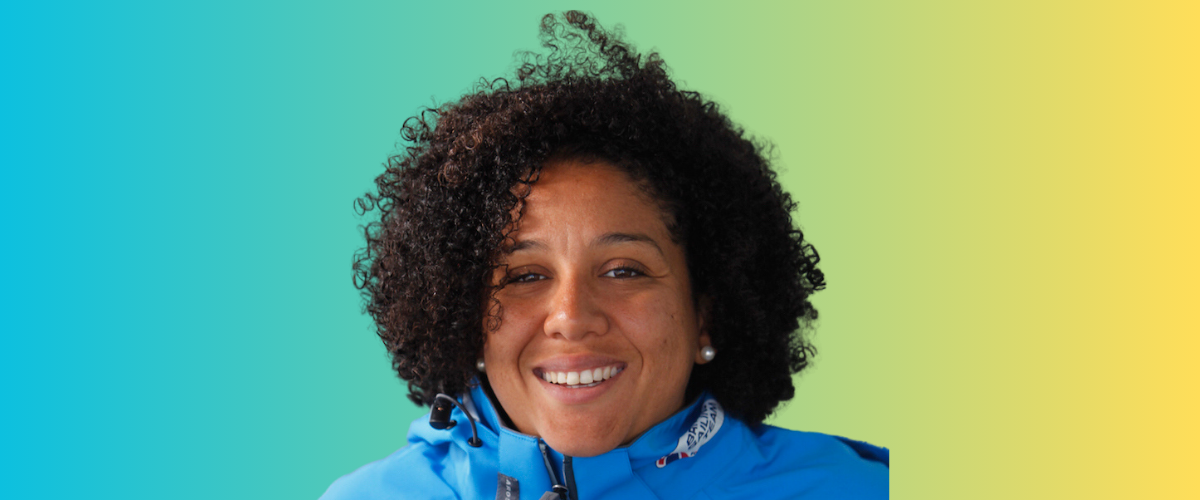
After graduating from Bath, Alexandra went on to compete at three Paralympic Games alongside sailing partner Niki Birrell, winning bronze at London 2012 and Rio 2016.
Today, she's using the lessons she learned from elite sport to tackle one of its biggest challenges: becoming more sustainable.
Can you tell us what attracted you to studying Natural Sciences and what made you choose Bath?
I was a bit of a generalist, but I knew I wanted to go down the science route. Biology interested me most, but Natural Sciences gave me the breadth to explore a wider range of subjects, which appealed to me.
As for Bath, when I came to an open day everyone seemed genuinely happy. I actually asked one of the students showing us around whether it was all a facade, because people seemed unusually enthusiastic. They laughed and said they were graduating that year and were genuinely sad to be leaving because they'd had such an amazing experience. That really stuck with me. It felt like somewhere I could enjoy myself while getting a fantastic education.
Was that your experience once you arrived?
Absolutely. I was just as sad to leave. I had a fantastic three years and met some of my closest friends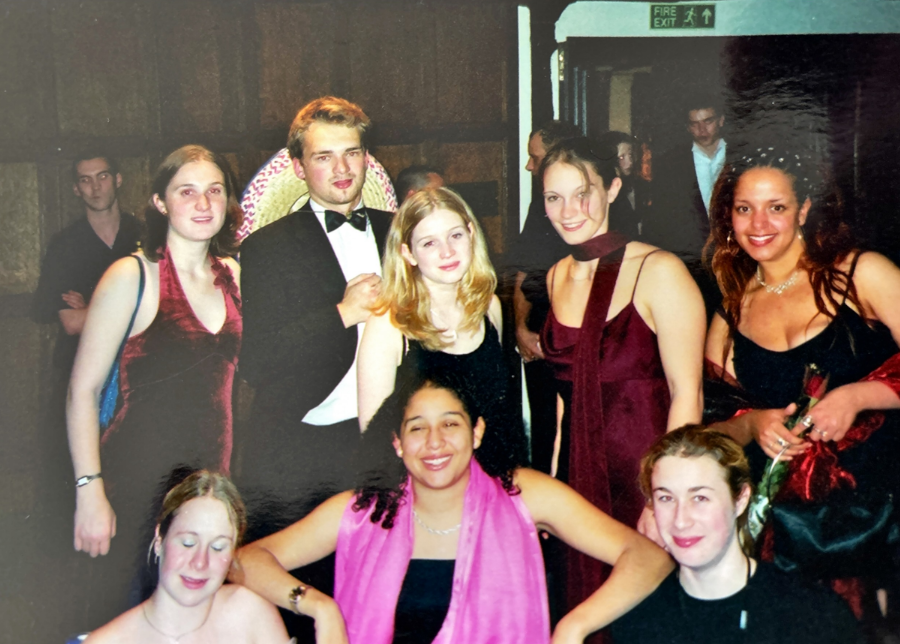 here. It was a brilliant environment to learn in, but it was also a really enjoyable place to live. The campus had a great atmosphere, there was so much going on.
Were you involved in sport while you were at Bath?
Not in the way I'd hoped. I tried to join a few clubs, but at that time many of them didn't know how to facilitate someone using a wheelchair. I think I was either the only wheelchair user at the University or one of only two. This was 25 years ago, and you just didn't see as many disabled students in higher education.
I found other ways to get involved, though. I spent a lot of time with RAG, got involved with URB and helped out at the SU.
Where did life take you after graduating?
When I left, I headed into the wonderful world of work. I quickly discovered that finding a job wasn't as straightforward as I'd expected. Looking back, it was probably the first time I experienced discrimination because of my disability. I'd spent years in education, having had my accident when I was 13, and suddenly I realised that the working world was different.
I decided to apply for a master's. I studied Environmental Technology at Imperial College London. While I was there, I got into sailing. I'd dabbled before, but a new Paralympic boat class had been introduced, and someone was looking for a helm who met the classification criteria. I thought, "Why not?"
At the end of the year, I told my parents that I'd love to sail full time. Reality was a little different, so I accepted a job with BP in their environmental department. I wanted to understand how change could be driven from inside rather than just throwing eggs from the outside.
Then I received a call from the Royal Yachting Association. They were putting together a new Paralympic partnership, and that's when I teamed up with my sailing partner, Niki Birrell. We went on to compete together for 10 years across three Paralympic Games.
When you first started sailing competitively, did you ever imagine it would become so serious?
Not initially. With my first sailing partner, it was very much something I did for fun, although his ambition was always to reach the Paralympics.
Things changed when I was paired with Niki. The RYA had deliberately brought us together as potential contenders for the 2008 Beijing Paralympics. We were initially there to challenge the established British team, but we ended up winning the selection trials and securing the place ourselves.
That left us with just nine months to prepare for the Games. In a technical sport like sailing, where so much time is spent developing and preparing the boat as well as training, that was a huge challenge. But it was also an incredible learning experience.
How did Beijing 2008 go?
It was a difficult Games. We finished fifth, which, looking back, was actually a very good result considering how little time we'd had together, but at the time we were devastated.
Eventually, though, we recognised what we'd achieved. We'd only been together for nine months, and we'd become genuine medal contenders. In many ways, Beijing was the start of something much bigger.
After Beijing came London 2012, where you won bronze. How did you get there?
We set ourselves one clear goal for the first year of the cycle: win the world championships. That was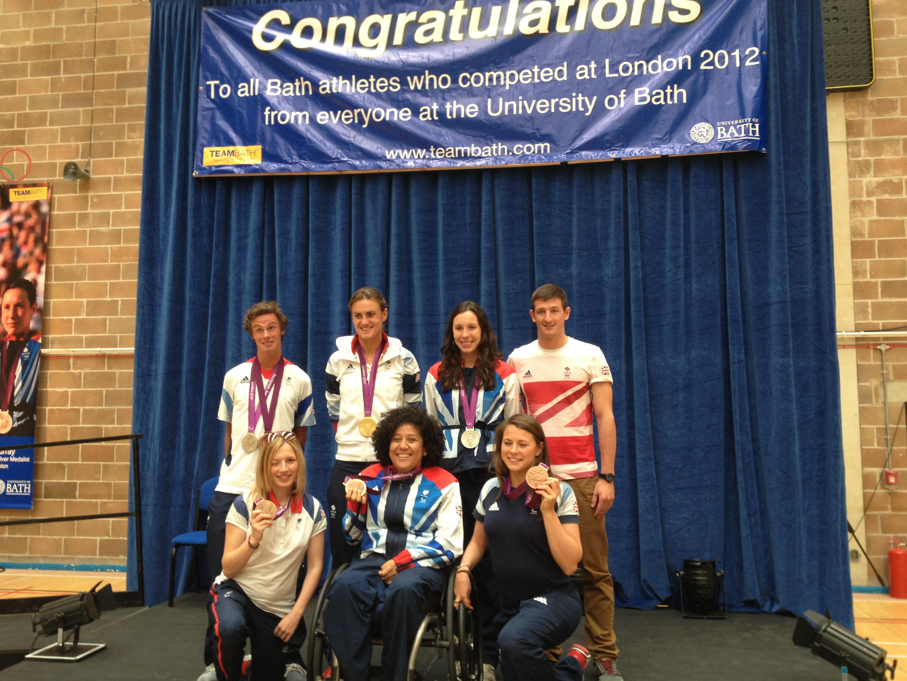 important, not only because it would prove we could compete with the best, but also because it would have a huge impact on our funding.
We spent most of that year finishing second. Then we finally won the World Championships, which completely changed our confidence as a team. That victory set us up for the next four years. We went on to win back-to-back world titles and arrived at London 2012 as one of the favourites.
At the time, we weren't happy with the bronze medal because we'd gone in aiming to win. Looking back, though, any Paralympic medal at a home Games is incredibly special, regardless of the colour.
London was a defining moment for the Paralympic movement. It felt like the point where Paralympic sport became recognised as a major sporting event in its own right.
Channel 4 taking on the Paralympics was a real game changer. Suddenly Paralympians had a platform and individual profiles. Before that, we'd often just feature in a highlights package. London created an opportunity to enter the mainstream.
You also won another Paralympic medal in Rio 2016. How did that experience compare?
Rio was a much tougher cycle. We spent far more time away from home and were based in Rio for long periods, training in challenging conditions. It was a difficult four years and a difficult regatta, both technically and as a partnership.
Winning another Paralympic medal made it worthwhile, but it was certainly a much harder journey than London.
Looking back on your sporting career, what achievement are you most proud of?
Winning that first World Championship. As much as I'd love to say it was an Olympic medal, that world title represented a real turning point for us. It was the moment we proved to ourselves that we belonged at the very top of the sport.
After retiring from elite sport, you moved into sustainability. What inspired that career change?
Even while I was competing, I knew I wanted to return to environmental work. The challenge was finding a way to combine that with everything I'd learned during 10 years in elite sport.
At the time, Sir Ben Ainslie's racing team was using sustainability as a key part of its work, so I got in touch. The person leading sustainability had just moved on, and I was offered the chance to do some project work through her consultancy. That was my way into the sector.
Where did your career develop from there?
I worked for five or six years supporting a range of clients across sport and beyond, including athletics. During that time, I was seconded to SailGP, which was just starting out as a global sailing league. They wanted sustainability to be embedded from the very beginning rather than added later, so I helped develop their strategy before moving in-house to manage the sustainability programme.
After that, I joined World Sailing to lead sustainability across the international federation. It wasn't necessarily that I wanted to stay in sailing, but the opportunity came along at exactly the right time, and it gave me the chance to influence the sport on a much broader scale.
What does making sport more sustainable involve?
There are two sides to it.
The first is reducing the environmental impact of sport itself. Every sporting event has a footprint through travel, broadcasting, food, waste and all the logistics involved in staging competitions. The challenge is reducing those impacts as much as possible.
The second is using sport as a platform to influence behaviour. More people watch sport than watch the news, so it has an incredible ability to inspire change. If fans see sports organisations and athletes making responsible choices, they're far more likely to adopt those behaviours themselves.
Ultimately, sustainability is a numbers game. We need millions of people making better choices, and sport has the reach to help make that happen in a way that few other industries can.
What excites you most about making sport more sustainable, and what are the biggest challenges?
What excites me most is sport's ability to influence huge numbers of people and encourage real behaviour change. Sometimes the actions themselves seem quite small. Encouraging people to travel to events by train or bring a reusable water bottle might not sound revolutionary, but if you can persuade 60,000 people in a stadium to do that, and they continue those habits at home and pass them on to their children, that's a significant shift.
The challenges are more complicated. Greenwashing is a major issue, and sponsorship remains one of the biggest conversations. We've removed tobacco sponsorship from sport, but fossil fuel companies are still highly visible at many major events. We have to ask what that means and whether those partnerships align with the values sport wants to represent. It's still an elephant in the room.
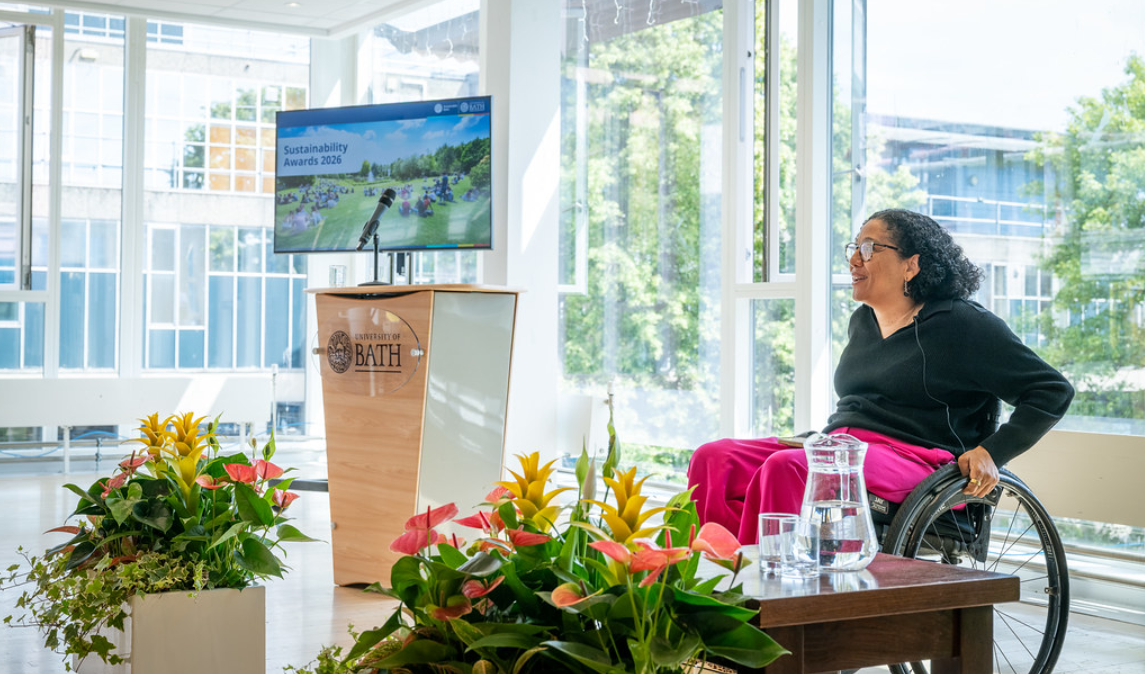
Then there's the direct impact of climate change itself. We're already seeing sporting events disrupted by extreme weather. At recent international competitions we've seen athletes competing in intense heat, hydration breaks becoming necessary and changing weather patterns affecting performance. In sailing, for example, we've experienced events with almost no wind because of the conditions.
Grassroots sport is affected too. When playing fields are flooded or temperatures become too high, children can't play. That has consequences for physical health, wellbeing and the future talent pipeline. Every elite athlete starts on a local pitch or playing field somewhere, so we can't pretend these issues only affect professional sport. It's all connected.
What advice would you give to current students who want to build careers that make a positive impact?
The biggest thing I'd say is that you don't have to work in sustainability to make a difference.
As sustainability professionals, much of our role is helping other people take responsibility within their own areas. It can't just be one person's job.
Whether you become an accountant, an engineer, a scientist or work in any other profession, you'll have opportunities to make more sustainable decisions and influence those around you.
That's probably the most important message. Creating positive change isn't limited to people with "sustainability" in their job title. It's about making responsible choices wherever your career takes you.
A note on sustainability at Bath from Richard Jackson, Director of Sustainability & Space Management:
As Alexandra's career demonstrates, sport can be a powerful catalyst for sustainability. At Bath, we're building on our reputation for sporting excellence and sustainability impact to help lead the sector's response to environmental and social challenges. We're already making a difference for sustainability through our research, innovation and education, as well as through the way we operate as an institution.
Later this year, we'll launch a new Sustainability Plan that brings together our expertise, partners and wider community to pioneer new approaches to sustainable sport. From reducing environmental impacts to harnessing sport's unique ability to inspire behaviour change at scale, we're exploring how sport can drive positive action. From community sport to elite competition, our ambition is to help create healthier communities, more inclusive spaces, and a more sustainable future for people and the planet.
Respond