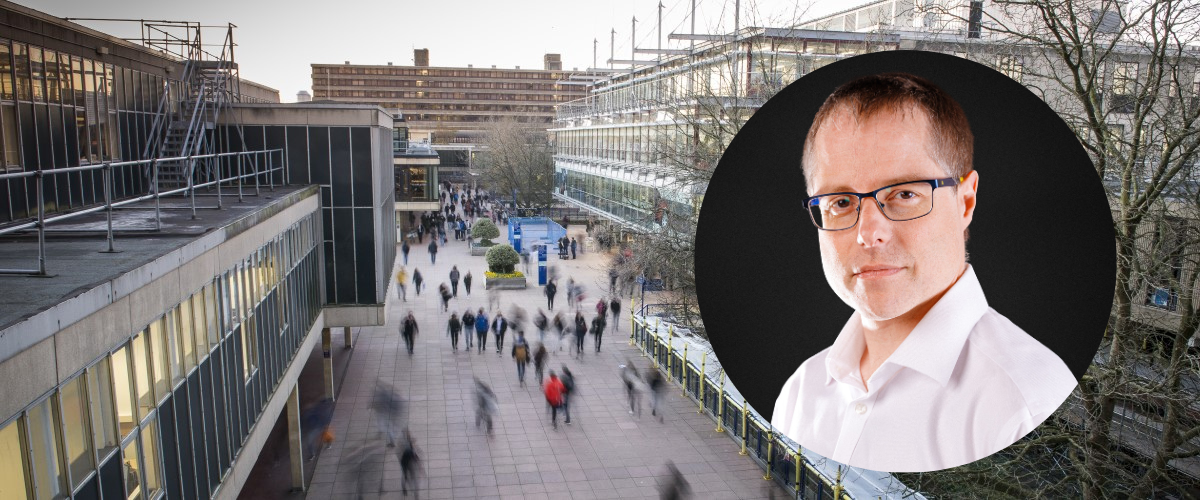
Adam describes himself as someone who is curious and always looking for new challenges. At Bath, you could find him trying canoeing, playing frolf (a frisbee-golf hybrid) or even DJing during his slot on URB.
His career has been similarly varied, with roles from cancer research to running laboratories. But it all started at Bath, the place that taught Adam how to be an adult.
Why did you choose to study at Bath?
Of all the places I checked out during visits, Bath seemed like the most pleasant and yet exciting place to be. It may have been the warm yellow stone, the compact campus, the smiling faces or an eye-opening chat with a fascinating scientist that did it!
Can you tell us about your experience of studying here? Do you have any favourite memories or preferred places to visit on campus or in the city? 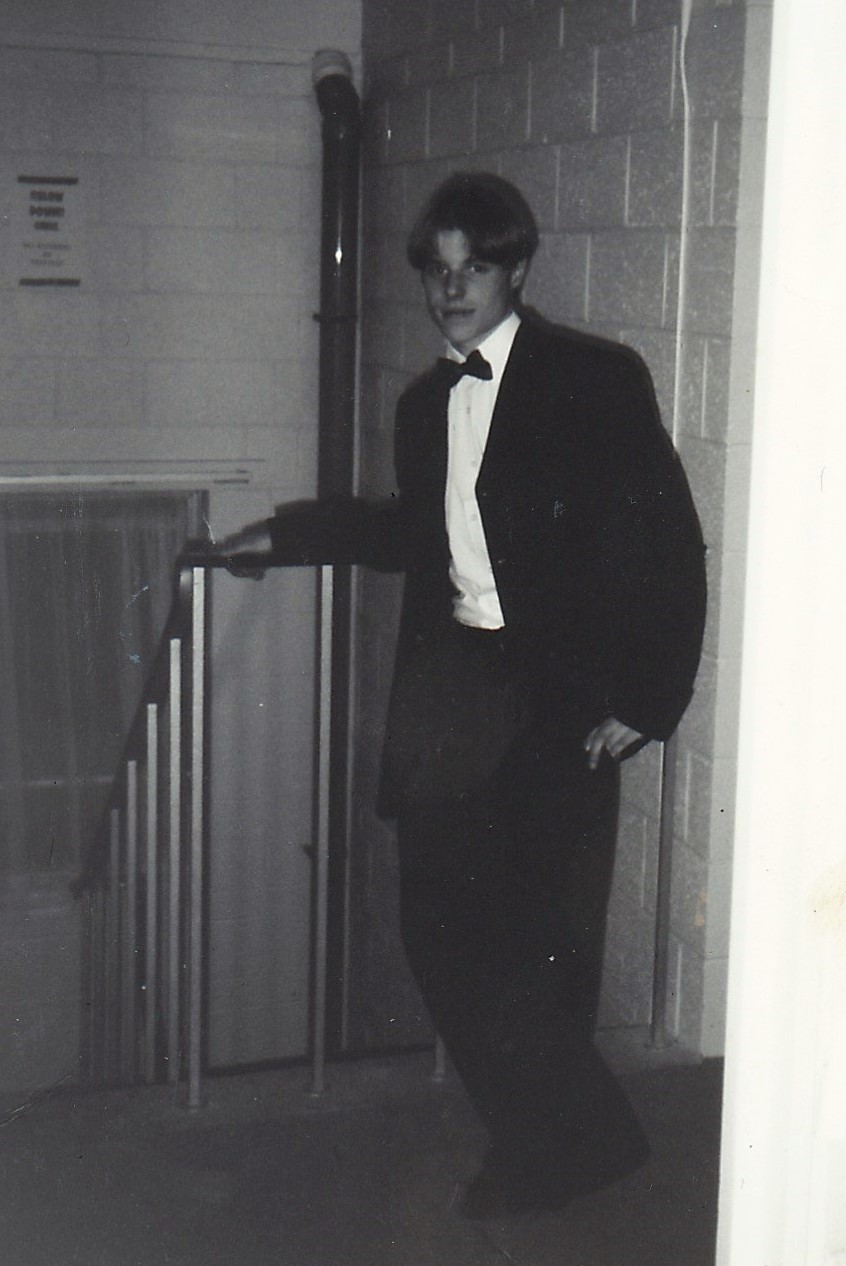
I have a tapestry of brilliant memories of my time at Bath. Bill Whish was my tutor in the first year, and he was a real inspiration. Other standouts include £1 pint nights in The Plug, making snowmen on the green in Eastwood, hungover brunches in Café Retro, Karanga at the Pavilion, pranks in Eastwood 4 and opening my eyes to cell signalling via the magic of overhead projector acetates!
Were you part of any societies or sports clubs during your time at Bath? What did you enjoy most about them?
I dabbled in all sorts during my time at Bath, including canoeing, Battle of the Bands and Frolf. But I treasure my late-night slot on URB the most. Sharing the music I love – even if it was often to an empty Parade – and attempting to maintain the spontaneity of presenting while getting the timing just right led to a lifelong love of DJing which I still mess around with today.
Describe your career journey since graduating. What is a typical day like in your current role?
I’m curious and always looking for new experiences, which has led to a bunch of different life sciences jobs. I’ve been a water microbiology technician sampling the delights of the River Avon. A clinical scientist, testing patients post-transplant for engraftment. I’ve worked in cancer research in children, taught nurses how to take blood and I’ve tested cardiovascular filtration loops to ISO standards using gallons of horse blood. I’m lucky enough to have worked on national specialist panels on blood collection and advised a healthcare diagnostic lab in rural Rwanda on reaching international standards for accreditation.
Most recently, I’ve been a General Manager, running a laboratory business. These days, I leave the science to the experts (most of the time!) with the post requiring a balance of business strategy with the everyday needs of the talented people staff, and the fantastic customers. The labs provide diagnostic data on health parameters and drug and alcohol use, helping organisations support people, wherever they are.
What do you enjoy most about your career? Has anything surprised you?
To me, all science is like climbing a mountain – every time you think you’ve nearly reached the peak and it’s just over the next ridge, you realise the mountain is so much bigger and more beautiful than you realised.
A career in biological science means working in a field that evolves astonishingly fast. The techniques that were cutting-edge in my time at Bath are now mundane, schoolkid stuff. This means there’s always something new to learn and new techniques to try. The other component is that everything you do helps someone, somewhere. For me, this combination makes it intensely rewarding and constantly motivating.
How did your studies help you develop?
Bath taught me how to ‘adult’. I’m sure that this is true of most people who set foot on to campus for the first time. It taught me basic skills and a toolkit I’ve been developing ever since.
Without my time at Bath, I wouldn’t know how to critically appraise information to get to the truth. I wouldn’t know how to respectfully discuss ideas with people holding viewpoints very different from my own, and I wouldn’t have the confidence to present evidence to a room full of people who knew far more than I did!
It struck me a couple of days ago that the notation technique I was using to learn from others speaking was one I adopted using trial and error at University. 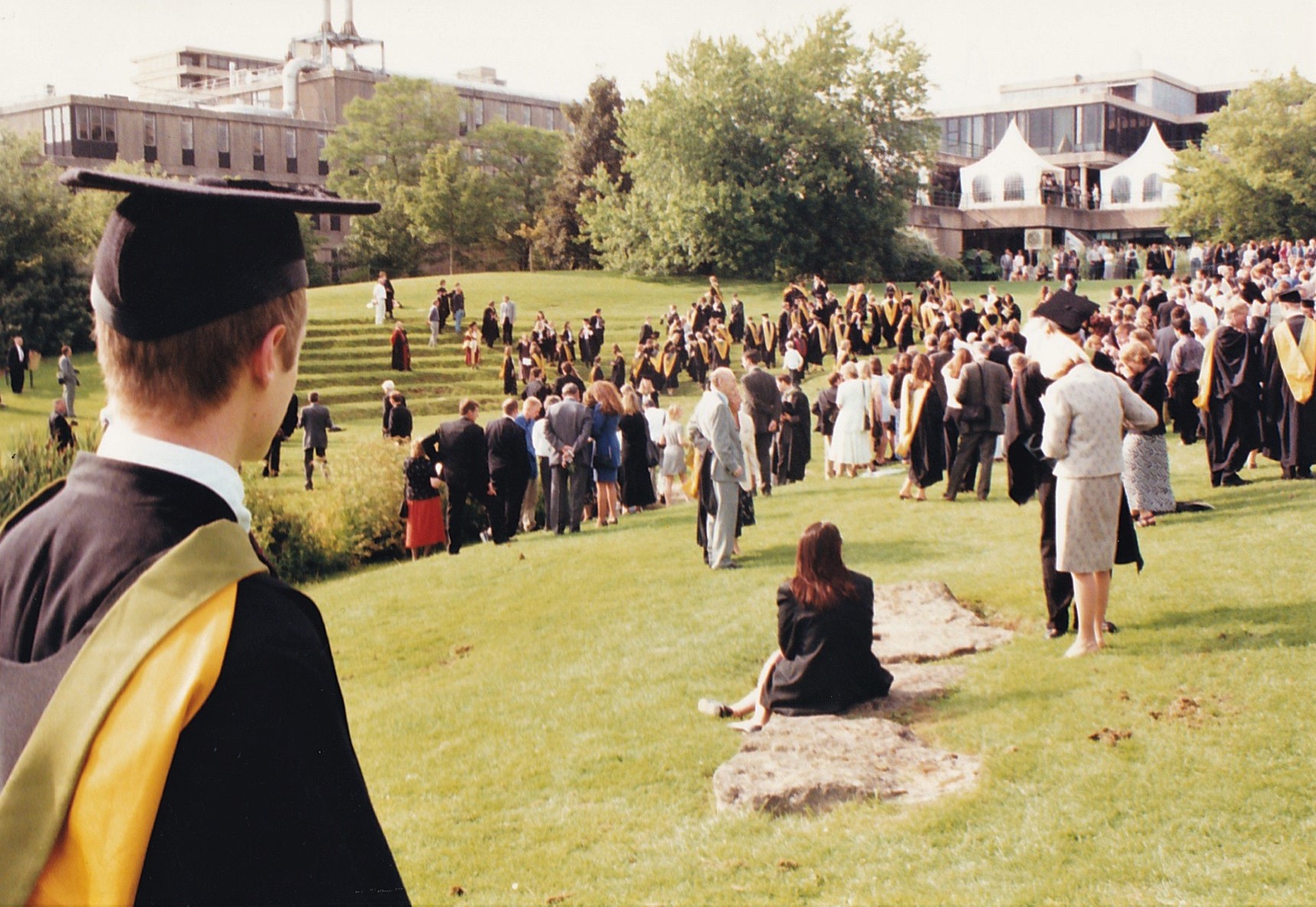
Did you have a mentor, tutor, or lecturer who made a significant impact on you?
The late, great Bill Whish was my tutor for a while during my first year. His endless well of knowledge and enthusiasm, coupled with a sparkling sense of humour, made me aspire to match his many talents. I know I’m not alone, and I know his legacy lives on at Bath.
You volunteer on Bath Connection – could you tell us why you give back to Bath in this way?
I remember not having a clue of what I wanted to do with my life, what my options where, or what to do about the impending end of my studentdom. Careers advice was helpful, but there are so many unanswered questions. As it was, I made a series of choices as I came to the end of my undergraduate degree that have led me through an enjoyable career.
By volunteering on Bath Connection, I hope to be able to answer a few of the questions that I had at the time, and give some context to decisions that you make. If I can help someone to take a fulfilling next step, then I shall consider that time well-spent.
What advice would you give to prospective students considering studying your course at Bath?
Molecular, Cellular Biology and Biochemistry cover so many aspects of biological science that you will almost certainly find a niche and a passion for life. Explore it, ask questions, be curious. Once you do find your future speciality, get to know the people working in the field, and most importantly – what tricky questions are they trying to answer. For me, it was connecting the specific experimental work that you do to the big picture that really made me realise that this would be my future career.
Respond