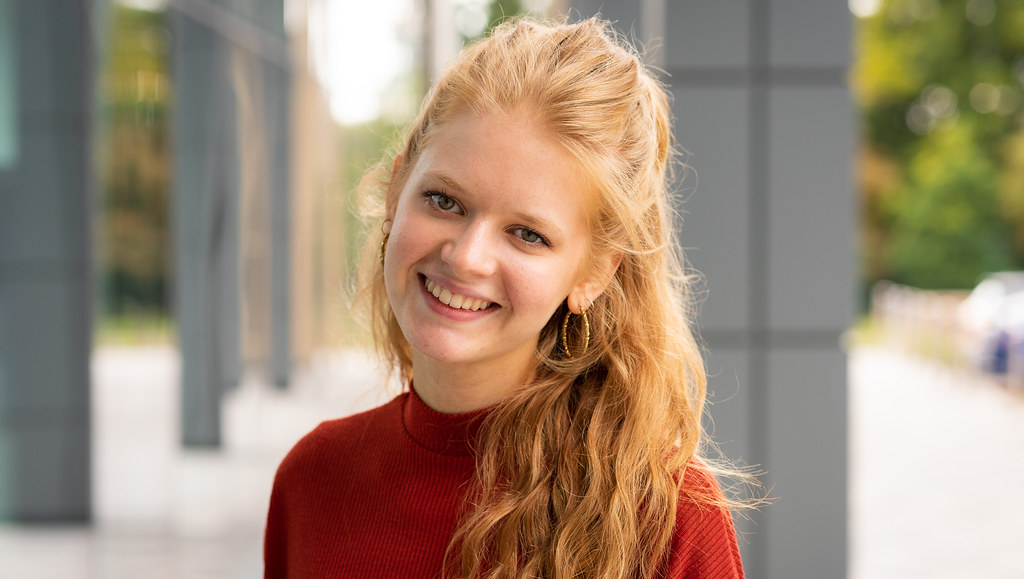
Cicely Hayes was a part of One Young World during her time at Bath. To put it plainly, it changed her life. As a student, she won the Chancellor's Prize for both her exceptional academic work and her activism, which saw her addressing gender equality and sexual violence on campus and beyond.
Always passionate about mental health, Cicely now works in the NHS, where she's dedicated to providing therapy to those who are often overlooked.
Can you tell us about your time at Bath?
I started studying Psychology at Bath in 2016 because it was my favourite subject at school and I always knew I wanted to work in mental health.
I loved the course. It was amazing to study a subject I was passionate about in real depth, and my lecturers had a huge impact on me. My personal tutor, Dr Michael Proulx, was particularly influential and inspired my own interest in teaching and training.
One of the highlights was my placement year at the Mental Health Foundation in London. I worked on projects focused on preventing mental ill health among groups at higher risk, including young people, veterans and parents in the perinatal period. The experience was invaluable and gave me a strong foundation for a career in mental health.
It strengthened my commitment to the field. Mental health is still surrounded by stigma, and many people carry a lot of shame when they're struggling. Supporting people to develop self-compassion and challenge that self-blame is incredibly rewarding.
The placement also highlighted the challenges facing mental health services, including long waiting lists and underfunding. It made me want to be part of the movement pushing for better access to mental health support.
What does your role involve today?
After graduating, I trained as a Psychological Wellbeing Practitioner and moved into a therapeutic role within NHS Talking Therapies. I deliver interventions based on Cognitive Behavioural Therapy (CBT) for people experiencing anxiety and depression.
I'm now a Senior Psychological Wellbeing Practitioner, which means I still work directly with clients, but I also supervise and train both trainee and qualified practitioners. Teaching and supporting other therapists are parts of the role I really enjoy.
You were involved in One Young World while at Bath. For those who don’t know, what is it?
One Young World is about empowering young people to be at the forefront of positive social change. It brings together young people from around the world to learn from one another and from people who have already created meaningful change in their communities.
How did you first get involved?
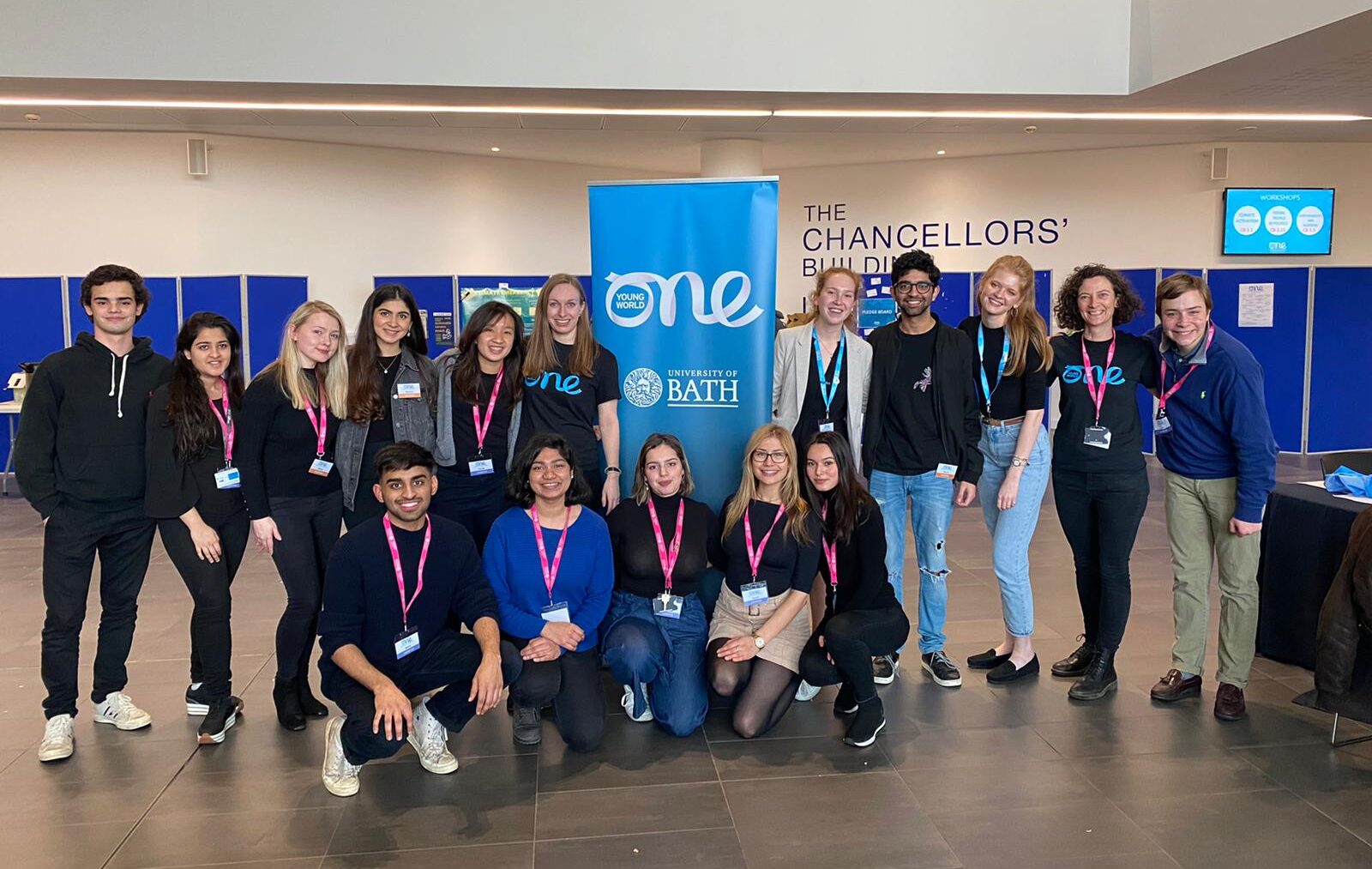
In 2019, after returning from my placement year, I saw an opportunity to apply to represent the Faculty of Humanities & Social Sciences at the One Young World Summit in London.
By then, I had spent a lot of time researching the social factors that contribute to mental ill health, including discrimination, trauma, poverty and loneliness. I had also begun activism work focused on gender-based violence. One Young World felt like a natural fit because I believe in bringing young people together to tackle social issues.
What was the experience like?
It's difficult to sum up because it was genuinely life changing.
When you're aware of some of society's biggest challenges, it's easy to feel overwhelmed or helpless. At One Young World, I met people who were actively creating change, and I came away with much more hope and motivation.
One speaker who particularly inspired me was Kartik Sawhney, who spoke about being denied the opportunity to study science in India because of his blindness. His story made me think about accessibility in education, and when I returned to Bath I researched how UK schools could better support visually impaired students in maths and science. That work was eventually published with my personal tutor.
It showed me that university assignments could be more than a way of earning a degree – they could also contribute to positive change.
Bath is One Young World's longest-standing UK university partner, celebrating its tenth anniversary in 2026. What does that mean to you?
I think it reflects Bath's commitment not only to academic excellence but also to creating real-world impact.
The Faculty of Humanities & Social Sciences is particularly focused on producing research that contributes to social change, and the university encourages students to gain practical experience through placements. Those values align strongly with One Young World's mission.
I'm grateful to have studied at a university that has maintained that commitment for so many years.
Did taking part influence your career after graduation?
Absolutely. It encouraged me to think about my career as more than just a job.
We spend so much of our lives working, and for me, it's important that my work feels meaningful. It also gave me the confidence to pursue a career in mental health, despite how competitive the field can be.
Can you tell us about your gender-based violence activism?
I'm a survivor of sexual violence and becoming aware of how prevalent it is at university motivated me to act.
I began by delivering talks in schools and colleges about consent, healthy relationships and sexual violence. The aim was not only to raise awareness but also to empower young people with knowledge and understanding.
It was very healing for me to almost turn my pain into power and try to prevent other people from going through similar things to me.
As my career developed, I had to find a sustainable balance between activism, work and my own wellbeing. I'm the gender-based violence champion within my NHS service and I train therapists to recognise signs of unhealthy and abusive relationships and help connect survivors with specialist support services.
There is still a long way to go. Statistics around violence against women remain deeply concerning, which is why I'm still passionate about this work.
What’s next for you?
Honestly, I feel very fortunate because I already have what feels like my dream job!
I particularly enjoy working in perinatal mental health, supporting parents during pregnancy and after birth. Working for the NHS allows me to provide free mental health support, which is something I care deeply about. Everyone should have access to therapy regardless of their background.
I've also become increasingly aware that many psychology students don't realise how many different career paths exist beyond the Doctorate in Clinical Psychology. There are lots of rewarding routes into mental health work.
More than anything, I've learned the importance of appreciating where you are now rather than constantly focusing on what's next. If you'd told me years ago that I'd be doing this job today, I'd have been amazed.
What would you say to students considering applying for One Young World?
Don't hesitate. University can sometimes feel like a bubble, and One Young World helped ground me and connect me with wider global issues. I met incredible people from around the world who shared similar values and ambitions.
It also helped build my confidence. Although people may not believe it now, I was very shy and nervous before attending. Experiences like One Young World help you grow personally as well as professionally.
Most importantly, you're joining a community that continues long after graduation. Returning for Bath's 10th anniversary celebrations is a reminder that I'm still part of that community today.
Respond