As my time in the Public Engagement Unit ends, I’ve been thinking a lot about the work that has meant the most to me over the last two years. One of the pieces of work that really stands out is the Connect! event series which has been part of the ParticipatoryResearch@Bath project funded by Research England.
I wanted to take a moment to reflect on what we’ve created, what I’ve learned, and why this work has felt so special.
What is Connect?!
Connect! was born out of something both community groups and researchers told us: ‘We need more informal, low‑pressure opportunities to meet each other.’
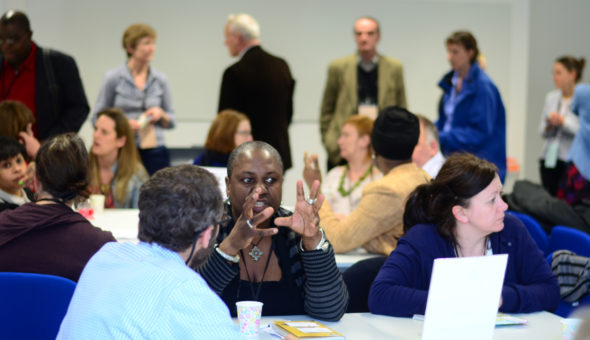
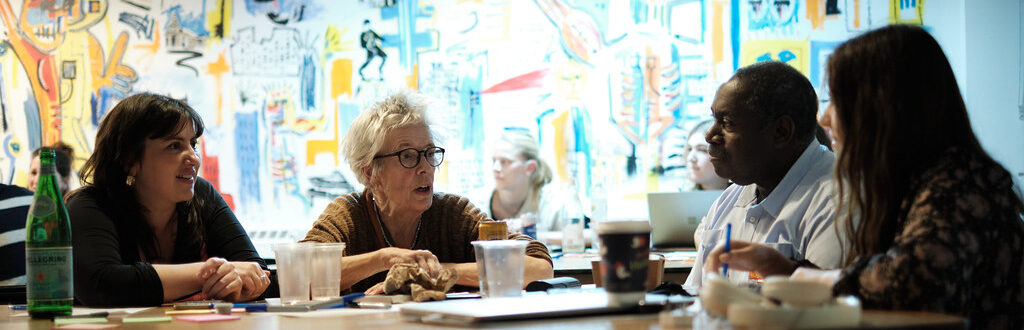
Inspired by UCL’s Creating Connections events, Connect! set out to create exactly that — spaces where researchers, creative practitioners, and community organisations could come together, share ideas, explore themes, and simply talk to each other as humans.
Over the last year and a half, I’ve had the joy of producing these events in collaboration with Bath Spa University. They’ve become vibrant gatherings where sparks fly, ideas grow, and genuine relationships begin.
Connect! so far
In total, we’ve run five Connect! events, each with its own theme, from green futures to tackling social isolation, and hosted in four different locations.
A big priority for us has been hosting events in accessible, central community venues to limit barriers to attendance. That’s why we’ve popped up everywhere from the Percy Centre to Roseberry Road Studios. And to keep the community spirit (and good food!) flowing, we’ve been catered by Bath Community Kitchen, a brilliant local social enterprise addressing food waste, poverty, and isolation.
We’ve welcomed researchers from both universities, community organisations, creative practitioners from Bath and wider BANES, people working directly in the themed areas, regulars who come every time and newcomers simply wanting to meet people outside their usual circles and connections have happened both in the room and afterwards.
What I’ve learned
Making time and space just to connect is vital
What I’ve learned from this experience and the feedback I received is just how valuable it can be to curate relaxed, informal spaces where people can meet without the pressure of fixed outcomes. These settings allow relationships to develop organically, paving the way for meaningful connections and potential collaborations.
Not everything needs to be evaluated – the worth can be that these spaces exist
I’ve also realised that not everything needs to be evaluated to prove its worth. In fact, trying to measure impact too closely can create pressure for myself and participants to report something tangible — even when the value of the space lies precisely in its openness. Sometimes connections spark quickly; sometimes they evolve quietly in the background; sometimes we never hear about them at all, and I have learnt to accept that.
We know things have already happened because of Connect! — people have told us so — but we also need to accept that many outcomes won’t be traced back to a single encounter or might only become visible much later. We’re fortunate at the PEU to have created structures that allow us this freedom: the freedom to create spaces for connection without insisting on immediate, demonstrable results. Sometimes the impact is simply that the space exists.
Less is more
As the events evolved, we made changes based on feedback. Our very first event had lots of facilitated discussions… and over time, we stripped things back. We realised that what people needed most was simply the space and time to talk. Less structure = more connection.
The power of stories
One of my favourite developments has been bringing storytelling into the format — inspired by professional storyteller Clare Murphy’s Salons. Instead of formal presentations, we invite a few people beforehand to share something they’re passionate about within the theme.
This gentle, story‑first approach has sparked some truly rich discussions. We’ve heard about creative writing workshops with women in prison, living maps of ecological loss, community meals tackling isolation, and more. The mix of listening, talking, eating, and mingling has proven to be a simple but powerful recipe.
The future of Connect!
I’m genuinely delighted that Connect! will continue beyond my time here and will be returning in the spring. So please do keep your eyes peeled for what’s next.
It’s been a privilege to help shape this programme. Seeing people come together, spark ideas, and build new connections has been one of the best parts of my role. I can’t wait to see how Connect! continues to grow.
Respond