Since my last blog, life in Argentina has continued to be extremely enriching. Meeting new people all the time, I am constantly presented with opportunities to connect. However, inevitably, there came a point where it was hard to squash down feelings of homesickness. Despite being consistently surrounded by people, about a week ago I suddenly felt a wave of loneliness wash over me.
Emotional overload
To be sincere, I’m really not a crier. It’s just not how I seem to express my emotions. Last week, however, I couldn’t stop the tears from flowing while walking down a residential street in northern Argentina. My host family at the time spoke zero English, so we conversed in Spanish all the time. This is ideal and what I’d hoped for as an IP & Spanish student. Despite this, I realised last week that I hadn’t expressed myself candidly for quite a while. When you can’t speak a language like a native speaker, you don’t possess the words and phrases you want in order to convey your emotional state. I was beginning to feel like I just wanted to talk to someone in English for 24 hours, get everything off my chest, and then I’d be good to go again. This blog is not supposed to be a cry for help. Instead, I’d like to share how I got over these feelings of isolation and what made me feel at home despite being 7,000 miles away.
The landscape of Córdoba
After my time in Bahía Blanca, I worked as a camp counsellor again for 12 days in Córdoba. Córdoba has a somewhat sacred reputation in Argentina. It is home to the country's second-largest city, as well as the Sierras de Córdoba, which boast dramatic mountains and pristine rivers. The camps took place at El Rincón, a hostel located in the countryside.
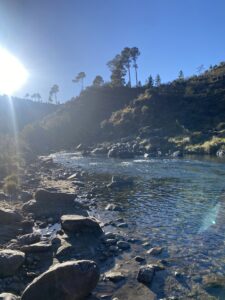
In order to help us get to know the area, the owner of El Rincón, Alberto, immediately gave up two and a half hours of his morning to give us a private tour of the Sierras (mountains), which can only be accessed if you have a very large truck capable of withstanding the dilapidated dirt tracks.
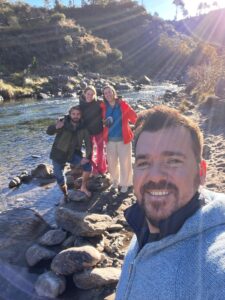
Lucky for us, Alberto had the perfect vehicle for the job. His grand tour showed us the very best of the Cordobés landscape we had heard so much about, and he spoke proudly about having built his business and home in one of the most scenic places in Argentina. Although Córdoba was completely unfamiliar to me, the vastness of the landscape was a soothing change from the intensity of Buenos Aires.
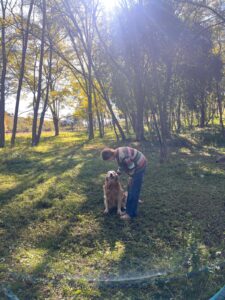
On our days off between camps, Alberto took us to a nearby village situated in the middle of a valley. La Cumbrecita is famed for being completely pedestrianised and for its Swiss influence. We felt incredibly fortunate to be guided around by a local and shown these treasures authentically, rather than through the tourist gaze.
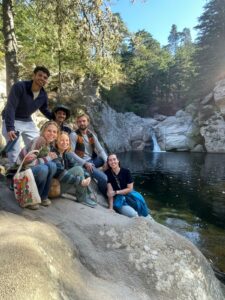
La Familia Rivarola
My next stop was a work placement in Resistencia, Chaco. I was feeling a little nervous simply because I had had such an unforgettable experience in Córdoba. Additionally, I had been speaking English for the last few weeks at the immersion camps and was therefore very much in my comfort zone. Honestly, the first weekend in Chaco was difficult. I was to share a room with the family's 16-year-old daughter for the next two weeks. Salma was lovely, but I felt a kind of pressure to constantly entertain her. Sometimes the conversation felt a little stilted, and I was self-conscious about my Spanish abilities. However, after the first weekend, once adapted to the Argentine routine, I slowly fell in love with the Rivarola family.
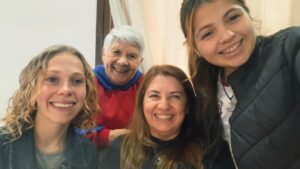
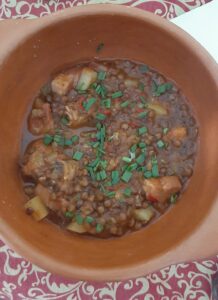
Abu (the grandma) prepared a feast for the family every day at lunchtime before I started work in the afternoon. Each day, I could feel her watching me eagerly out of the corner of my eye, waiting for me to approve of her cooking. She called me “amor” and couldn’t do enough for me. Sundays were reserved for asado, a traditional Argentinian barbecue. Carlos, (the dad) and chief ‘Asador’ of the family, was determined to serve me what seemed like an entire cow; the meat kept coming, even when I insisted I was going to explode if I ate any more!
One Saturday,Vivi (my host mum) drove me across the province border to Corrientes, a beautiful riverside city that I was keen to visit. Despite recovering from an illness and being unable to walk long distances, she accompanied me at a gentle pace along the Costanera while we shared stories and watched the sunset. As if this wasn’t enough, she also noticed that I was a friolenta (someone who feels the cold easily) and thoughtfully gifted me a scarf made from llama wool that she had bought while travelling in the western provinces.
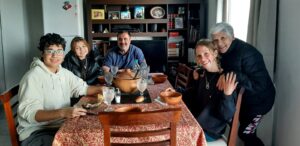
The little touches and acts of kindness that the family showed me quickly began to add up, and after the first week I felt surrounded by warmth. It was difficult to feel homesick when the things I had been nurtured with growing up—small acts of gentle affection—were being replicated all the same, just halfway across the world.
The importance of verbalising your experience
Despite being extremely grateful for the full Spanish immersion I was receiving while staying with my host family, there were days when I felt as though I simply couldn’t speak Spanish (this was partly the reason for the uncontrollable tears that one day). It was as if my brain had gone into paralysis. I was therefore very pleased when the English teachers at the institute where I worked invited me to have Merienda (snack time at around 5 or 6 p.m.) with them.
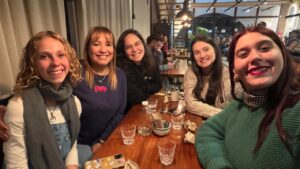
It was one of the few times I felt able to share how I was feeling, they too understood the emotional effort that language learning necessitates. They told me that they also experienced days when they felt as though they were tripping over their tongues with every sentence they spoke. Aside from reassuring me, I noticed that they intentionally slowed down when speaking to me in Spanish, used hand gestures, and maintained eye contact. I didn’t feel patronised but rather touched; they were clearly trying hard to include me, and above all, validate how I was feeling. My time with those teachers was a masterclass in empathy. They had walked in my shoes before and understood how language learning can often be a lonely pursuit.
May 25th – a special day in Argentina
I was lucky enough to be in Chaco for 25th May while working at the institute. This date is significant because it commemorates the May Revolution, one of the foundational events in Argentina’s path to independence. In schools across the country, children perform ‘Actos’, which typically include traditional folkloric dances and songs from the region. Being I was in Chaco, I was able to watch Salma and her classmates perform the ‘Chacarera’, a spirited dance from rural Argentina involving partner work accompanied by lively music. I wasn’t watching the famed Tango; instead, I was able to move beyond stereotypes of the country and experience something raw and specific to the province in which I was staying.
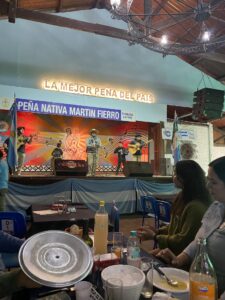
The day highlighted how proud Argentines are of their country. All the children had made ponchos, traditionally worn during the dances, in anticipation of the Actos. After the show, I was invited to eat a traditional stew called Locro at a community town hall. Honestly, it may have been the first meal I have been given here that I genuinely struggled to eat. I’m not a picky eater, but I think this particular version contained pig skin. I couldn’t decide what was worse: the texture of the meat, which was akin to slugs, or the fact that I could still see hairs on it! All the same, it served as another opportunity to immerse myself in local culture.
The antidote for homesickness
I hope that through reading about my experience in Argentina, it becomes clear that feelings of homesickness are possible to subdue. Since being here, I have come to see that people sharing their culture, home, and simple day-to-day pleasures with you are the antidote to loneliness. Homesickness is upsetting when it creeps up on you out of the blue, but it is easier to overcome than we imagine through genuine human connection, which seems to transcend all language barriers.
Respond