As COP30 raises questions about the net zero transition in the Global South, Professor Effie Kesidou explains why the electric vehicle boom isn’t benefiting all countries equally.
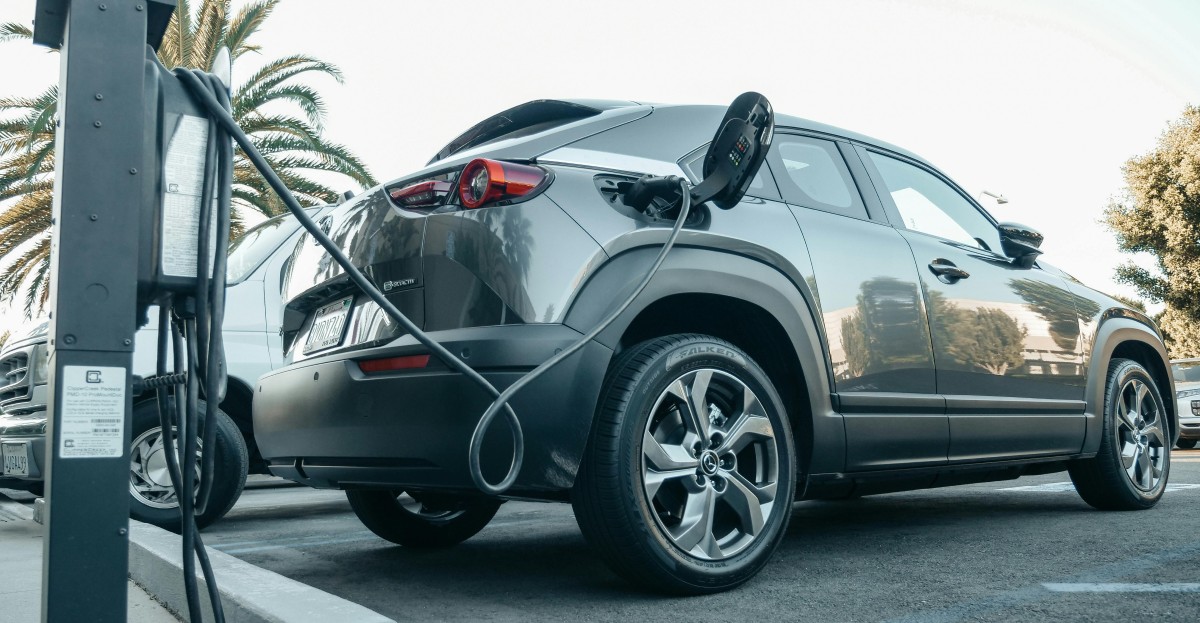
Electric vehicles (EV) are an example of a success in transitioning to low-carbon transport. The International Energy Agency reports that one in five new vehicle sales in were EVs as battery costs have reduced, governments offer subsidies, and consumer environmental awareness is increasing.
Yet, behind the shimmering lights of COP30 and the major news headlines lies a story about the uneven geography of the net zero transition in general and EV diffusion in particular.
The transition has been dominated by a small group of technologically advanced economies –the United States, members of the European Union, and China – while the majority of developing economies remain peripheral participants.
This is happening as, paradoxically, many of the requisite minerals are mined in the Global South, under questionable and irregular practices that benefit the Global North.
Indonesia’s strategic position
This uneven geography matters for the global transition to EVs. Indonesia illustrates, perhaps better than any other country, both the potential and the constraints of green industrialisation in the Global South.
Indonesia holds nearly a quarter of the world’s reserves of nickel, a key input for the construction of lithium-ion batteries. Its government’s ambition is to become a global hub for EV and battery manufacturing by 2030 – and, in doing so, to move up the global value chain from supplier of raw materials to producer of green technologies.
In principle, this could enable Indonesia to capture significant value from the global green transition. Yet, as our recent study in the Journal of Environmental Management demonstrates, the country’s ability to transform resource wealth into sustained technological capability is far from guaranteed.
Drivers and barriers
Our study used firm-level evidence from across the EV value chain, from battery producers to vehicle assemblers. We examined what helps and what hinders eco-innovation – the development and implementation of novel products, processes or organisational practices that reduce environmental harm.
Our analysis identified several positive drivers of eco-innovation in Indonesia’s EV sector.
Regulatory drivers have been especially influential, such as mandates for public fleet electrification, and both fiscal and non-fiscal incentives.
EV purchase subsidies since 2022 have significantly reduced total ownership costs and increased accessibility. At the technological level, collaborative partnerships between EV manufacturers, energy companies and universities have enhanced knowledge transfer and innovation capacity.
Market drivers have been equally important. The growing involvement of urban consumers and ride-hailing platforms have generated positive market signals for EV producers. Firms have responded by developing battery-swapping systems, subscription-based models, and pay-per-use services.
Finally, environmental drivers are emerging through firms’ engagement with circular-economy initiatives, including battery recycling and secondary use in energy storage.
However, we also found enduring structural barriers. Regulatory fragmentation and uncertainty persist, with overlapping mandates and inconsistencies in policy undermining firms’ long-term strategic planning.
Financial constraints, especially for small and medium enterprises, are common. Technological barriers are apparent in the shortage of skilled engineers trained in EV-specific technologies and in the sector’s continued dependence on imported components and batteries.
All of these factors combined, limit domestic technological sovereignty and inhibit localised eco-innovation. Market barriers (including high upfront costs, limited consumer awareness and insufficient charging infrastructure) further impede widespread adoption.
Last but not least, environmental barriers arising from the absence of comprehensive regulations on waste management and battery recycling, expose the gaps between policy ambition and implementation capacity.
The global pattern
Indonesia’s experience also demonstrates a broader challenge facing many emerging economies. Across the Global South, governments are adopting resource-led industrial policies to attract investment in green sectors.
While such initiatives can create new economic opportunities, they rarely guarantee green technological deepening. Eco-innovation depends on cumulative learning, stable policy environments and institutional coordination – conditions that cannot be imported wholesale through foreign direct investment.
Indeed, current global supply chains reinforce technological concentration. China accounts for over 75% of global battery cell production, while the EU is deploying large-scale subsidy schemes, such as the Green Deal Industrial Plan, to localise advanced manufacturing.
The result is a fragmented and increasingly protectionist green economy that risks marginalising developing economies to the role of material suppliers.
The green growth paradox
Emerging economies face yet another key challenge. While on the one hand they seek rapid green industrialisation and green job creation, on the other they are expected to meet global climate commitments and net-zero targets. The result is a ‘green growth paradox’ pursuing economic expansion through activities that remain dependent on the Global North.
These objectives are not necessarily incompatible but require policy coherence and institutional capacity that are often lacking.
Effective green industrial policy should therefore focus on capability formation rather than short-term investment attraction. This would involve:
- Ensuring regulatory stability and transparency
- Investing in education, vocational training and R&D infrastructure
- Encouraging joint ventures and technology partnerships that embed learning rather than dependency
- Expanding access to green finance for SMEs
Indonesia’s ban on raw nickel exports, for instance, is strategic as the country seeks to capture greater value domestically, but these efforts require complementary investments in innovation and skills.
A truly global revolution
The electrification of transport is not only a technological transformation but also a socio-economic one. The distribution of knowledge, production and power within the EV sector will influence whether the global energy transition is equitable and sustainable.
If developing economies remain suppliers of raw materials while advanced economies retain the high-value technology segments, the world risks reproducing old hierarchies in a green cloak.
If countries such Indonesia can build dynamic, green innovation systems, they could help rewrite the global map of industrial power and demonstrate that a green economy is not the exclusive privilege of the wealthy.
Conversely, if the EV revolution bypasses the Global South, the world will struggle to meet its climate goals. More poignantly, the entire EV revolution will be little more than a self-indulging Global North exercise in eco-vanity.
The transition to clean mobility must therefore be not only low carbon, but also inclusive and just, enabling all nations to share in both its risks and its rewards.
Respond