

Blog post by: Katie Knight (MBioMed Biomedical Sciences with professional with Professional Placement) and Will Hempstock (BSc Management with Work placement): Insight Interns working in the Faculty of Science.
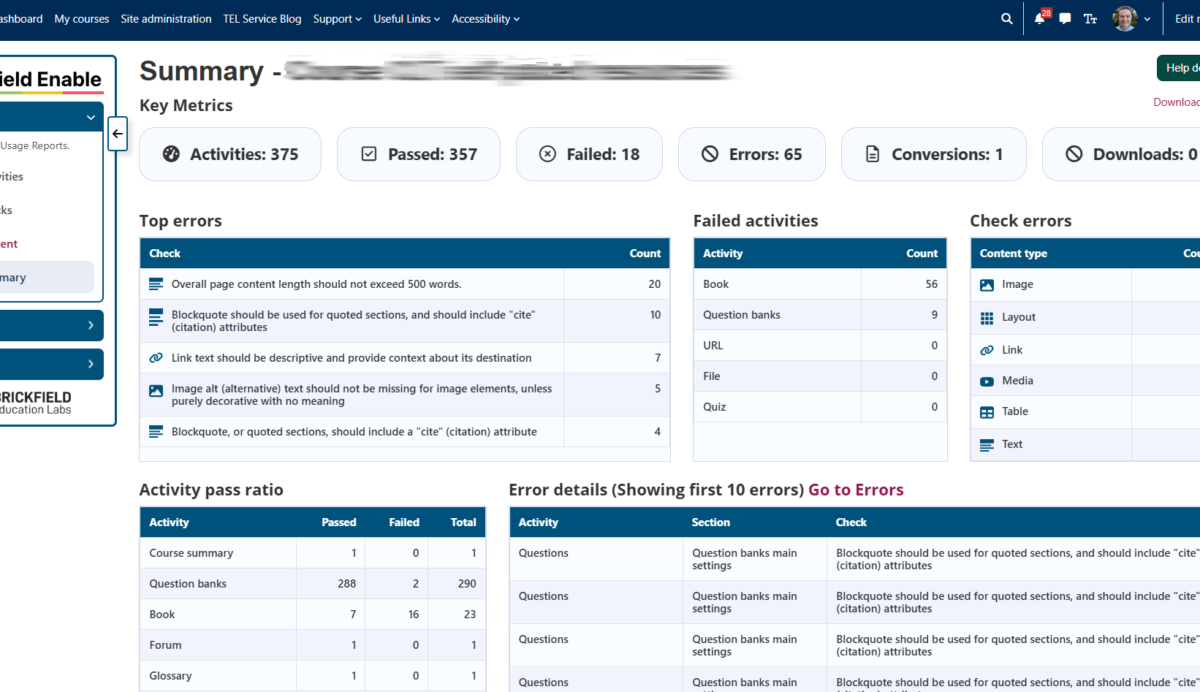
466 Moodle pages analysed. Over 10,000 accessibility errors fixed. This project has evidently had a significant impact, leaving 236 Moodle pages with no errors remaining. Over the last two months, we have completed the Bath Insights Internship, working together to improve the accessibility and consistency of Moodle pages across the Faculty of Science. We achieved this through implementing the Bath Blend Baseline and using the Brickfield Accessibility+ Toolkit in Moodle, establishing a better digital learning experience for all students.
The Takeaways
Throughout this internship, we learnt a variety of lessons, notably the importance of digital accessibility. As we encountered Moodle pages with a significant number of accessibility errors, we realised the scope of the project was greater than initially anticipated. We fixed various issues such as inconsistent formatting, missing alt-text and colour contrast errors. Additionally, we ensured each page contained key information, improved page layouts and reorganised content into clear, consistent sections. Although many of these changes may seem small, together they significantly enhance the Moodle experience for both students and staff. This was the key takeaway of the project, that small design choices can have a big impact.
Alongside technical skills, this project shaped us both personally and professionally as we transitioned from students to staff. We adapted to the 9-5 lifestyle, coordinated meetings both in person and online, and sent professional emails to Unit Convenors. This internship experience provided insight into workplace expectations and helped us develop skills that are difficult to gain through academic study alone.
The Positives:
The most rewarding aspect of the internship was the tangible difference to the Moodle experience of students both with and without accessibility needs. As students ourselves, we have experienced the challenges of inaccessible Moodle pages and the convenience of one that is well structured and inclusive. Contributing to pages becoming both more consistent and more accessible was incredibly satisfying, especially as the benefits will continue long beyond the project.
Furthermore, we enjoyed working together to complete this project as it was helpful to have a different perspective when faced with key decisions. We grew collaborative skills as we strategically divided tasks, ensured consistency across our work and maintained effective communication throughout.
The Challenges:
Although we received a largely positive response, some Unit Convenors had different approaches to organising their Moodle spaces and were reluctant to implement the changes we proposed. This proved to be one of the more challenging aspects of the project as we developed adaptability and understanding of different perspectives.
Initially, adjusting to a full-time working schedule was a notable change to the flexibility of student life. The key challenge within this was remaining focused and motivated throughout the day, especially due to the repetitive nature of the project. Nevertheless, we learnt when to take breaks to optimise productivity and complete our project to a high standard.
The Reflections:
If we were to undertake this project again, we would be mindful to record all changes made to Moodle pages. Whilst we recorded the number of common accessibility errors fixed, we did not complete this for every error we encountered. This meant a significant proportion of our work is unaccounted for as we do not have the supporting data, requiring us to use an estimate for manual errors. Recording each error would have enabled us to identify common patterns more easily and provide stronger recommendations for future accessibility work. It could also help support similar projects in the future by highlighting areas that require the most attention.
The Conclusion:
Overall, this internship has been an incredibly valuable experience. It has given us the opportunity to contribute to a project with a meaningful and lasting difference while developing new technical and professional skills. Additionally, it has shown us that creating inclusive digital learning environments is often achieved through small, thoughtful improvements that collectively have a significant impact on user experience.
This work was supported by the Faculty of Science through the Bath Insights Intern Programme and contributes to the University's anticipatory approach to inclusion through Level 1 Reasonable Adjustments and improved digital accessibility.