

After a successful pilot period, the Faculty of Engineering and Design (FED) has adopted FeedbackFruits across all their departments – how did the first year go?
The results have been positive. FeedbackFruits was successfully adopted by all four departments in FED – Architecture & Civil Engineering, Chemical Engineering, Electrical & Electronic Engineering, and Mechanical Engineering. Over the past academic year, colleagues from across the faculty have been using FeedbackFruits to support teamwork, encourage reflection and create learning experiences that mirror professional engineering practice. While implementations have been tailored to its own discipline, they all share a common goal: helping students become more engaged, reflective learners while developing the skills they'll need beyond university.
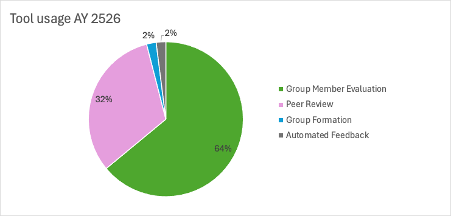
The most used activity in FeedbackFruits was Group Member Evaluation, supporting collaborative project work across the faculty. Tutors also made use of Peer Review, Group Formation, and Automated Feedback (giving students a safe space to receive formative feedback before submitting their final work).
These activities support the University's commitment to delivering quality and excellence by encouraging active learning, authentic assessment and inclusive group work. They also help staff address Level 1 reasonable adjustment recommendations by mitigating barriers to group work.
Developing better teamwork in Chemical Engineering
One example of how FeedbackFruits supports better teamwork comes from Chemical Engineering, where Dr Stuart Scott and Dr Jon Noble have embedded FeedbackFruits into design project units across Year 2, Year 3 and MSc programmes.
Rather than using peer assessment simply as a way of allocating marks, the focus has been on supporting students to become better collaborators.
Students complete regular group member evaluations throughout their projects, allowing both students and staff to identify participation issues early, reflect on group dynamics and have informed conversations about effective teamwork. As Unit Convenor for the third-year projects, Dr Noble found having visibility of the scores and feedback comments useful to help target interventions around difficulties in group dynamics. Being able to see the background, issues and different perspectives in the comments made it a lot easier to have supportive conversations to get groups back on track. Students developed a better understanding of why peer review mattered and how it could help improve both individual contributions and team performance.
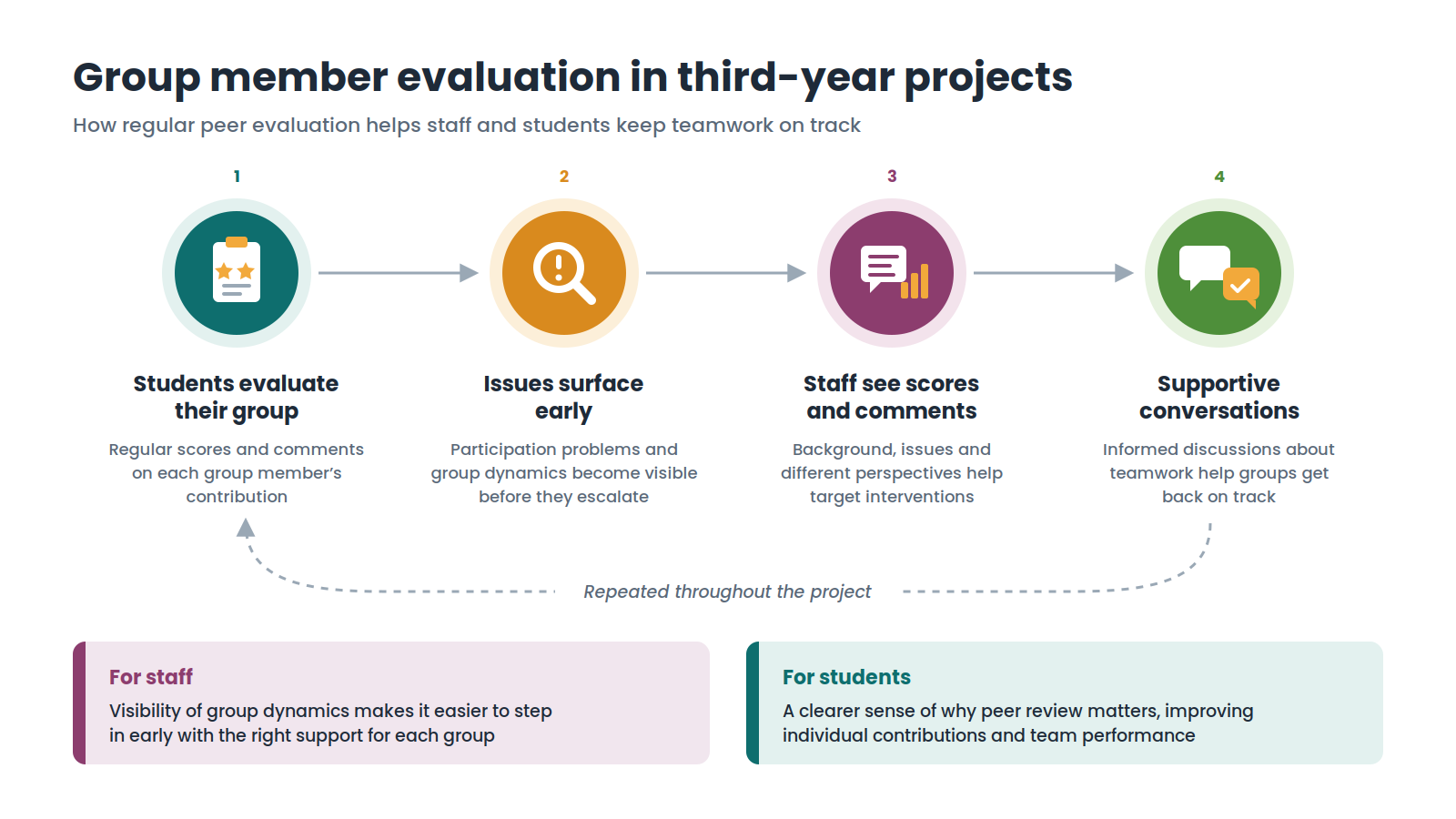
A key priority this year was encouraging students to engage authentically with the process. Rather than presenting FeedbackFruits as a stand-alone tool for differentiating marks, it was embedded as part of a larger process managed by the students to evaluate group dynamics. While there is still work to do, this has encouraged many groups to use the tool more constructively, helping students develop a better understanding of why peer review matters and how it can improve both individual contributions and overall team performance.
Based on student feedback from last year's delivery, the course team have already refined their approach by simplifying the assessment rubric, requiring written feedback alongside ratings and introducing Feedback on Feedback to encourage richer reflection. It's an excellent example of colleagues using student feedback to continuously improve their teaching.
Dr Scott and Dr Noble’s work has been recognised by the wider FeedbackFruits community. It is nominated for the Learning Design Community Awards, and has been turned into a public template for other community members from other institutions to use.
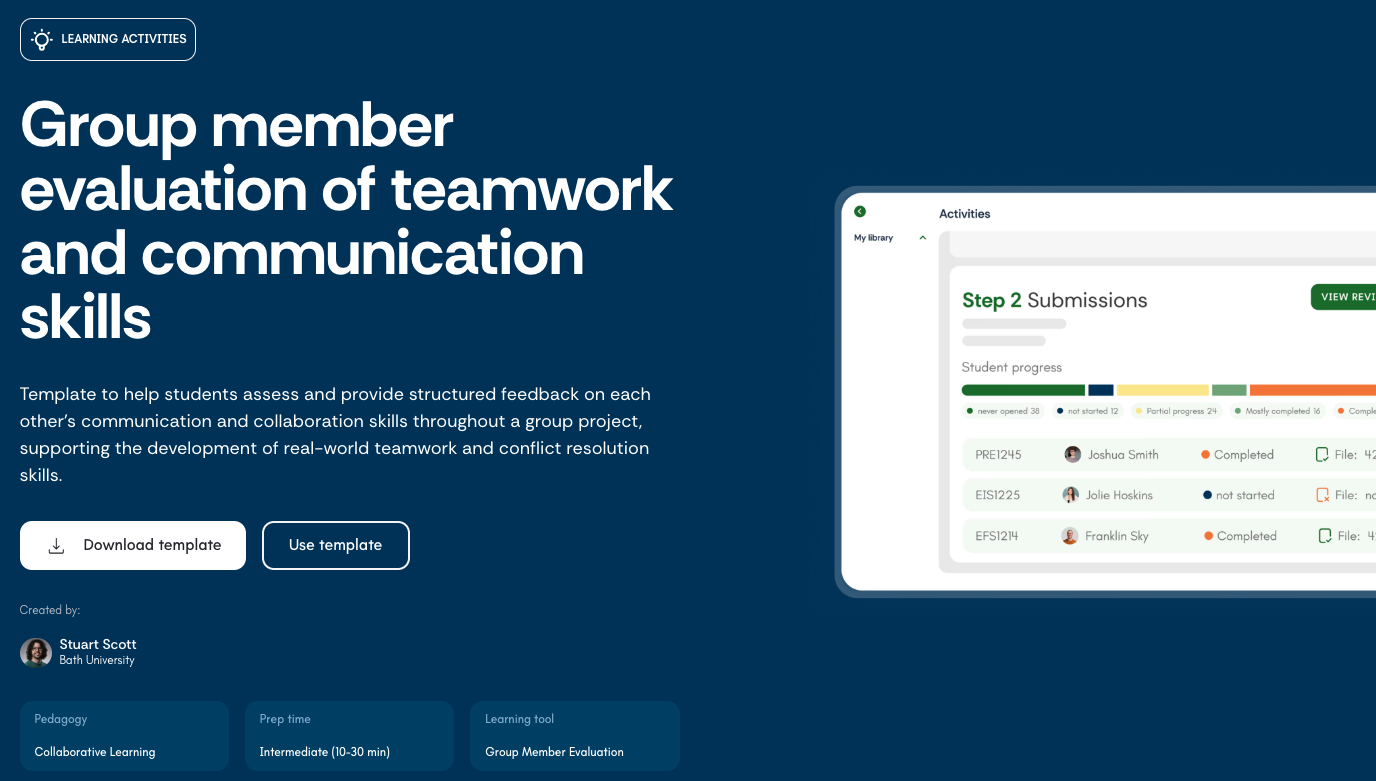
Source: Group member evaluation of teamwork and communication skills
Bringing professional practice into the classroom
FeedbackFruits has also enabled authentic learning experiences in Architecture and Civil Engineering.
Dr Taghried Abdelmagid used the platform to simulate the professional design review process that students are likely to experience in industry. Rather than simply submitting work for assessment, civil engineering students took on professional roles, moving through cycles of drafting, reviewing, providing feedback and constructing designs.
This mirrors the collaborative way projects are developed in professional engineering practice, giving students valuable experience of receiving critique, defending design decisions and improving work through constructive feedback.
By embedding these activities within teaching, students develop skills that extend well beyond their academic studies and into their future careers.
Looking ahead
With a successful first year adoption of FeedbackFruits, what can we look forward to in the future? New tools have been added to FeedbackFruits to continue the faculty’s commitment to driving excellence in education, such as the AI Practice tool. This tool provides students a safe and structured activity to practice and evaluate their GenAI literacy. Rather than simply using AI to generate answers, students can experiment with prompts, evaluate AI-generated responses and reflect on how these tools can support their learning. Combined with peer review and reflective activities, this offers exciting opportunities to help students become thoughtful, responsible users of Generative AI.
In conclusion
Overall, the first year of FeedbackFruits has made a positive impact.
While FeedbackFruits provides the technology, the real value is how it is being used. If you’re in the faculty of Engineering & Design and would like to discuss if FeedbackFruits supports the pedagogy and learning activity you want to do with your students, or if you're based in another Faculty or School and would like to learn more about adopting FeedbackFruits please reach out to the Technology Enhanced Learning (TEL) team at tel@bath.ac.uk.
Written by Lynn Cheong-White (Instructional Designer, TEL).